Nova Survivor & the Bedouin Who Saved Him | UN Rally Against Antisemitism
With the third anniversary of October 7 weeks away, Shalev Biton and Youssef Ziadna told thousands at a New York rally how a Muslim farmer faced down Hamas terrorists to protect 33 lives
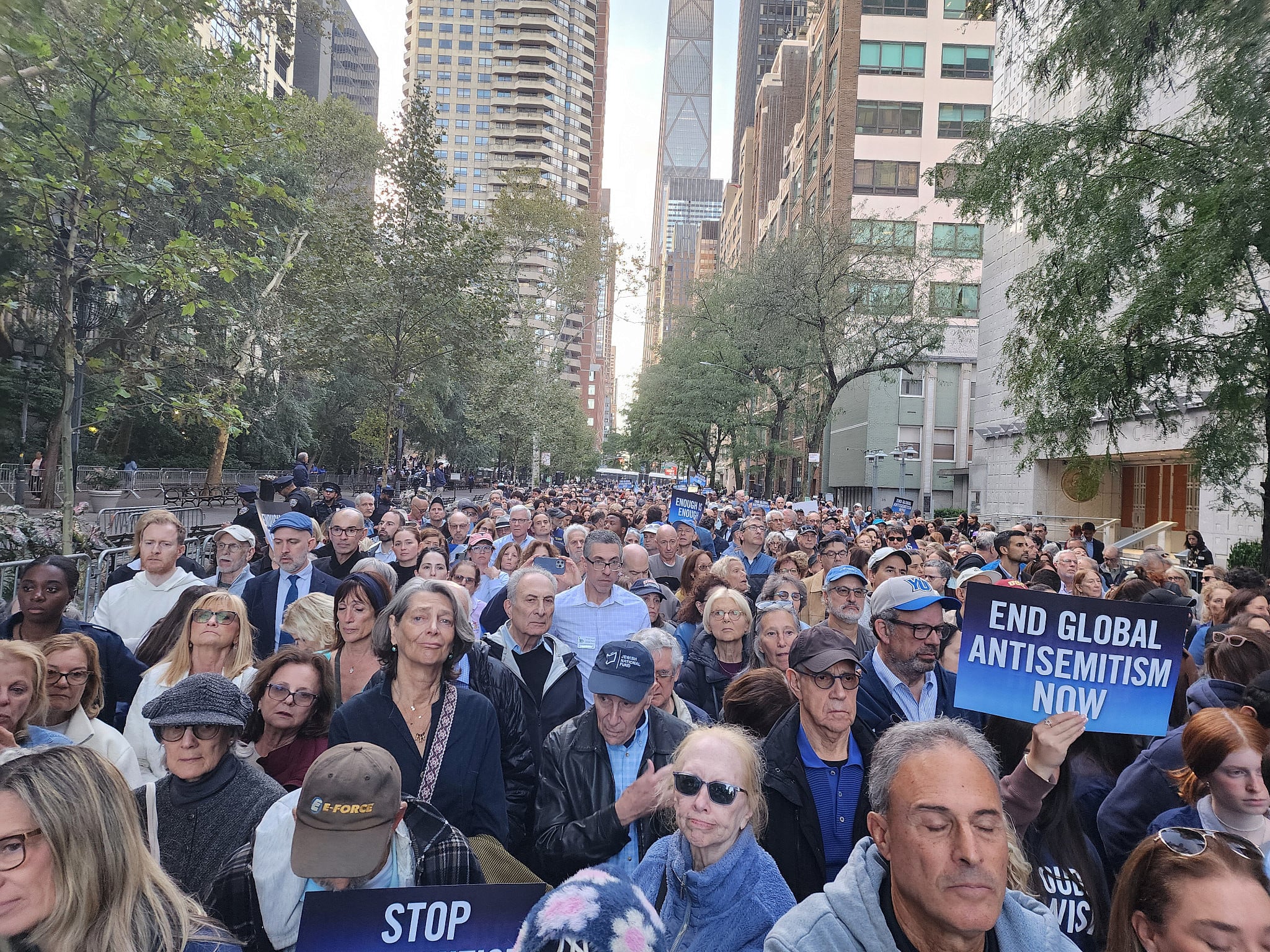
A block from the United Nations headquarters, thousands of New Yorkers packed Dag Hammarskjöld Plaza on Wednesday night for the “Tell World Leaders: No More Excuses” Rally Against Antisemitism. Among speeches demanding accountability, one moment silenced the crowd: a young Jewish survivor of the Nova music festival massacre stood beside the Bedouin Muslim man who saved his life.
“In a few hours that morning, I saw the worst of humanity and the best,” said Shalev Biton, 27. “The best is standing right here next to me.”
Next to him stood Youssef Ziadna, 52, a Bedouin Israeli Muslim from Rahat, the largest Arab city in Israel. He is a father of six who has worked in agriculture for 30 years. Speaking in Hebrew, with Biton translating line by line for the crowd, the two men told their story together.
“The longest moment of my life”
Biton, who grew up in northern Israel in a Jewish family of Moroccan descent, went to the Nova festival on October 7, 2023, to dance with his friends. The party became the site of the deadliest massacre in Israel’s history, and the deadliest attack on a music event anywhere in the world, with 364 people murdered.
“If you can imagine, my friends and I were the lucky ones,” Biton said. “We ran away through endless, endless fields while Hamas terrorists were chasing us, trying to murder and kidnap us.”
That morning, Ziadna was at the farm where he works. At 6:30 a.m., he heard rockets launched toward Israel. “Unfortunately, we are kind of used to these missiles,” he said, “but that morning, that was something extremely different.”
Messages and videos soon confirmed that Hamas terrorists had infiltrated Israel. Ziadna was on the farm with 24 Thai agricultural workers. He gathered them and told them they needed to protect themselves.
After hours of running, Biton and his friends reached the farm and slipped inside. Moments later, a voice behind him demanded, “Who are you? What are you doing here?”
“I froze,” Biton recalled. “I heard Hebrew with an Arabic accent, and to be honest with you, I was afraid, afraid that maybe this man is a terrorist. That was the longest moment of my life.”
Ziadna had approached from behind and saw a young man sitting down, trying to drink water. Then he noticed something that told him everything he needed to know.
“I could see that he has earrings on his ear,” Ziadna said, drawing laughter from the crowd. “So I told myself, there is no chance that Hamas terrorists wear earrings. This guy is one of us.”
“Where are the Jews?”
Ziadna hid the festivalgoers for hours. Then he came to their hiding place with a warning: Hamas terrorists were approaching on a motorcycle.
Biton and his friends crawled beneath a building. From there, they heard shouting in Arabic, and one sentence cut through: “Ayna al-Yahud?” Where are the Jews?
“Like in a scene that reminds us of the Holocaust,” Biton said, “I just began praying, saying Shema Yisrael as strong as I could.”
At the gate, one terrorist jumped off the motorcycle and began shoving it, searching for a way in. Ziadna had locked every gate that morning, but the man was persistent.
“I told myself, if this terrorist comes inside the farm, he will kill all of us,” Ziadna said. “We were 33 people inside.”
He made a decision: he would go out and talk to them.
About 40 meters and a tractor separated him from the terrorist. Ziadna spoke to him in Arabic: How can I help you? The terrorist demanded to know who he was. “I’m a Bedouin from Rahat, I work here,” he answered.
The terrorist ordered him to open the gate. Ziadna said he had no keys. They were in his pocket.
Then came the question he says was the hardest moment of all: Do you have Jews? Bring out the Jews.
“I was so afraid I could not stand on my legs,” Ziadna said. “But I did not run. If I ran, he would understand that I had people inside.”
“I told him, ‘There are no Jews here. I’m alone. Leave me, I have small children at home.'”
The exchange lasted about seven minutes. Then the terrorist got back on the motorcycle and drove away.
With that act of courage, Ziadna saved 33 lives: the Nova survivors, the 24 Thai workers, and his own. Two years later, President Isaac Herzog awarded him the Medal for Civilian Heroism.
“It is written in his tradition, it is written in my tradition”
Since that day, the two men have traveled the world together sharing their story. “And Shalev,” Ziadna noted with a smile, “is still with his earrings.”
For Biton, the lesson is simple. “That day taught us how fragile life is and how much we need to appreciate the gift we got,” he said. “Be a good person to the people around you. Show love, not hate. Show compassion, not cold-heartedness. If we will show more love, like what Youssef did, our world will be a better place for every person of every age, every religion, in every country.”
The two closed with a teaching found in both their faiths. Ziadna recited it from the Quran in Arabic, and Biton answered in Hebrew from the Talmud: Kol ha-mekayem nefesh achat, k’ilu kiyem olam malei. Whoever saves one life saves an entire world.
“It is written in his tradition, it is written in my tradition,” Biton said. “On October 7, Youssef lived it.”
“A true hero in our time”
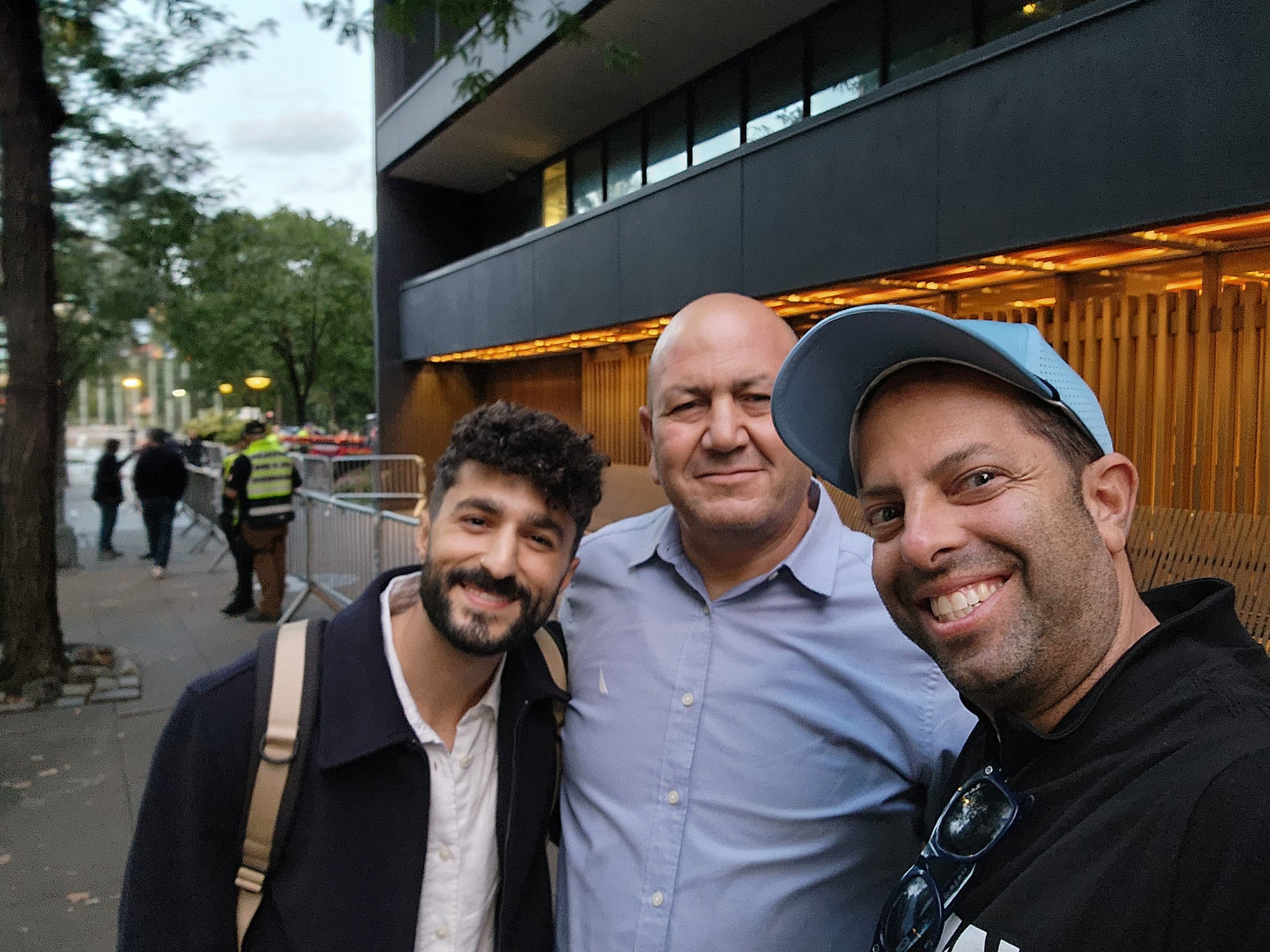
I first met Shalev Biton two years ago, when I was staffing a Taglit-Birthright Israel trip. His story stayed with me. But seeing him on stage beside the man who saved his life, and the lives of countless others, was something else entirely. It was deeply emotional and powerful to witness. Youssef Ziadna is a true hero of our time.
Courtesy of Aaron Herman
As I listened to them tell the story together, one question kept going through my mind: How does one person decide to step up and save others, knowing it could cost him his own life?
It speaks to more than courage. It reflects a profound commitment to humanity, a recognition that every life in this world is precious and unique, and deserves to be protected from hate. That is what made this testimony so special. It brought to the forefront a truth we cannot afford to forget: the fight against hate and terror is a human issue, not only a Jewish one. And a single act can change the lives of many and shape countless narratives for years to come.
Courtesy of Aaron Herman
A battle for the truth
The rally, held in front of the United Nations, called on world leaders to take concrete action against antisemitism. More than a hundred partner organizations and interfaith allies joined the effort, including the UJA Federation of NY, Jewish Community Relations Council of New York, ADL and ADL New York/New Jersey, and AJC. Their message was that the community wants more than condemnations after tragedies. It wants action plans, security funding and accountability to stop the rampant spread of antisemitism and its deadly consequences.
IMPACT, a New York-based nonprofit that organizes and mobilizes communities online and on the ground, was among the partners, helping bring people out to the rally. The turnout reflected a simple truth: there are times when people need to show up. Major Jewish organizations, start-ups and allies from a wide range of backgrounds stood together and demonstrated that when communities organize, they can truly make an impact.
The testimony carried weight far beyond the plaza. Nearly three years after October 7, a battle for the truth is being waged online, where the atrocities of that day are minimized, distorted and denied. Against that tide, seeing the people behind the miracles of October 7, a Jewish survivor and the Muslim man who risked his life for him, cuts through in a way no statistic can. These stories need to be heard, and the people who lived them need to be seen.
In New York, hatred of Jews and Israel has risen sharply. The rally brought together the Jewish community and its allies and showed what becomes possible when people stand united. They can fight back, take back the narrative, and make a real difference in their communities.
Moments like this are needed now more than ever. The truth has to break through barriers. Ties with allies have to deepen. Young people need to learn civic responsibility, and people of every age need to understand the power of speaking up, on social media and on the ground.
For many in the crowd, the night offered something just as vital: the realization that they are not alone. By showing up and lending their voices and their physical presence, they stood up to hate and showed the resilience that Biton and Ziadna embody.
As Israel and Jewish communities worldwide prepare to mark three years since the massacre, that may be the rally’s most lasting answer to hatred: unity, resilience and hope, delivered steps from the United Nations.
“Thank you, Youssef, my guardian angel,” Biton said, “and thank you for listening.”