

Nuremberg, Invisible Court, Blurring Days
Eighty years after the opening of the Nuremberg Trial, it is remembered as the birthplace of modern international criminal law. Crimes against humanity were named; responsibility was asserted beyond borders. Yet, Nuremberg no longer unsettles. It reassures. Like many foundational moments, it has been transformed into heritage rather than vigilance.
A similar silence surrounds the eightieth anniversaries of Hiroshima and Nagasaki. In Japan, the consequences of the atomic bombings are still reported daily; elsewhere, they are absorbed into narratives of necessity and closure. What is striking is not ignorance, but normalization, commonplace. Law remembers, but no longer judges.
This reflection is not a rejection of international law, but a consideration of its anthropological limits. What Nuremberg created – and what it failed to create – continues to shape our present.
Norms Without Architecture
Nuremberg, and its Asian counterpart in Tokyo, produced something unprecedented: the juridical naming of crimes that offend humanity as such. Yet they did so without constructing a durable global architecture capable of absorbing historical shocks. Law was articulated; sovereignty remained hierarchical. Norms were universal in language, but selective in application.
The post-war order quickly crystallized into a system of superpowers governing the world through blocs, protectorates, and spheres of influence. Colonial logic was not abolished. It was transformed. Peoples were no longer conquered outright, but administered, contained, displaced, or instrumentalized. They were treated as populations or “tribes,” not as full juridical subjects.
The Tokyo Trial made this asymmetry explicit. Emperor Hirohito was excluded from prosecution in the name of stability. Unit 731, responsible for systematic human experimentation, received de facto immunity in exchange for scientific data. Hiroshima and Nagasaki were never subjected to juridical scrutiny. From the outset, international justice carried a double silence – European and Asian, moral and political.
The Question of Existence
Contemporary jurists such as Philippe Sands have insisted on a crucial point: what is not recognized as existing cannot truly enter judgment. Law judges subjects, not abstractions. When peoples are treated as variables, blocs, or managed populations, they remain visible yet juridically fragile. Without zehut/זהות (זה הוא = “this is, it is (here) – recognized juridical identity – judgment becomes procedural rather than transformative.
This helps explain why genocide can be named yet endlessly debated, acknowledged yet insufficiently judged. The crime exists; the subject remains contested.
The Displaced Voice: Avrom Sutzkever
One moment at Nuremberg exposes this fracture with particular clarity.
Avrom Sutzkever – poet, partisan, survivor of the Vilna Ghetto – was called to testify. He had risked his life to save Yiddish manuscripts, fragments of a civilization targeted for annihilation. He asked to testify in Yiddish.
He was refused.
Instead, he spoke in Russian – the language of one of the superpowers, one of the four judging parties. The tribunal accepted – at least heard his testimony, but not his voice. The Holocaust was judged, yet its linguistic body was displaced.
This was not a technical detail. It revealed a deeper truth: what is not allowed to exist fully – linguistically, culturally, ontologically – cannot truly enter judgment. Nuremberg recognized the crime, but fractured its living articulation.
Europe After Judgment: A Journey Without Listening
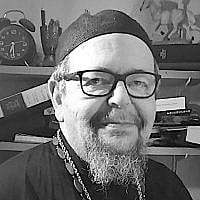
In 1992, fifty years after the Wannsee Conference, I was invited – as a Hebrew-Christian cleric – to participate in a radio project retracing the moral geography of post-Nuremberg Europe. The journey did take place: from Nuremberg eastward through Vienna, Prague, Bratislava, Budapest, Warsaw, Kraków, Auschwitz-Birkenau, Przemyśl, Uzhhorod, Zhytomyr, Kyiv, Minsk, Brest-Litovsk – and back to the West.
What did not take place was listening.
The broadcasts were quietly abandoned. The journey was reframed as a gesture of gratitude: enjoy the trip, whatever the subject. Knowledge was gathered; circulation was refused.
Along the way, the same pattern appeared repeatedly. Václav Havel spoke of truth as something that survives power, but rarely governs it. In Subcarpathia, Jesuits rebuilt intellectual and spiritual life amid overlapping identities. A rabbi was teaching Tanakh and Talmud to young adult women – in Yiddish, Hebrew, and Ukrainian – attempting to repair what history had torn apart in his opinion. History had been so crude that who was able to certify that they belonged to Jewish families converted to Christendom in the course of embattled ages. In Minsk, an Orthodox metropolitan remained silent for nearly an hour before confessing, in private, that he had been born Jewish and could never say so publicly.
Silence was not ignorance. It was survival.
The journey took place. The listening did not.
Fragmentation After 1989
After 1945, Europe was frozen by the Cold War settlement. After 1989, it fragmented again. The collapse of communism did not restore a coherent continental order; it exposed unresolved layers of memory, grievance, and identity. Yugoslavia disintegrated violently. New states emerged without shared historical narratives. Borders multiplied faster than law.
Rabbi Léon Yehudah Ashkenazi (Manitou) described this period as a hemorrhagic process: the long, irreversible departure of Jews from the European continent. This was not only fear or antisemitism, but the collapse of Europe as a juridical-civilizational host. At the same time, Soviet Jews began their liberation – an exit from one collapsing imperial order into another uncertain horizon.
The conflicts and mass migrations we witness today are not anomalies. They are the consequence of norms without architecture, law without binding force, and responsibility without durable embodiment.
The In-Between: A Blurring World
What emerges from this trajectory is neither pure collapse nor stable order, but an in-between condition – a blurring of categories that once structured judgment. Law and power overlap without distinction; victims and perpetrators circulate in the same moral language; responsibility dissolves into procedures, statistics, and narratives. Nothing fully disappears, yet nothing fully holds.
This blurring is more destabilizing than open conflict. It erodes discernment itself. Judgment becomes hesitant, delayed, or displaced, while action accelerates. We live amid references without contours, norms without edges, and commemorations without binding force. The purpose of this reflection is not to denounce this condition, but to name it – because what remains unnamed cannot be judged, and what cannot be judged cannot be restrained.
Freedom, Cain, and Responsibility
At this point, two voices from the twentieth century help clarify why Cain remains so vividly present — not as despair, but as vigilance.
The Swiss cardinal Hans Urs von Balthasar insisted that history never neutralizes freedom: “As long as history endures, freedom remains capable of refusal; therefore judgment is never redundant.[Solange Geschichte dauert, bleibt die Freiheit fähig zur Verweigerung; darum wird das Gericht niemals überflüssig]” Cain persists because freedom persists.
The Russian Orthodox priest and theologian Pavel Florensky, writing from within the persecution and later killed in the camps, formulated this with even greater austerity: “Evil is not abolished by history; it is unmasked by it.[Зло не уничтожается историей; оно ею разоблачается]” Cain is not erased by progress, nor eliminated by tribunals. He is exposed – and with him, the inescapable demand to stand before truth.
Judgment, in this sense, is not a mechanism of closure, but a condition of responsibility.
Acts 15, Nicaea, and the Thinning of Judgment
This crisis is not only political; it is also theological, which is hardly understood in daily life, but it impacts our ways of considering spiritual development. Acts 15, the early Jerusalem council in 49-52 (?), universalized the growth of Christian faith while detaching it from full juridical incorporation. Gentiles were included, but without a formative court or covenantal legal structure. This decision was necessary for expansion, but it had long-term consequences that became viable over some centuries.
The Council of Nicaea fixed some of the doctrine in 325, but it did not recreate a living juridical body capable of sustaining responsibility. Doctrine endured; juridical discipline thinned. as the Indivisible Church separated from the Church of the Circumcision. It disappeared, followed by the reciprocal anathema between Jewishness and Christian communities.
For this reason, the contemporary celebration of Nicaea’s 1700th anniversary appears deeply ambiguous. The failure lies not in these moments themselves, but in the way they are commemorated without embodiment. Like Nuremberg, Nicaea survives as a major historical reference rather than as operative structure. All the colloque on the Council of Nicaea in 325 underscore that the formulas adopted are accepted in faith. They are more difficult to be clear in each language of the diversified congregations.
The Invisible Court
Yet, this reflection is not negative, nor nihilistic. It traces invariants across millennia.
The Court does exist. In Christian understanding, the Judge is the Lamb – Jesus Messiah – who comes back to judge the living and the dead. But this Judge is invisible and non-coercive. He is not to intervene as human powers do. History is entrusted to human responsibility under restraint, not control.
This is Europe’s specific difficulty. Formed under the gaze of an invisible Judge, it has repeatedly sought either to replace Him with institutions or to forget judgment altogether. The result is a juridical culture oscillating between domination and abdication, between moral inflation and practical paralysis.
The Trial That Never Ended
Nuremberg named crimes, but could not regenerate responsibility. Sutzkever testified, but his language was excluded. A journey across Europe occurred, but listening was withheld. We can feel it in the way the different communities live in the same Vilnius, Wilno, Vilno and still are not able to meet and have a real dialogue as most inhabitants and refugees co-exist in artificial forms of alterity that trace back to the broken structures of Europe.
This is not failure in the moral sense; it is the recurrence of an invariant. When law, identity, and responsibility drift apart, judgment becomes ceremonial and power reasserts itself in other forms.
In that sense, the Nuremberg Trial never ended. Is it “on hold”? It continues wherever judgment is invoked without allowing existence to speak – and wherever freedom is exercised without the patience to bear responsibility under an invisible gaze.