What I want my non-Jewish friends to see this October 7
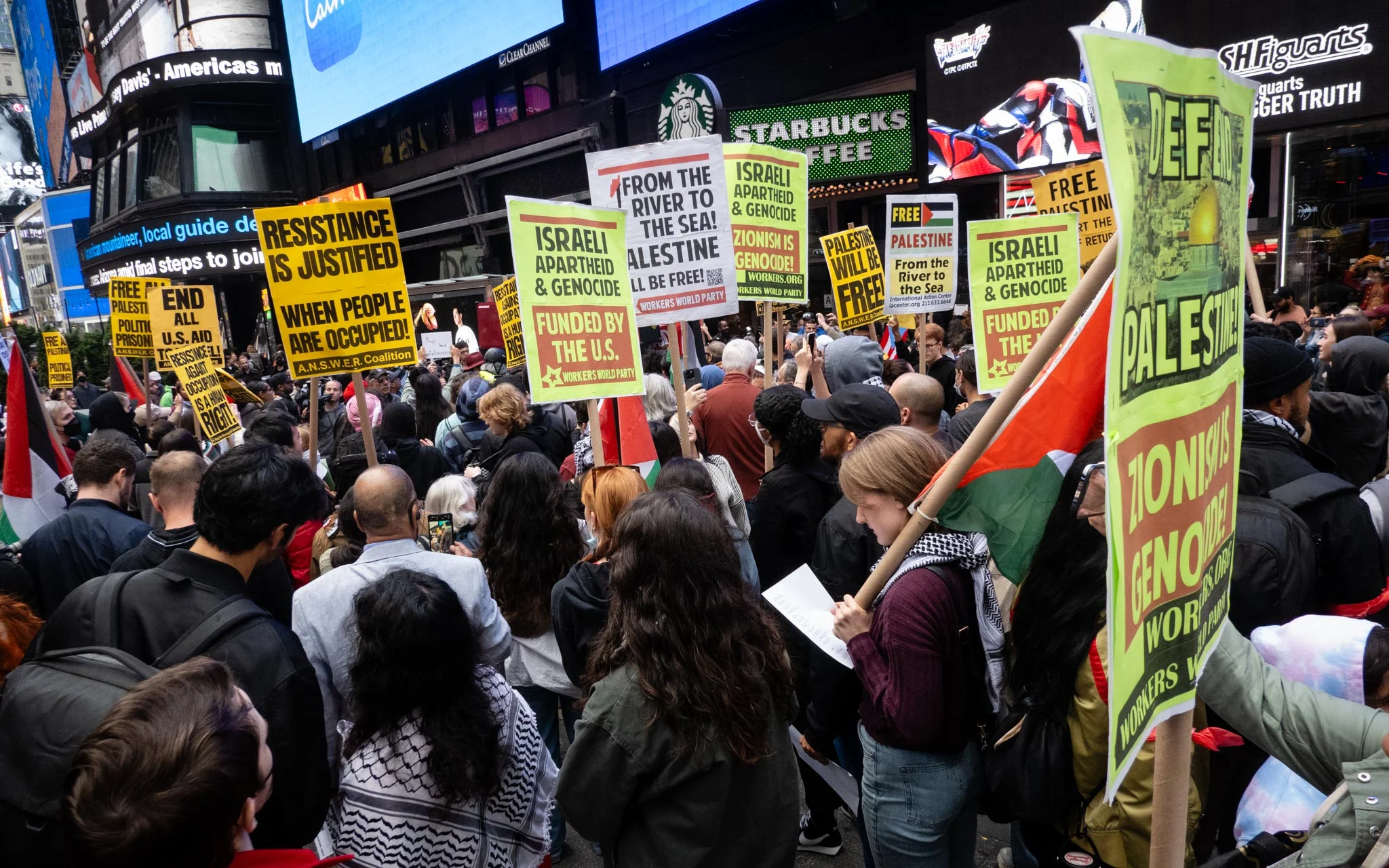
There is a word increasingly spoken in America as though its meaning should be self-evident: Zionist. It is hurled as an accusation, appears on protest signs, on college campuses and across social media. It is often used to describe people as uniquely malevolent, inherently racist or somehow beyond the bounds of acceptable society. For many non-Jews, this may sound like a political argument about Israel. However, most Jews hear something else, and I think it is important that our non-Jewish friends understand why.
At its core, Zionism is the belief that the Jewish people have a right to national self-determination in their ancestral homeland. That is not a statement about Benjamin Netanyahu. It is not an endorsement of a particular Israeli government, settlement policy or military action. Zionism existed long before any of them. It is simply the proposition that Jews – one of the world’s oldest peoples – are entitled to the same basic political right claimed by countless other peoples, the right to govern themselves in their ancestral homeland.
One can vigorously criticize Israel while accepting that proposition. Israelis themselves do it every day. One can oppose particular Israeli governments, protest the conduct of the war in Gaza, advocate for Palestinian self-determination, and still believe that the Jewish people have a right to a state. None of those positions requires believing that the Jewish state should cease to exist.
That distinction matters because increasingly the argument is no longer that Israel behaves badly. It is that Israel’s very existence is illegitimate. Ask yourself how extraordinary that standard is. There are nearly 200 countries in the world. Many were created through war, partition, population movement and historical trauma. Many have borders, governments and histories deserving serious criticism. Yet, the movement for Jewish self-determination is the only national movement whose very premise is routinely described as racist.
As much as people criticize Russia, China, North Korea, and many Muslim-majority countries, no one ends their argument by opining, “and that’s why it shouldn’t exist!” No one suggests that the Islamic character of a country means Muslims everywhere must answer for those governments. Nor should they. Yet Jews in London, New York, San Francisco or Sydney are increasingly expected to explain themselves because Israel exists. That should make people uncomfortable.
The International Holocaust Remembrance Alliance’s working definition of antisemitism makes precisely this distinction. It explicitly says that criticism of Israel comparable to criticism directed at any other country is not antisemitic. But it also identifies denying Jews the right to self-determination, including describing the very existence of Israel as a racist enterprise, as a potential manifestation of antisemitism.
That does not mean every anti-Zionist is consciously an antisemite. Motives are complicated, and words mean different things to different people. But intentions are not the only thing that matters. Ideas have histories and consequences.
Which brings me to October 7, 2023. On that horrific day, Hamas and other armed groups crossed into Israel and murdered approximately 1,200 Israelis and foreign nationals. Children were killed. Women were raped. People were murdered at a music festival and inside their homes. Approximately 250 people were taken hostage. Three years later, demonstrations are again being organized around the world on or around October 7, including in the United States in support of what occurred on that horrific day.
Let me be precise about what troubles me. Choosing the anniversary of the worst massacre of Jews since the Holocaust to glorify Hamas, celebrate “resistance,” justify what happened that morning or treat the massacre as an understandable act of liberation crosses a profoundly different line.
Imagine demonstrators choosing September 11 to celebrate the people who flew airplanes into the World Trade Center while insisting their protest was merely a critique of American foreign policy. We would understand the difference immediately. October 7 deserves the same moral clarity.
There is something especially chilling about watching Jews mourn murdered families while, sometimes only blocks away, people celebrate the ideology of those responsible. That is not solidarity with Palestinians. It is not criticism of Netanyahu. And it is not a peace movement. It is pure hate. When the murder of Jews becomes something to rationalize, romanticize or celebrate, we should be willing to state exactly what is – antisemitism.
For centuries, antisemitism has been remarkably adaptable. The accusation changes while the object remains the same. Jews were once hated for being stateless outsiders. Today they can be hated for having a state. They were accused of refusing to assimilate, and then of infiltrating societies too successfully. They were condemned as rootless cosmopolitans, and now can be condemned as colonialists for returning to the land from which Jewish history, religion and peoplehood emerged. The vocabulary changes. The Jew remains the problem.
That is why what is happening now should concern people who are not Jewish every bit as much as those who are. History teaches something else about antisemitism that is too often forgotten: it rarely ends well for the societies that tolerate it. Antisemitism is a warning light. Societies that become comfortable dividing citizens into worthy and unworthy groups, tolerating conspiracy theories, excusing political violence or deciding that hatred is acceptable when directed toward an unpopular minority do not confine those habits to Jews. The poison spreads.
This is why I am asking my non-Jewish friends to pay attention. You do not need to support every decision Israel makes. I certainly do not. You do not need to choose between caring about Israeli children and Palestinian children. A decent world requires us to care about both. And you do not have to become a scholar of the Middle East.
But you should notice when criticism of a government mutates into hostility toward a people. Notice when “Israeli” becomes “Zionist,” and “Zionist” becomes a socially acceptable substitute for “Jew.” Notice when synagogues, Jewish businesses or Jewish students become targets of anger over decisions made by a government thousands of miles away. And notice what happens on October 7.
If people cannot allow Jews even the anniversary of their massacre without turning the perpetrators into heroes and the victims into villains, the issue before us is no longer simply the Israeli-Palestinian conflict. It is something much older.
The world has seen it before. We should know enough by now to recognize it.