October 7 Did Not Create Antisemitism.
October 7 Did Not Create Antisemitism. It Released It from Embarrassment.
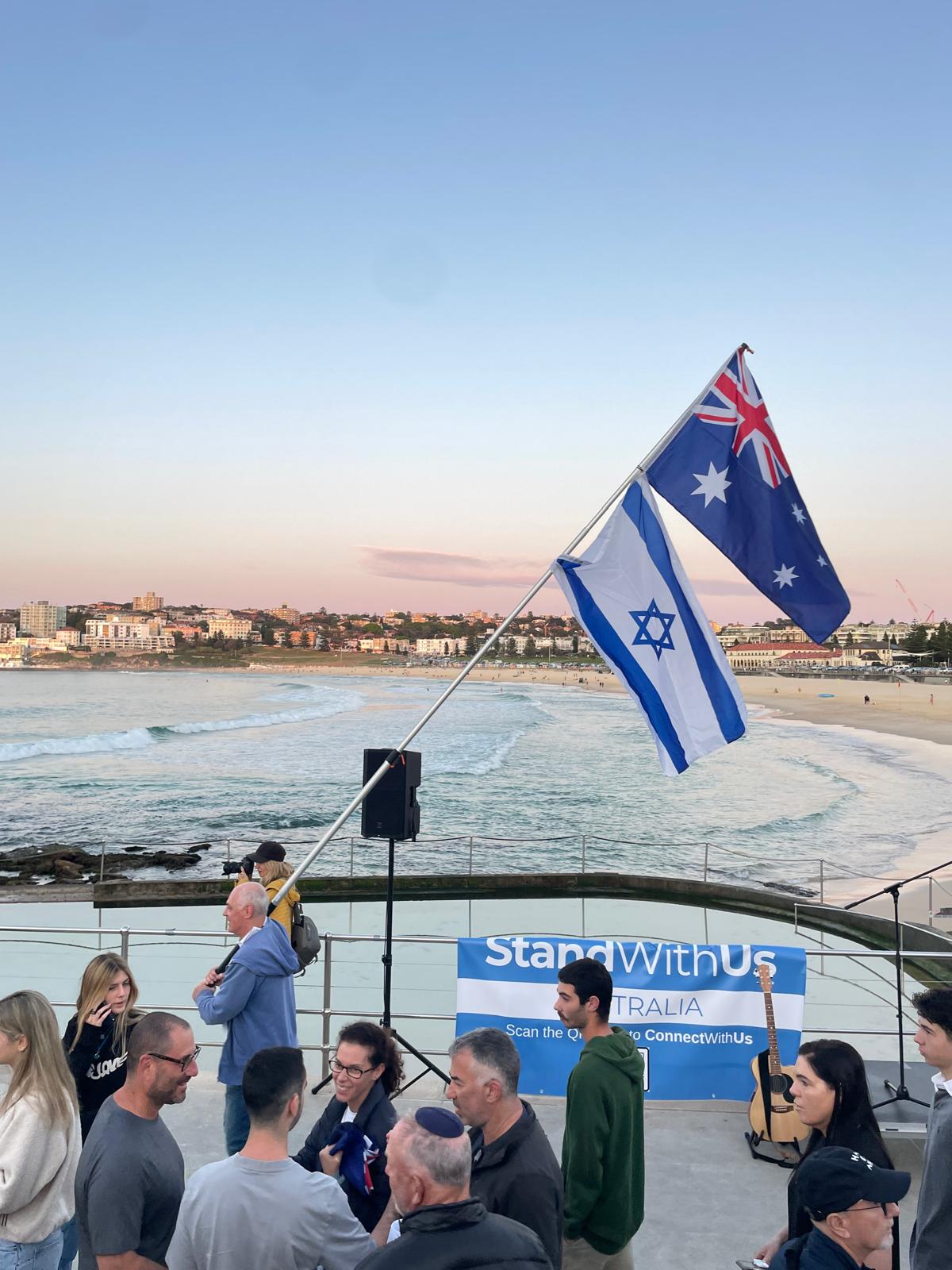
At precisely 6.29am on October 7, we will gather again for StandWithUs Australia’s third annual dawn commemoration of the October 7 massacre.
We first gathered at Bondi Beach in 2024, one year after Hamas terrorists crossed into Israel and began their campaign of murder, rape, torture, and abduction. We gathered again last year, and we will do so once more this October.
The time matters. There was a world before 6.29am on October 7, 2023, and there is the world Jewish people have lived in since. As we prepare for this year’s commemoration, I keep returning to how much has changed—and how much has not.
On paper, Australia has done a great deal. There have been vigils, bipartisan statements, and repeated assurances that antisemitism has no place here. The Commonwealth appointed a Special Envoy to Combat Antisemitism, adopted her national plan, established a National Student Ombudsman and an Antisemitism Education Taskforce, and strengthened laws dealing with hate and extremism. After the terrorist attack at a Chanukah celebration at Bondi Beach in December 2025, a Royal Commission on Antisemitism and Social Cohesion was established.
These measures are welcome. But they sit uneasily beside the day-to-day experience of Jewish Australians.
What has changed most is what people are now prepared to say—and what our institutions are prepared to tolerate.
Old Hatred, New Language
Israel, like every democracy, can and should be criticised. But criticism of government policy is one thing. Describing the Jewish state as uniquely evil, denying its right to exist, or using “Zionist” as a term of abuse is something else.
Jewish Australians should not have to condemn Israel before being permitted to participate in public conversation, as though our place in Australian life depends on passing someone else’s political test.
Much of what we hear today is not new. It has simply been repackaged. Talk of Jewish power becomes talk of a sinister “Zionist lobby”. The blood libel reappears as the claim that Israel deliberately murders children. Questions about Jewish loyalty return as demands that Jews distance themselves from Israel.
Replace “Jew” with “Zionist” and language that would once have been recognised as prejudice is suddenly defended as political commentary.
This rhetoric has entered public life. Calls for intifada and the glorification of “resistance” are heard on our streets. Accusations of genocide and apartheid are often presented in the media and Parliament as settled facts, while the hostages and Hamas’s stated intentions receive little attention.
A recent NSW Supreme Court judgment said it would not accept that “F*** Israel” graffiti was antisemitic and rejected the International Holocaust Remembrance Alliance working definition. Whatever the legal question before the court, Jewish Australians know what it feels like to see those words painted across cars and buildings in a neighbourhood known for its Jewish community.
Institutions Must Answer
The Royal Commission’s hearings on universities should have prompted a serious reckoning. Jewish students and staff spoke about Nazi salutes, being called “baby killers”, encounters with masked protesters and becoming afraid to attend their own campuses. University leaders acknowledged that Jewish students and staff had not been adequately protected.
Yet StandWithUs Australia is now dealing with two of the most serious university incidents we have encountered in the past three years. I cannot discuss the details while those cases are being addressed. For the students involved, however, these are not abstract debates about policy or definitions. They affect their safety, their education, and their ability to identify openly as Jewish or Zionist.
These incidents are happening after the hearings, the apologies, the rewritten policies, and the promises that lessons have been learned. That should trouble everyone.
The numbers tell the same story. In the decade before October 2023, Australia recorded an average of 342 antisemitic incidents each year. That number rose to 2,062 in the year after October 7 and remained at 1,654 the following year.
It is also worth remembering when this began. People were celebrating before Israel had responded and before Gaza could be offered as an explanation. Israeli families were still hiding. Bodies were still being recovered. Children were being dragged into captivity. Yet the excuses had already begun, and the victims were being blamed before they had been buried.
Then came Bondi Beach. Fifteen people were murdered while celebrating Chanukah in one of Australia’s most recognisable public places. After that, nobody could credibly dismiss antisemitism as merely offensive language or a problem happening somewhere else.
The Royal Commission has heard from hundreds of witnesses and received 20,000 submissions. Australia cannot say it did not know.
What October 7 Exposed
When we gather at dawn this October, we will remember those who were murdered, honour the survivors and stand with the families whose lives changed forever.
But commemoration must also demand honesty. October 7 did not create antisemitism. It released it from embarrassment. It exposed how quickly old prejudices could be revived, repackaged, and defended—and how readily institutions could fail to confront them.
Three years later, the question is whether Australia is prepared to face what October 7 exposed and make unacceptable again what it has allowed to become normal.
Michael Gencher is the Executive Director of StandWithUs Australia.