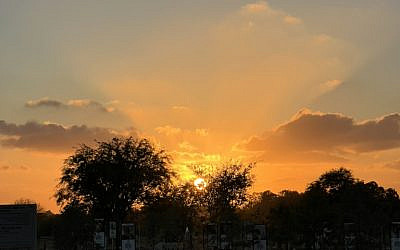
October 7th redefined my life as a Jewish American
Being a young Jewish adult in America, there’s an even greater responsibility to be proud of my roots and share stories that reflect my beliefs and identity
You bear witness. Your own eyes are your best eyes. Now, it’s your choice. What will you do with what you’ve seen?
A famous quote from Alexander Hamilton echoes in my mind as I walk through the atrocities of October 7th, 2023: “If you stand for nothing, what will you fall for?” I thought I needed to take action in some way, but I just don’t know what way.
Let’s backtrack to April 2023. The weather was warming up, and thoughts of summer were circulating throughout my brain. I had no summer plans, no internship, no travel plans, which was very unlike me. I had also never been outside the U.S., and the furthest I had traveled was to San Francisco.
After a typical day of classes, I had coffee with my mentor, who introduced me to the idea of an internship program that would allow me to live and work in Jerusalem for two months. I would end up doing this after my Birthright trip, which I got off the waitlist for. My mentor said, “You’re going to have the best summer of your life, guaranteed.” I was hesitant at first, but I was eventually sold. I went back to my dorm, called my mom, and said I was going to Israel some way or another. I think she just understood.
Two days before my departure with my Birthright group from Newark airport, I stood in New York City holding my freshly minted expedited passport. (My previous one was expiring the day I was due back from Israel and therefore wasn’t valid.) I was determined to make this journey to Israel under any circumstances.
That summer, I traveled across Israel with my Birthright group for 10 days, then joined the Onward Aish Jerusalem program and interned for the City of David, producing videos of their coolest tourist spots. One day, I’m in the Old City learning about the history of the Jews; the next, I’m on a farm with chickens. Only in Israel.
I was able to see the uniqueness of the country, from Mitzpe Ramon to Haifa, Tiberias to the Dead Sea, Masada to Tzfat, Tel Aviv to Jerusalem, and more. I had the best summer ever. I felt free, I had the most amazing Jewish friends, and I was working and traveling around Israel.
On August 6th, as my plane took off from Ben Gurion, I looked out the window to see the shining blue Mediterranean Sea and was overwhelmed with emotion.
I returned to the U.S. with a new mindset: to share the beauty of Israel. And where there’s a will, there’s a way. Within the first couple of weeks of my junior year of college, I scheduled a meeting with an academic advisor to pursue a second major in Journalism.
On the night of October 6th, a close friend I met in Israel came to visit me at Rutgers University, and we were reminiscing on pictures, videos, and memories we had during our time in Israel. In those moments, we didn’t know what was unfolding across the world, seven hours ahead.
I remember feeling frozen that week, doing whatever I could to help my community–whether it was donating to soldiers, being involved in my Jewish organizations on campus, or simply spending more time with my Jewish and Israeli friends.
October 7th was a catalyst for a lot of decisions to come in my life. I signed up for a seven-day trip to Poland–a trip I never imagined making, but a trip that felt important in the aftermath of 10/7, which has been likened to the Holocaust.
Reading excerpts of Anne Frank’s diary may suffice for an 8th grader, but not a 20-year-old hungry to learn.
Walking through Majdanek, Auschwitz–Birkenau, the death forests, and Jewish ghettos, my body felt numb. I couldn’t process my senses at the speed at which we were bearing witness to such atrocities. Every day of my trip in Poland, I was restless and wanted to leave, especially on the day someone threw diapers and rotten food from their apartment at my group as we huddled and sang songs.
However, one magical night–Shabbat in Krakow–ignited a thought: amid horror and incessant antisemitism, I’ll still choose to explore my roots and won’t let others take that experience from me.
In the summer of 2024, while studying abroad in Bologna, Italy, I was tasked with interviewing activists about their views on the Israel–Gaza war. Honestly, I hadn’t expected the topic to surface so prominently. Before arriving, I was immersed in my own college bubble at Rutgers, focused on what was happening in the U.S.—it never crossed my mind that I’d be writing about this conflict in Italy.
While working on my story, I asked a young activist, whom I will keep anonymous, if he empathized with Israeli suffering, as he pointed to how he empathized with the Palestinians who were suffering as a result of the war. He said, “Honestly, no. I don’t empathize with Israeli suffering because I know fascists to be a threat like the Nazis were when they invaded Italy in WWII.” To say my heart sank is an understatement. This is seared into my mind forever. This was the moment I realized how polarized the world was and how the polarization doesn’t just exist in the U.S., but globally. Suffering is still suffering, no matter who suffers.
I never expected to walk through the aftermath of October 7th. But when I had the opportunity to return to Israel and visit the South of Israel, I knew I couldn’t think too much about it. On a count of 3, 2, 1, it’s either a yes or a no. “Yes,” it was.
Nothing prepares you for how eerie being in the South of Israel feels. As an American, I had only seen the attacks through various forms of media and friends who resided in Israel. On the ground, the air felt light, but the energy felt intense and heavy.
When I visited Kibbutz Kissufim, I found myself asking why Israelis lived so close to Gaza. If you walk the streets of virtually any major college campus nowadays, it’s incredibly divided between Israel vs. Palestine. In reality, many people in Israel and Gaza had close relationships despite popular opinion.
I learned that Kissufim was spared from some of the devastation that other kibbutzim faced due to the precise communication skills of those who managed the community. This does not necessarily make the kibbutz “better” than any other kibbutz that got hit hard, but it underscores how quick action saved the lives of many.

Inside one home, the remnants of grenades, bullet holes, and damaged walls lie there as if the attack happened yesterday.

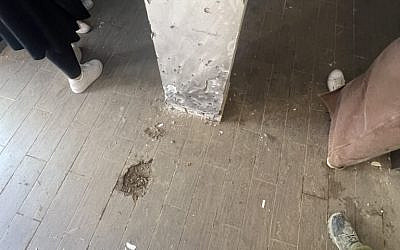
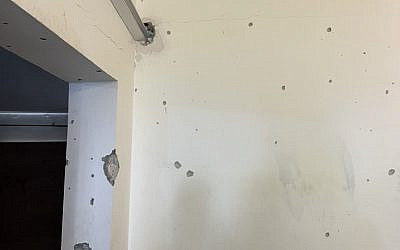
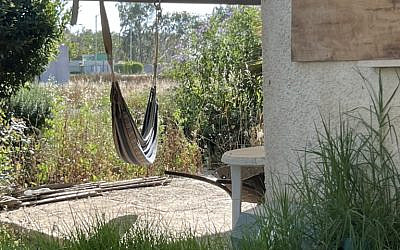
Despite the damage, I found the kibbutz beautiful. It was clear that the people here loved agriculture and gardening, as some survivors of the attacks were still taking care of what was left of what they had.
In Re’im, my group and I stood beside and walked into a bomb shelter next to a bus stop where Hersh Goldberg Polin ran for his life and was eventually taken hostage as he was fleeing the Nova festival. Before he was taken hostage, Hamas threw a grenade into the shelter. Our guide began to play audio from Hersh’s mom, Rachel, who spoke about him so dearly. Tears were streaming all around as the group was huddled in listening.
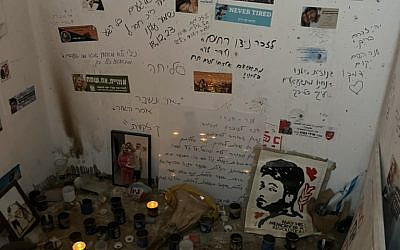
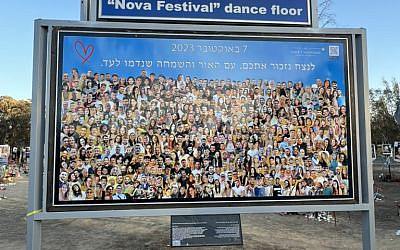
Stepping off the bus to visit the Nova festival site was anxiety-inducing, chilling, and uncomfortable. My mom’s name, Tamar, comes from the Hebrew word for “palm tree,” a symbol of strength, peace, and everlasting life. As I walked through the memorial, I searched for any Tamar I could find, reading their stories and sending them to her. One Tamar stood out: Tamar Samet. She was about my age, had curly hair, and green eyes like mine. Her memorial said she “followed her heart, letting it guide her forward. She walked her own path–barefoot, creative, and uniquely hers. She made everyone laugh with her sharp, witty humor, but at times was a quiet and gentle leader.”
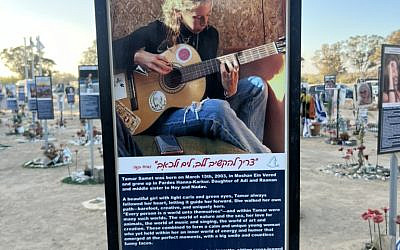
I related to her personality, and without personally knowing her, I felt inspired to start to bring out our shared traits even more.
As I read through all the Tamar’s and other lovely people’s memorials, a reminder set in. Who you are, how you treat people, and the legacy you leave will always be what is remembered.
 While you may not be a perfect person, being uniquely yourself is what makes you perfect. No one can be you the way you can.
It sparked the question of “who do I really want to be in this world?”, “Who am I?”, and “What do I want to stand for?” The answer: Nothing less than myself. I’m a storyteller. And I will always share what I see through my lens back home in America.
As a Jewish American, I will continue to share stories that matter. What will you share?