Old Women in Roladin
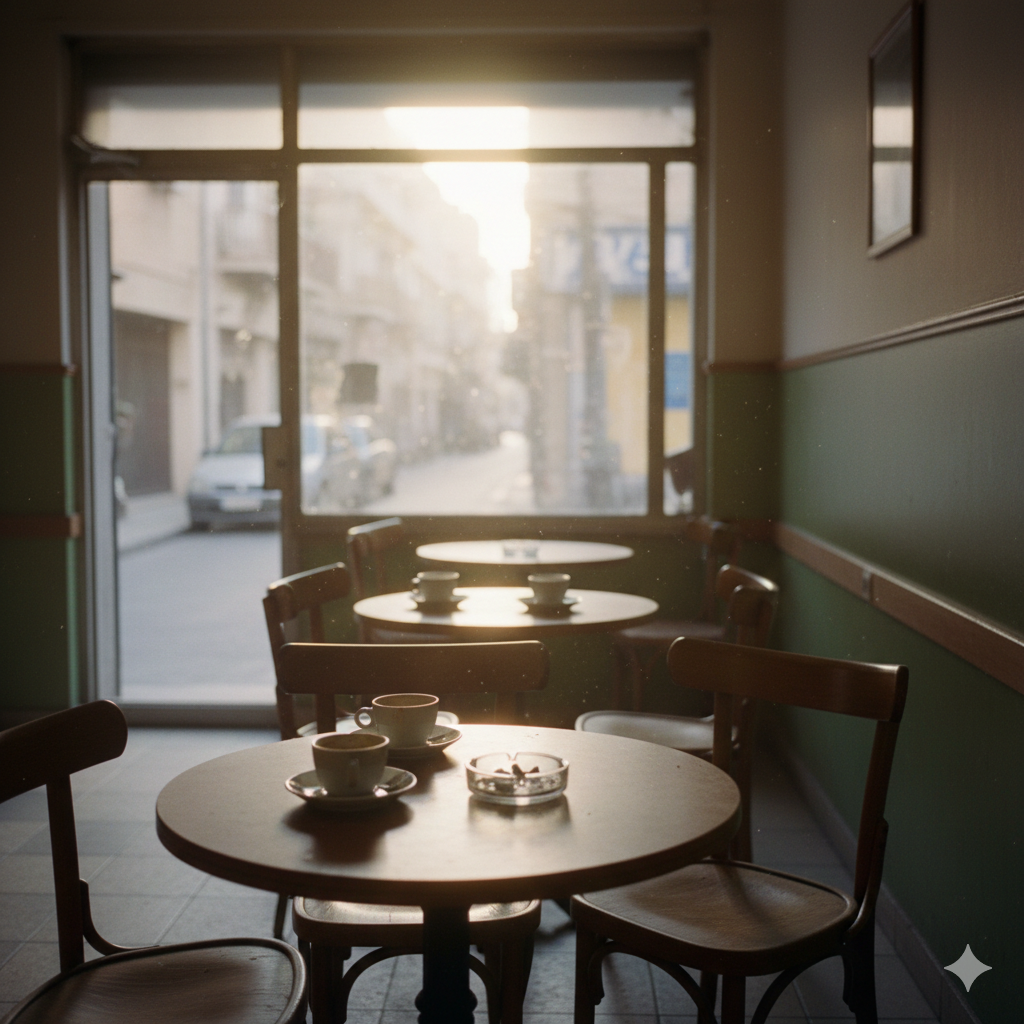
A grey-haired woman at the far end of the coffee shop is loudly complaining about someone.
“She told me to shut my mouth! Can you imagine? Every time she is here she tells me to shut my mouth! My voice is naturally loud and I like talking to people, I love people – it’s not my fault that my voice is loud!”
She seems to be talking to no one in particular, as if addressing the entire coffee shop. She looks to be in her mid-70s early-80s, has a grey bob, is wearing a bright flowered top, mascara and bright red lipstick.
I’ve seen her here before. Her name is Shula and she comes here almost every day and sits at the same table. I know because I too come here almost every day to write and also always sit at the same table. I would have loved to be somewhere else – some hip coffee shop in Tel Aviv, but Tel Aviv is a train ride away, so I’m stuck with this Roladin in the mall because it’s only a 10-minute walk from my house, which means I can make it home just in time when the school bus brings my kids back in the afternoon.
Roladin is not hip. This branch is mostly frequented by two or three gangs of old people (there are two assisted living facilities in the area) who come and sit at the same tables every day of the week and can spend hours here. Shula and whoever she’s complaining about are clearly from opposing gangs.
She points at another elderly woman who just brought her coffee and settled at a table some distance away with a couple of other old women. “Every time she sees me, before I even open my mouth she tells me to be quiet – can you imagine?”
Shula’s gang is not here now so she has no choice but to address the entire populace of the coffee shop. At first people try to ignore her. But she is so intent on engaging everyone’s attention and her voice is indeed so loud that people have no choice but to listen. Most giggle quietly in their fists (like me).
“How about you come at different times?” suggests a bearded man at a nearby table, leaning back in his seat with an amused expression. “One at nine am, the other at ten.”
“….People are allowed to talk if they want to! Why is she telling me to be quiet?”
“Which slot do you want?” the man continues, “Nine or ten?” The rest of us suppress our giggles and exchange glances.
“That woman over there told me what a nice shirt I have and where did I get it, so I had to answer her – would be rude not to reply, no? And the minute I open my mouth this one shhh’s me!”
A woman with a laptop talking on the phone turns around, covering the mic: “Sweetheart, can you be just a tiny bit quieter? I’m talking on the phone here.”
That doesn’t go through.
“My voice is naturally loud. I come here every day for a couple of hours so I don’t have to be alone all the time. I want to see people and I love people and people love me, it’s only this one who tells me to shut up.”
When “this one” gets up from her table to get a napkin, Shula leans toward her nemesis’s companion and asks: “How old is she?”
“I don’t know,” she replies quietly.
“I’m seventy-eight!” Shula declares proudly.
“She is older, I think,” the friend says quietly again.
“She is seventy-eight and a half!” pokes the bearded man.
* * *
One afternoon a few months later it is Shula’s birthday. I know that because she has a loud voice and she loves people and she comes to Roladin every day in order not to be alone and so do I. She is there with her gang this time (mostly women, and one quiet man, someone’s husband) and they all sing “happy birthday!” to her in a loud voice (multiple times) and yell “till 120!” also multiple times and then the barista girl brings her a cheesecake and they sing again.
I turn up the volume of my focus playlist and try to concentrate on the article I’m supposed to be finishing. But their loud voices break through this barrier.
They talk about where they buy their clothing and how they spend their time. They commiserate that it’s become hard for them to do embroidery because they can’t see where the needle is supposed to go very well anymore.
I manage to focus on work for a couple of minutes, and when I tune in again, they are reminiscing about their army service:
“I had profile 72 and low weight and they didn’t want to take me,” says one woman.
“I had profile 64 and was underweight too and they didn’t want to take me but then the health officer said it’s ok,” says Shula.
In the Israeli army, medical profiles below 82 indicate health issues that could limit your service options, and in the past, particularly for women, could disqualify you for service.
I’d been half-listening to them talk about embroidery and birthdays, but now I’m fully paying attention. These women who can’t see their embroidery needles anymore, who come here every day to avoid being alone – they’d all been eighteen and worried about their BMI being too low to carry a rifle.
I look at Shula’s large slouching figure in her loud flowery top, her red lipstick and mascara and purple-tinted grey bob, and try to imagine a young girl with long smooth dark hair, arguing with a health officer about her medical profile.
* * *
The last time I saw Shula was five or six years ago – before the war, maybe even before COVID. I don’t work in that Roladin anymore. My kids are older now, I have more freedom, and there’s a better café in town. Sometimes I even make it to Tel Aviv and those hip coffee shops I wanted so badly back then. But there’s no Shula at any of them. And sometimes I miss my daily routine of being irritated by her and her gang more than I expected.
I have no idea if Shula is even alive anymore.
The other day I happened to walk by the old place and saw one woman from her gang in a wheelchair, wearing fluffy pink pajamas, accompanied by her live-in carer.
In my head, I gave her long hair, an army uniform, and an M16.
________________________________________________
This piece was originally published on The Wrong Globe, a newsletter about language, culture, and living between worlds.