
Saying goodbye is hard: Simchat Torah and October 7th
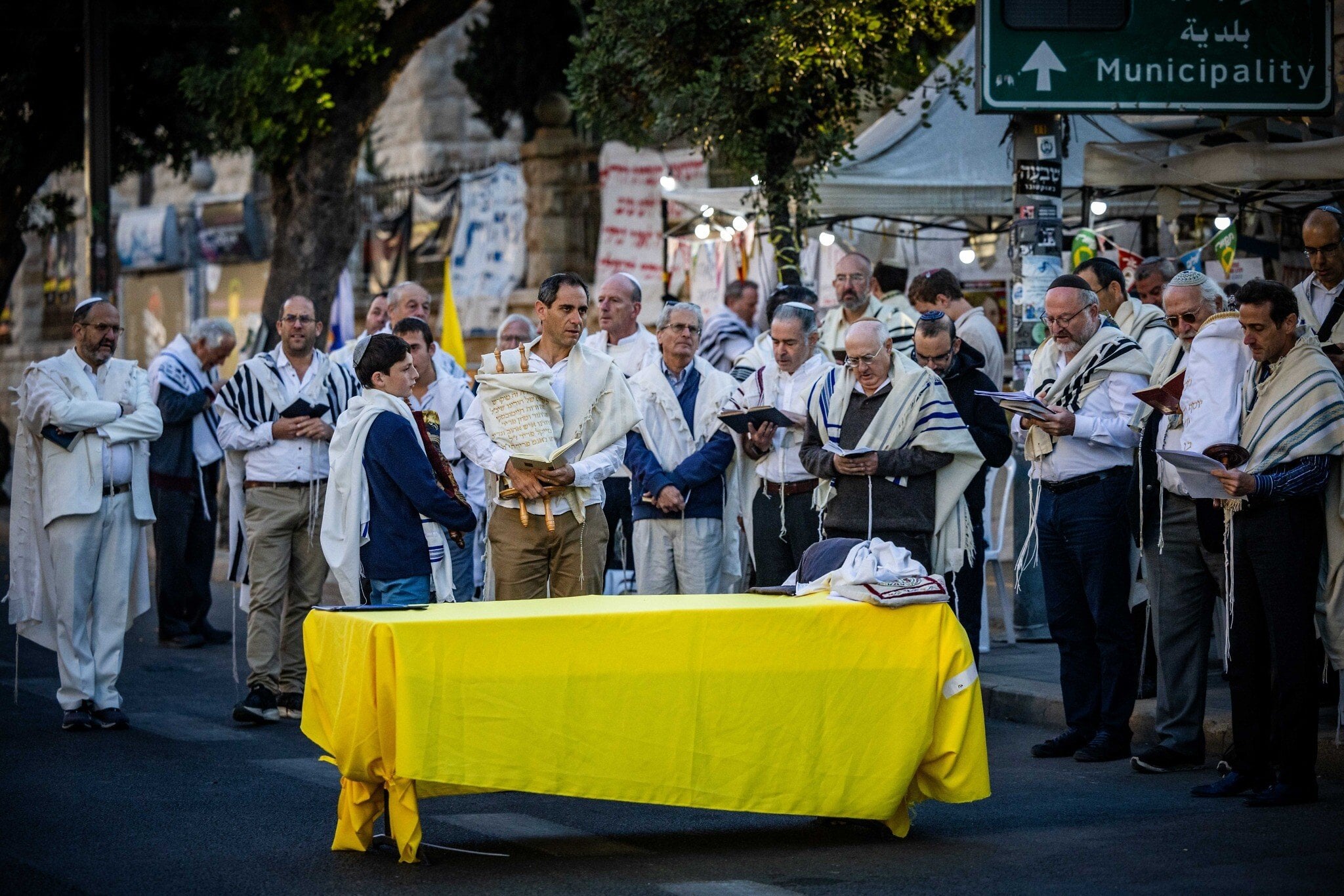
I’ve never really liked Simchat Torah. Aside from the fact that I’m not much of a dancer, I’ve always felt that it “steals the thunder” from Shemini Atzeret. At least in Israel, where they co-exist within the same day (less so outside of Israel, where Simchat Torah follows Shemini Atzeret), Shemini Atzeret — a biblical holiday — has been almost completely overwritten by Simchat Torah — a mere custom. Very few people actually refer to the day as “Shemini Atzeret.” To me, Simchat Torah seems like an unnecessary invention at best (we already have Shavuot to celebrate the Torah!), and “Bal Tosif” (a prohibited addition to the Torah) at worst. So I’d like to take a closer look at the nature of Shemini Atzeret, the character of Simchat Torah, and why the combination might not be as bad as I used to think.
So what exactly is Shemini Atzeret?
The Torah tells us, “On the eighth day you shall hold a solemn gathering (‘Atzeret’),” and Rashi (based on the Gemara in Sukkah 55b) explains the word “Atzeret”:
“עָצַרְתִּי אֶתְכֶם אֶצְלִי; כְּמֶלֶךְ שֶׁזִּמֵּן אֶת בָּנָיו לִסְעוּדָה לְכָךְ וְכָךְ יָמִים, כֵּיוָן שֶׁהִגִּיעַ זְמַנָּן לִפָּטֵר, אָמַר, בָּנַי בְּבַקָּשָׁה מִכֶּם עַכְּבוּ עִמִּי עוֹד יוֹם אֶחָד, קָשָׁה עָלַי פְּרֵדַתְכֶם:”
“I (God) keep you back with Me one day more. It is similar to the case of a king who invited his children to a banquet for a certain number of days. When the time arrived for them to take their departure he said, ‘Children, I beg of you, stay one day more with me; it is so hard for me to part with you!’”
We have celebrated with God — in shul, in our Sukkot, in the presence of the Divine — for a few weeks now, since the beginning of Tishrei, and when God is not yet ready to say goodbye, He beseeches us to stay for one more day, to say a proper farewell. So Shemini Atzeret is essentially a goodbye party. Now, a goodbye party is generally not in its nature a happy event. Goodbyes are rarely easy, and meaningful ones are almost always emotional.
So what did we — generations of Jews, over the course of hundreds of years — do to help us cope with this challenging reality? We transformed the day — we turned Shemini Atzeret into Simchat Torah. Instead of focusing on the impending separation and absence, we focus on what will remain — what will continue to bind us to God, even after we say goodbye. Instead of focusing on what will be sorely missed, we focus on the central core of our relationship with God — Torah, which is permanent and eternal.
“There is no lasting remnant but this Torah,” as we said in Selichot.
We take what could have been a sad goodbye party, and we transform it into a positive celebration of our everlasting, unbreakable bond with God.
As A.A. Milne once wrote (through the mouthpiece of Winnie-the-Pooh), we focus on how lucky we are to have something that makes saying goodbye so hard. That is Simchat Torah — not an erasing of Shemini Atzeret, but a refocusing of it.
I think that this perspective on Shemini Atzeret and Simchat Torah can help us navigate the renewed and unique complexity of the day in our times.
Because Simchat Torah is now also a terribly, overwhelmingly sad day of remembrance and echoes of goodbyes. It is so, so hard for us to part with you. But the only way through that, the only way forward, is to take that grief and focus on the underlying love. After all, as Paul Bettany once said, “What is grief, if not love, persevering?” We need not ignore or suppress the sadness we feel on this day over all that has been lost; we must not try to erase it so that we can dance unhindered. Rather, we refocus on what remains — the abundant love, the joyful memories, and the determination to forge ahead as a stronger, more unified people.
As we read in Kohelet on Chol HaMoed, “To everything there is a season, and a time for every purpose under heaven…a time to mourn, and a time to dance.” There are days when we are sad, even mournful. There are days when we are happy, singing and dancing. Sometimes — like Simchat Torah — those are the same day.
So this Simchat Torah.
Let’s sing,
Let’s cry,
And let’s dance.
Because on Shemini Atzeret and Simchat Torah, those are not a contradiction. They are two sides of the same coin — the sadness of goodbye and the celebration of everything that remains eternal.