On Yom Kippur, Man Plans and God Laughs

You can watch the transcribed audio-podcast version of this article here: Man Plans and God Laughs. Click to watch the video.
This year, I prayed not to be inscribed in the Book of Life.
There is no careful way to say that I am tired – as a Jew, as a woman – of surviving.
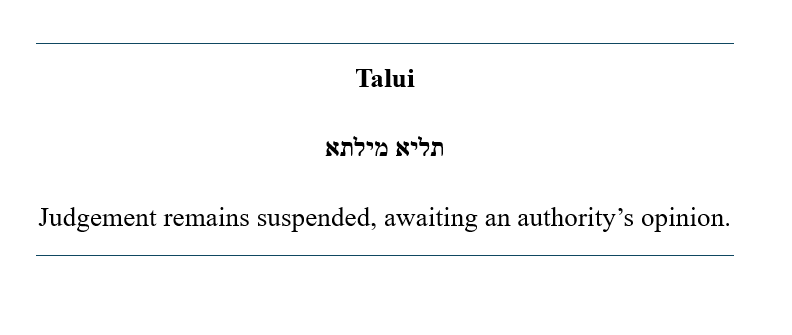
American Judaism has lost its soul, and I feel like I’m floating through the forgotten memory of an inheritance we stopped remembering. On Yom Kippur, when the congregation rose, I remained talui – suspended, awaiting judgment – trying to determine from within Jewish tradition whether pikuach nefesh has reached my limit. Is asking not to be inscribed in the Book of Life against the very machinery of Jewish survival?
The rabbis held questions open precisely so we could wrestle toward an answer, so here’s my question: why, dammit, does Judaism offer no escape without first demanding an argument?
What follows is my case file for the suspended judgment. I hope you’ll stay with me because a question held open needs witnesses: I am asking you to sit with me while I argue whether a Jew refusing to petition the Book of Life – for a year, this year, in a year like this one – is a betrayal of the tradition or the most Jewish prayer I’ve ever held.
Who am I? I want to untangle the memories that make up a consciousness, because I do not believe the end will make it all worthwhile by soothing a reader’s reaction to life’s intensity. I am curious about my own consciousness, which is one reason I write. The other is that I am determined, desperately, to bear witness to my own Jewish soul.
Why keep reading? I hope you’ll stay with me because I am … to an extent … like Hannah Arendt: in love with a Nazi, that Jewish woman penned a book about the brain behind the gas chambers so offensive to her Jewish community it wasn’t translated into Hebrew for four decades. Yes, I am Hannah Arendt – a woman inside Jewish consciousness and outside Jewish communal limitations. Like her, I will spend a lifetime making theory to make meaning of my own soul.
Together we are Jacob: wrestling with an angel through the night and by daybreak transformed into Israel – rewarded not for the ultimatum of victory or obedience, but for the act of struggle itself. For “you have striven with God and with man.”
I am guided by Esther Ha’Malkah (The “Queen”). Esther’s book, Megillat Esther, is the only Biblical story in which two things are both true: the woman prevails as the heroine of her own story, and God’s name is not mentioned. On Purim, as Jews recite a story of these characters – Vashti, Achashverosh, Haman, and Mordechai – we, the Jewish people, do not (as typical) thank God for mercy, but Esther for her courage.
For the last half decade, Esther has ignited a light of curiosity and purpose in me strong enough to compel me to survive. In Esther, we celebrate a Tzadik(a) – a righteous one – who rescued her people not by physical might, but by taking up space as a woman (uninvited) and by opening her mouth to speak (uninvited) as a Jew.
Esther helps me hang on; through her, life becomes a choice. To make meaning out of the totality of moments. To mark life by the totality of the choices.
Individually and collectively, this Yom Kippur I say: we have endured, and so what?
In the words of Melanie Kaye/Kantrowitz,
“The theme that circles … the continuous thread … is, of course, power. Power between women and men and the need to disrupt the imbalance; power as the partial result of violence-as-tool; power as the mark of the Jew, the too-powerful, scapegoated for all power imbalance. And the result: the woman, the Jew … taught, on every level imaginable, to fear her own power. What happens when she begins to contact her power? What happens when we begin to contact our collective power?
Is struggle a calling, a commandment, or a curse? Pain: is it redundancy, or is it prophecy?
From Kashrut to Klonopin
When I moved away after high school, I belonged to nobody. I was no one’s daughter, no one’s sister, no one’s “old friend.” If I told you about my twin brother, who used to carve spears out of branches and dig worms out in the backyard, then you’d know I belonged to something other than myself. We shared a B’nai Mitzvah. He lives in the woods now.
Who am I? I’m a day school graduate, a rabbi’s kid, and a raging feminist: the young woman who argues abortion rights using Talmud and named her cat Yentl. I am a Jewess, like the Abzugs and Pogrebins and Gratzs and Ginsburgs that came before me.
I wish that when I quoted my dad’s daily morning drop off refrain, to “have a nice day, ask good questions, challenge authority, and marry a Jew!” … that I could laugh at the punch line with you. But if I told you about the rooms behind the pulpit, then you’d know, you’d be certain, that I belonged to something other than myself.
I am somebody’s daughter, somebody’s sister, somebody’s Jew.
I love that I know Judaism as more than a Kol Nidre service, but I inherited my early Jewish knowledge, cultural literacy, and practical training from the same institutions that hurt me. I hate that my Jewish inheritance is tangled together with so much pain.
The way I experience my Judaism, it feels like God’s punishing me for being an antisemite in my past life.
I can’t escape Jewish consciousness itself, like a standpoint gaze onto and into and through the world. Like how when you see feminism you can’t unsee it? I can’t unsee my yiddishe neshama.
After high school, I lived in four states, eight cities, and 19 apartments. I earned three degrees, a hefty bit of radicalization, and complex trauma. I dated a pastor’s kid with a porn addiction and a Christian Palestinian who spoke about Edward Said like he was jerking off a Messiah. Back then, I only touched my childhood Jewish community through annual New Year’s Eve posts the popular girls shared on Instagram – still attending the same parties, still friends with the same people…still the same people?
I had transformed, but I never stopped yearning for the community that would not raise me. I moved from kashrut to Klonopin, became an antizionist, and went to campus Hillel services just to wrap a tallit I made at summer camp over ripped jeans and a crop top with no bra.
I couldn’t find my way back to Sinai.
I lost pride in being “resilient” because I was too pissed that I had to survive in the first place. The Mountaintop disappeared into fog. It’s still cloudy.
Jesus Speaks to Me in a Goldberg’s Bagels
At a Goldberg’s deli in Sandy Springs, Georgia, I realize a woman is staring at me with a book open on her lap — like she’s willing my attention to notice her. I’m back home finishing my undergraduate thesis over winter break.
The thesis was about educational legislation passed for California public high schools; and the 2019 draft curriculum, released for public comment by the Department of Education, was … hotly debated, to put it lightly. Much of the Jewish community resisted the state’s curriculum draft for being antisemitic, anti-Israel, and hostile to all Jews. The antizionist community celebrated the document for its commitment to liberation; praising how it weaved Palestinian struggle into an interconnected web against all forms of hegemony, oppression, and settler colonialism. The antizionists asserted that Jews, who through Zionism are complicit in white supremacy, deserve no place in a curriculum about liberation, intellectual emancipation, anti-racism, and reparation.
My current argument? I was writing that the antizionists were right.
I’d been thinking about Paulo Freire’s seminal book, Pedagogy of the Oppressed, where he describes schooling as a space for indoctrination and repetitive dispossession. Power structures use education to teach students only the oppressor’s ideas about them, rather than the agency to think about themselves for themselves. Liberation, to him, arrives when the learner unlearns the learning – with the realization that they can be the narrators of their own story.
Freire argues that once the oppressed liberate themselves from the systems that oppress them – through un/learning – they often recreate those same oppressive structures to marginalize others.
At Golberg’s Bagels, on the table in my booth, I am working through an article about the Jewish scholars who accepted to premise of eugenics to theorize about Jews in early 20th century Germany.
There I was, writing in support of an antisemitic curriculum.
I could not help but see the parallels.
The article argues that the Nazis ended up using those Jewish writings as evidence against Jews.
What will happen of my defenses?
The woman with the open book on her lap is still staring at me.
Growing up, my family avoided the mall in December because of the “Christmas crap.” I was taught about the violence of Christianity and Catholic anti-Jewish prejudice: Inquisition, pogroms, expulsions. I never realized early Christianity was answering the same historical crisis as Rabbinic Judaism.
Why did I choose on that day to engage this woman in conversation? I have no idea. After she started preaching Jesus’ teaching, why did I stay? I have no idea.
From her cushioned chair at the bagel shop, this woman told me that driving one night, about to crash – ready to give up on life in the throes of addiction – Jesus quite literally, in her telling, took the wheel. That same night, she began her sobriety, and her recovery.
Then she points to the book still resting on her lap.
I look down at her book and realize she’s holding my Tanach.
“I opened to a random page, really I just flipped it open. And I’m on the first page of this story and … Jesus told me … It’s yours,” she says. Her eyes are piercing.
I look at the page she’s referring to.
It’s the Book of Esther.
We speak for hours. When I leave, I return to my dad’s apartment where I rabidly, in a dissociative trance search for the first book of Biblical interpretation I can find. I see a JPS Bible on the guest bedroom shelf and, as I open the first page, I notice the inscription:
“This book is presented to Zahava Michal Feldstein in honor of her Bat Mitzvah.”
I flip to the Book of Esther, the Purim story.
This is not PG. Esther the Jewess parades in front of the King, Achashverosh, who has just banned his first wife – Vashti – for refusing to obey his invitation to the party. Except I recall learning years ago that the rabbis in the Talmud interpreted Vashti’s refusal to attend not as “she didn’t want to dance.” Because the party was not an innocent party, but likely an orgy. Vashti refused to come naked, likely to pleasure her husband’s friends, so the King banished her.
But today, Vashti and the orgy are not the striking part. For the first time in my life, I read the Book of Esther through to the end. I learn that King Achashverosh did not actually protect the Jews from Haman’s death verdict – he didn’t recall the order to kill the Jews on the 13th day of the month of Adar. Instead, the King allowed the Jews to fight back and defend themselves.
Then, after defending themselves from annihilation in Persia, the next day the Jews go back and preemptively strike against their enemies. Paulo Freire is screaming in my head.
Look, I’ve spent the next half decade trying to make sense of that day.
What is the significance of Esther to me? Do I bear her courage or her position or her condition or her soul? Why did this random woman at a bagel shop in Sandy Springs tell me to find meaning in this story? Am I insane for wanting to believe her? Am I the Jewish scholars who accepted eugenics only for Nazis to manipulate Jewish yearning for belonging into evidence for violence? Why did this moment arrive as I sat reading about agency, interpretation, and responsibility despite arguing against Jewish inclusion in a state-sponsored curriculum?
A recovering addict said: “Here’s your story,” and I spent the next decade trying to understand why.
The same day I came home from Goldberg’s and found Esther in my Bat Mitzvah gift — I read the Encyclopedia Judaica from 1972.
With my dad.
I noticed an entry for “Mizrahi” and noted my impression aloud. He started talking and for the first time in four years, I actually listened to meaning behind the words coming out of him.
The ideas he was conveying felt like they arose from something far deeper than the sound of speech; like the deep aching, yearning, enduring soul and memory of a collective – felt at the level of the individual, known at the level of communal.
The conversation turned into several thousand years of exile, diaspora, fear, violence, expulsions, antisemitism, memory, adaptation, diversity, and survival. That winter night in Georgia, the switch went off. I paused my questioning, listened, and learned to take Jewish history seriously on its own terms.
It was my watershed moment: the one where I remembered…
“Wait, I am a Jew.”
By 2 AM, I was sitting in the guest room with my Hanukkah present – a leather notebook – pen in hand, rewriting the whole damn thesis. 120 pages. By hand. With a pen. In a notebook.
I would not be the Jewish scholar who gave red meat to the antisemites.
I would challenge my community. I would not destroy or disown my community.
That day, I did not come back entirely. But what I did learn was to have empathy for the Jews who experience Judaism and Zionism differently than I do.
That night, I realized the true depth of our collective trauma, and I knew, with certainty, that I inherit it, too.
A Yom Kippur Prayer for Am Yisrael
This Yom Kippur, let us remember that we are the inheritors of a vast and brilliant and painful legacy. Jewish history has been both sacred and stupid and innovative and traumatic.
For years, I had interpreted my dad’s morning blessing – to “ask good question” and “challenge authority” – to mean that questioning is the end unto itself. But Jewish history is not an archive of endless argument for the sake of argument.
The rabbis did not preserve disagreement because they were afraid of answers; no, they preserved dissent because some questions are important enough to wrestle with before making a decision.
I have found compassion for my own people – all of them – and a semblance of peace in my personal machloket: my ongoing, endless quest for constructive questioning.
The fact that my Jewishness and my pain are codependent feels more and more like something I must live with. Why? Because wrestling is an inevitability of Jewish inheritance itself:
I can leave, but I must argue; I can reject, but I must reinvent.
I can’t escape the conversation as a Jew.
I also know now that I am not the first Jew to experience the trauma of being rejected or rejecting; to realize that rupture requires us to get creative; or to adapt in order to stay resilient. I, just like my ancestors, am obligated to keep thinking anyway. That is my inheritance.
This Yom Kippur, I understand that in our deepest moments of darkness Jews have consistently reimagined who, what, and why we are with the most enduring yearning: to continue existing. Now I get that yearning is a legacy of my diasporic Judaism. Those are my ancestors.
Jewishness is not something I “possess” by eating Hebrew National hotdogs at Costco. It is an intellectual inheritance that I am obligated to participate in. It is the chutzpah – mind, body, and soul – to keep asking good questions and keep challenging authority.
It is the obligation to suspend judgement until we are certain that an interpretation is worthy of my inheritance.
It is pikuach nefesh.
It is a machloket l’shem shamayim.
Like the rabbis who set the standards of argument – not for ego, but for coherence – I have learned that even after Yom Kippur passes, we must remain in talui, suspending judgement and authority, until the answer we find builds something worth inheriting.
In the Days of Awe, I prayed not to be inscribed in the Book of Life.
But, der mentsh trakht un Got lakht.
To learn more about my journey into, out of and through antizionism, visit Zahava Feldstein or zahavafeldstein.substack.com. It’s a fortress where memoir meets scholarship, where Jewish history and lived experience sit side by side. Part memoir, part meditation, part scholarship, Rabbi’s Daughter Rebellion is a space for reflection: where intimacy meets intellectual rigor. It blends Jewish history, ethnic studies, politics, and reflections on antisemitism in the United States of America.