
One Debate Exposed a Generation of Jewish Failure
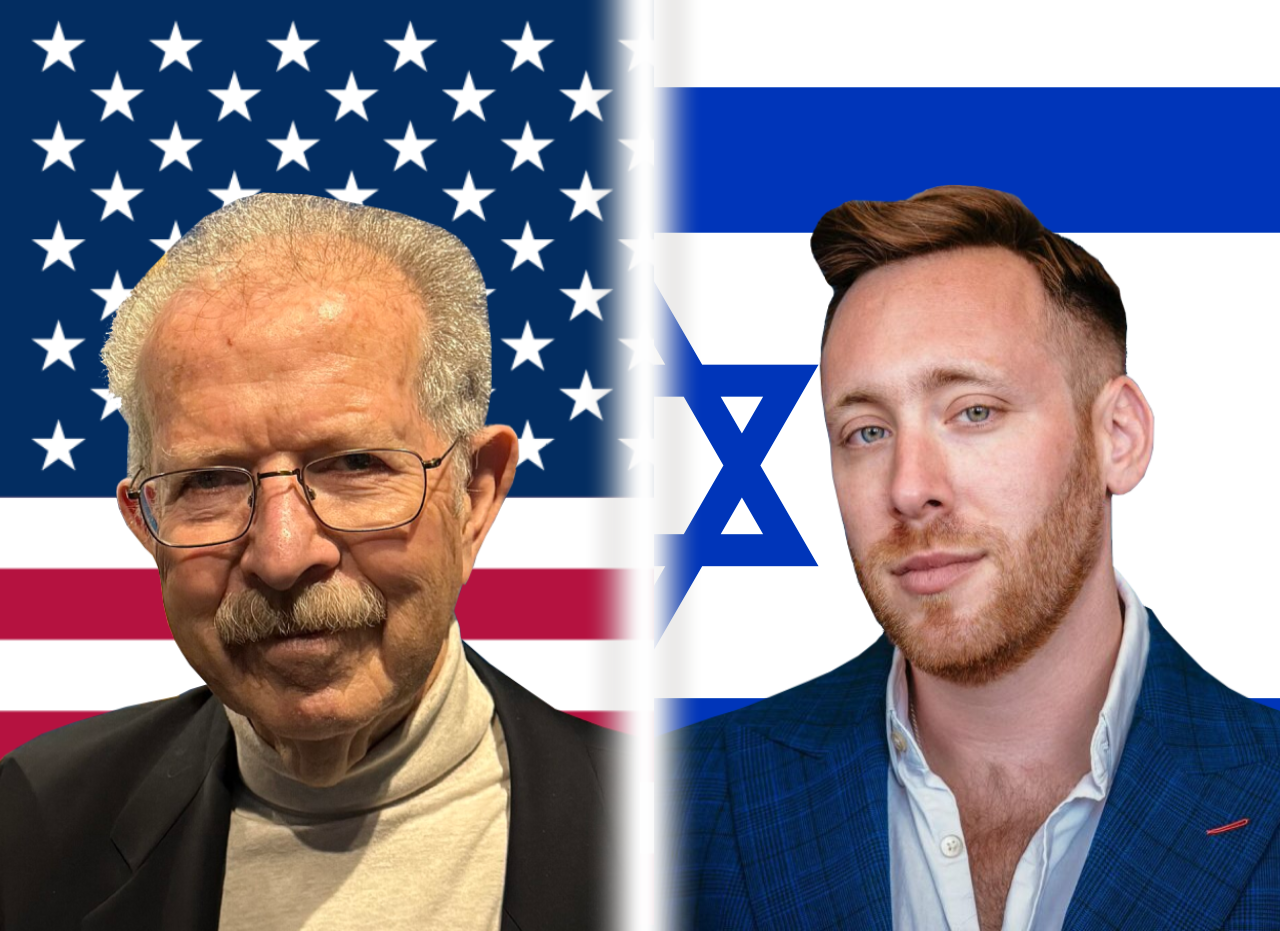
In the wake of the terrorist attack at Bondi Beach, many Jews—including myself—have been left questioning our future in the Diaspora. Last week, Moment Magazine hosted a debate between Adam Scott Bellos and Menachem Rosensaft on this very question. That debate exposed the two paths now before the Jewish Diaspora. We can follow the example of the early Zionists and become builders of a renewed Hebrew movement, or we can continue to decay under the disease of complacency. What we choose—both as individuals and as a collective—may determine whether Jewish life outside Israel remains viable at all.
Though framed as a debate about America, the discussion was ultimately about the nature of the Jewish Diaspora itself. Rosensaft argues from a fundamentally outdated Jewish reality. He views a pluralistic, fragmented Jewish world as a strength. He celebrates infighting and institutional weakness as evidence of healthy discourse. But upon closer inspection, what he calls pluralism is little more than clashing egos and petty factionalism. Jewish institutions today devote more energy to competing for donors and hosting events than to advancing the actual Jewish cause.
In the immediate post-Holocaust era, when survival itself was a victory, such dysfunction may have been understandable. But as Bellos argues, for this failure to persist for decades—while new threats emerged unchecked—is an unforgivable sin. Worse still, when confronted with those threats, our institutions do not merely fail to act; they refuse to acknowledge the danger at all. To do so would require admitting failure, stepping aside, and risking donor relationships. Rosensaft, for his part, fails to distinguish between diversity of opinion and the necessity of a unified Jewish will. Bellos does not argue for silencing minorities or dissent, but for recognizing that neither can supersede the survival of the Jewish people as a whole.
Bellos correctly identifies that the Jewish community traded real political power for the illusion of moral protection—an ever-weakening social taboo against antisemitism. We assumed our leadership would warn us when danger approached and mobilize us to act. In a just world, to be labeled a “Jew-hater” would end careers. In the modern age, Jew-hatred has been normalized, stripped of its moral gravity, while Jews themselves are stripped of moral clarity. Surely, Bellos argues, the open and public calls for Jewish blood would awaken the community. Instead, the response has been quiet discomfort.
In biblical times, Jews opposed idol worship and human sacrifice as any civilized people should. Today, those practices have returned in new forms. Jewish blood is spilled, and our killers are transformed into symbols of resistance and virtue. We no longer state with confidence that killing Jews is wrong. That hesitation alone is proof that “Never Again” has failed. The Holocaust did not begin with gas chambers; it began with schools, boycotts, and the normalization of hatred. Rosensaft claims the threat becomes existential only when governments permit violence. Yet Israeli intelligence warned Australia for months. The unanswered question remains: why did we not mobilize when crowds chanted “Gas the Jews” in Sydney, rather than waiting until bullets were fired at Bondi Beach? Herzl, heard the Parisians chant towards the framed Alfred Dreyfus “death to the Jew.” It was “mere chants” alone that spurred Herzl to action.
With the same necessary urgency, Bellos outlines the shifting political reality in America. At a time when Jews are attacked in the streets, young Jews raising alarms are told to stop overreacting. Bellos invokes the lessons of the early Zionists not as nostalgia, but as instruction. The course correction he offers is unapologetic: to rebuild a strong Jewish Diaspora modeled on the moral seriousness of Herzl and the discipline of Jabotinsky—a Jewish people capable of defending itself with dignity and self-respect.
Israel, surrounded by enemies and attacked on all fronts, built a resilient national spirit that refuses to break. Through Hebraization, Bellos argues, that same spirit can be reignited in the Diaspora. But this cannot occur until we admit the truth—both about the external threats we face and the internal failures we have tolerated. We must honestly assess the direction America is moving and the increasingly precarious place Jews may occupy within it. Denial is no longer a luxury. Without decisive action, reconciliation between the Jewish Diaspora of 2025 and the society that hosts it appears increasingly impossible.