London based entrepreneur, cybersecurity analyst doing a PhD in AI
One Idea Tafsir No.17 – The Science of Kindness
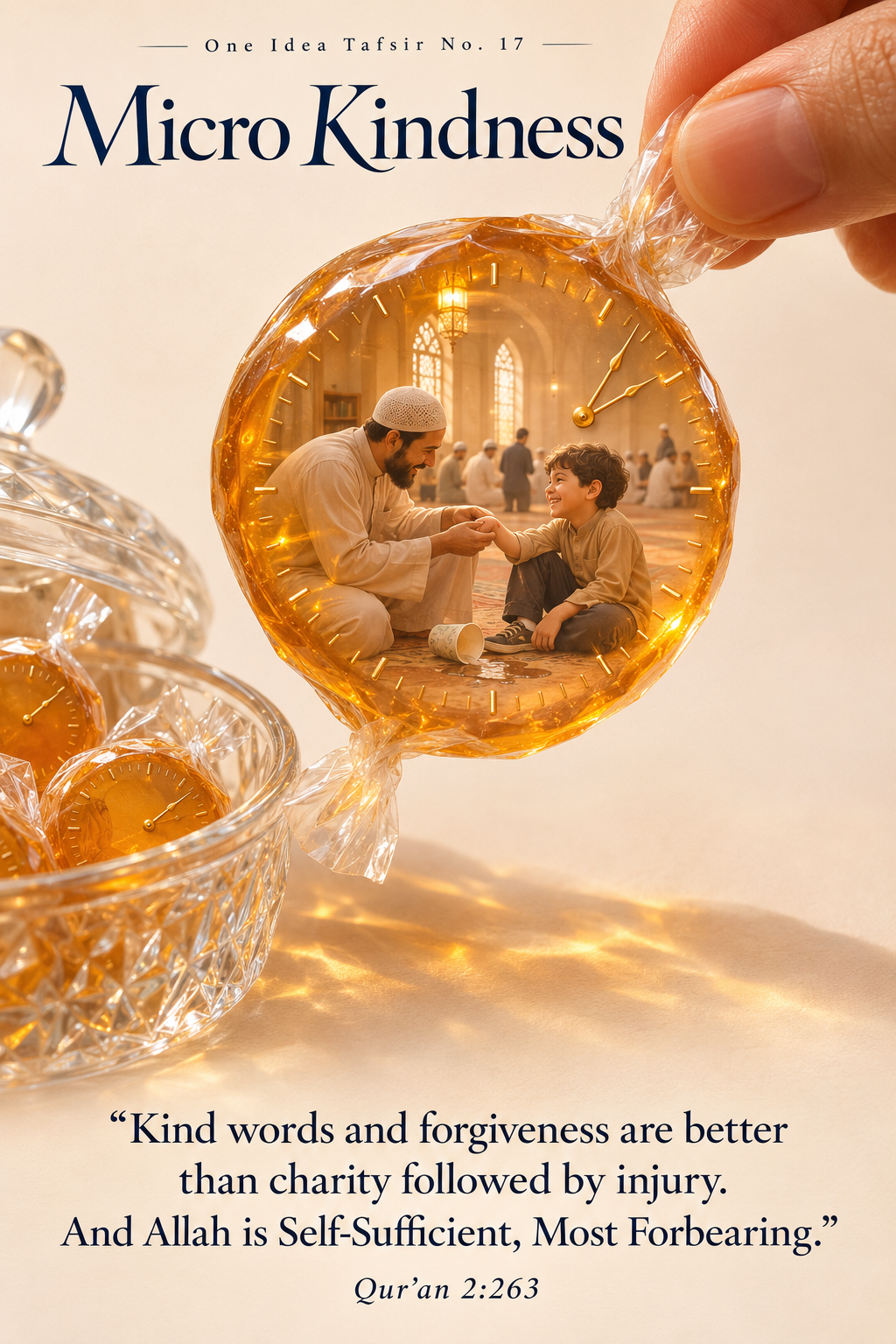
Micro Kindness are small acts of kindness - spoken words or small gestures that can make someone’s day.
One Idea Tafsir Number 17 — Micro Kindness
The Daily Brew · Short Tafsir on the Go · Qur’an 2:263
“Kind words and forgiveness are better than charity followed by injury. And Allah is Self-Sufficient, Most Forbearing.”
— Sūrat al-Baqarah 2:263, translated by Mustafa Khattab. Read the verse.
How much is a kind word worth? The Qur’an gives a precise answer. It can be worth more than money freely given if the giver later humiliates the person who accepted it. The surrounding verses praise generosity and warn that reminders of a favour can undo its reward. Ibn Kathīr explains that kind speech includes a good word or a prayer for someone, and forgiveness includes overlooking an offence. A few seconds of restraint can preserve somebody’s dignity. That in psychology terms is akin to micro kindness. Tafsīr Ibn Kathīr on 2:262–264.
Givers underestimate what recipients feel
In experiments by Amit Kumar and Nicholas Epley, people who performed small acts of kindness predicted how the recipients would feel. The researchers then asked the recipients. The givers consistently underestimated the pleasure their gestures brought. One reason was a difference in attention. Givers focused on what they had given. Recipients also valued the warmth conveyed by someone choosing to give it. That helps explain why “it only took a minute” can be such a poor estimate of a favour’s worth. Kumar and Epley.
The giver can benefit too. A meta-analysis of 27 studies involving 4,045 participants found that performing acts of kindness improved the giver’s wellbeing by about 0.28 standard deviations on average, a modest effect. A review of 15 preregistered experiments on spending money on others also found evidence of an emotional benefit. And the effect can reach beyond the original exchange. In a four-week experiment with 111 employees, recipients of kindness subsequently reported doing more kind things for colleagues than people in the control group. Curry and colleagues · Aknin and colleagues · Chancellor and colleagues.
What changes in the brain?
When volunteers donated anonymously to real charities, brain scans showed activity in some of the same reward-related regions that responded when the volunteers received money. A similar finding emerged from a study of 20 couples. Holding a partner’s arm while he was in pain increased activity in the giver’s ventral striatum, a region involved in reward. Both studies used functional MRI, which measures changes in blood oxygenation. Moll and colleagues · Inagaki and Eisenberger.
One such experiment used affectionate messages. Thirty-one volunteers read words written by people close to them after taking either a placebo or naltrexone, a drug that blocks opioid receptors. In the first session, feelings of connection were high under both conditions. In the second, volunteers who had taken naltrexone felt less connected. A separate PET study of 18 adults found changes in the availability of opioid receptors when participants received signals of social acceptance. Together, these small studies suggest that the brain’s natural opioid system contributes to the feeling of connection. Whether a kind act raises serotonin in both giver and recipient remains unproven. Inagaki and colleagues · Hsu and colleagues.
The word after the gift
Psychologists can measure how someone feels after receiving a kindness. Qur’an 2:263 asks the giver to consider what happens after that measurement would end. A gift may bring relief today. A public reminder next month may make the recipient regret accepting it. The giver has a choice on both occasions. Qur’an 2:262–264.
The Prophet ﷺ counted a good word as ṣadaqah, a form of charity, and taught Abū Dharr (may Allah be pleased with him) to value even greeting his brother with a cheerful face. Some days, micro kindness is the sentence you say. Other days, it is the favour you never mention again. Ṣaḥīḥ al-Bukhārī 2989 · Ṣaḥīḥ Muslim 2626.
Related Topics
Related Posts