One Thousand Days Later. Two Democracies. One Shared Responsibility
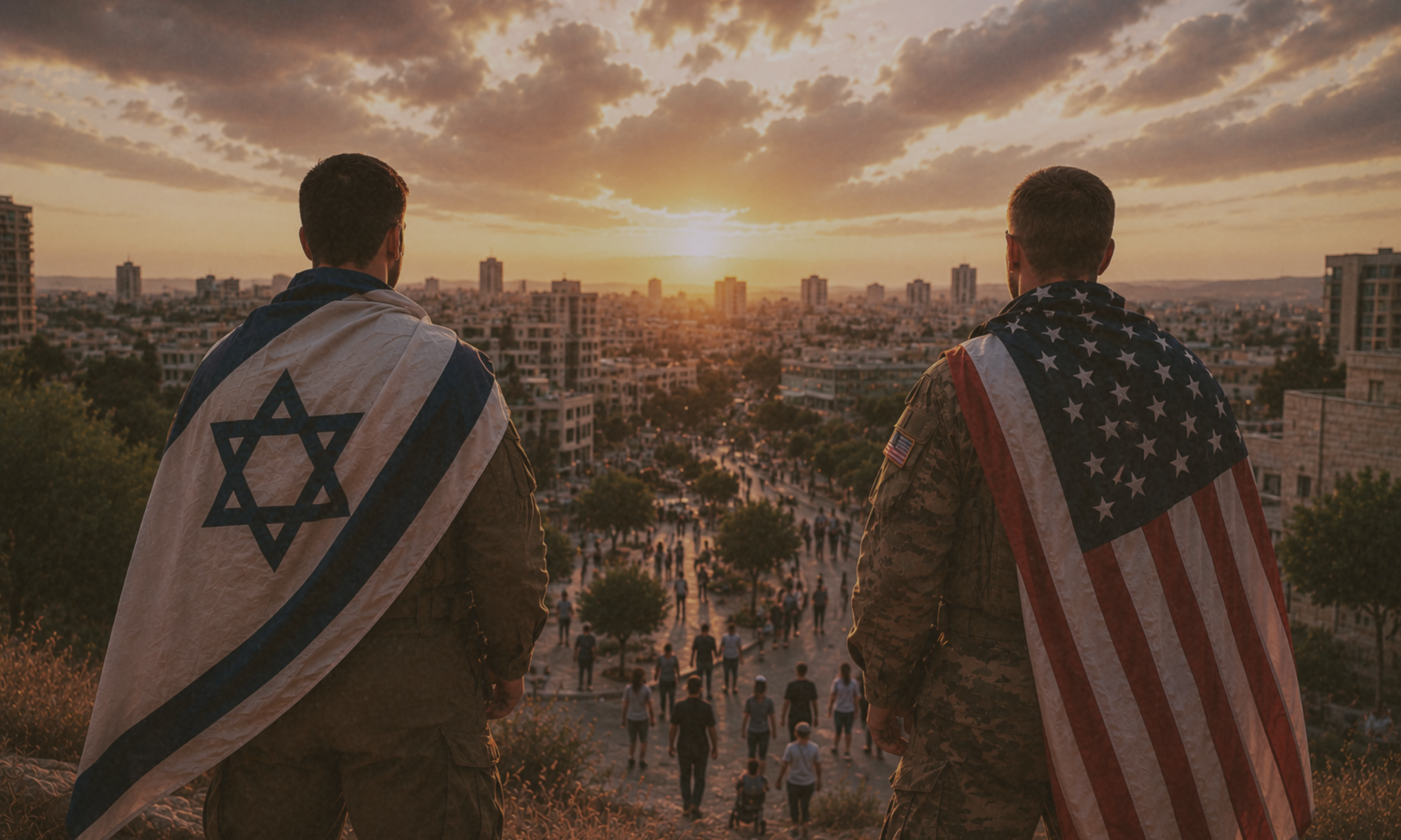
This week, two anniversaries arrive just one day apart.
On July 3, Israel marks 1,000 days since October 7, 2023. One thousand days since Hamas carried out the deadliest terrorist attack in Israel’s modern history, murdering families in their homes, kidnapping civilians, and forcing an entire nation into a new reality.
The following day, America celebrates 250 years of independence– a milestone commemorating the ideals of liberty, self-government, and the generations who fought to preserve them.
At first glance, these anniversaries seem unrelated. One reflects on centuries of freedom; the other on 1,000 days spent defending it. Yet as an American-born Jew whose work has become deeply intertwined with Israel over these past 1,000 days, I find myself thinking about them together. They remind me that while freedom may be declared in a single moment, preserving it is never a single event. It is the work of generations.
Much has changed over the past 1,000 days. The international attention that once dominated headlines has shifted elsewhere. New conflicts have emerged, political debates have evolved, and many outside the region have understandably moved on. But for millions of Israelis, the crisis did not end when the cameras left. The security threats remain. Families continue to navigate trauma, uncertainty, and loss. Entire communities are still rebuilding their lives.
Over the past three years, I have spent time with soldiers serving on multiple fronts, first responders who continue to answer calls despite carrying their own emotional burdens, and families working to rebuild after their worlds were turned upside down. What has stood out to me is not simply what happened on October 7, but what has been required every day since. The public often imagines recovery as a single moment– a ceasefire, a return home, a declaration that life has resumed.
In reality, recovery is a long and often invisible process. It is the reservist leaving his family for yet another deployment. It is the parent helping a child process another night of sirens. It is the evacuated resident deciding whether it is truly safe to return home. It is the daily work of restoring stability, security, and trust after they have been shattered.
One of the greatest misconceptions about crises is that they end when public attention fades. In truth, that is often when the hardest work begins. Emergency response can be measured in days and weeks. Rebuilding communities, restoring a sense of safety, and addressing the long-term effects of trauma takes years. It requires sustained commitment long after the urgency that initially captured the world’s attention has passed.
As an American, spending these past 1,000 days alongside Israelis has also changed the way I think about Independence Day. Every Fourth of July, we celebrate the courage of those who secured America’s freedom and the principles that continue to define the nation. But after witnessing Israel’s resilience, that celebration has taken on new meaning for me. Freedom is not merely something won by one generation and enjoyed by the next. It demands constant stewardship. It asks ordinary people, in every generation, to accept extraordinary responsibilities.
America and Israel are profoundly different nations with distinct histories, cultures, and challenges. Yet both understand that democracy is sustained not only by constitutions or institutions, but by citizens willing to defend, strengthen, and rebuild what they have inherited. In Israel, that reality is impossible to ignore. It is present in the reservist who leaves work and family behind, the medic who runs toward danger, the teacher helping children rediscover a sense of normalcy, and the volunteer rebuilding communities that many assumed would never recover.
That same understanding has shaped the work of Israel Friends from the very beginning. In the immediate aftermath of October 7, our focus was straightforward: get critical support into the hands of those who needed it most. Since then, the needs have evolved, but they have not diminished.
Today, that support includes advanced technologies that help defenders adapt to emerging threats, life-saving equipment for soldiers and first responders, and trauma recovery programs that address the invisible wounds carried by so many Israelis. The goal has never been simply to respond to a moment of crisis; it has been to stand alongside people facing a prolonged and evolving challenge.
The lesson of the past 1,000 days is that solidarity is not defined by what we do in the immediate aftermath of tragedy. It is defined by whether we remain engaged once the story is no longer leading the evening news. It is easy to express concern when a crisis first erupts. The true test comes later, when the suffering is less visible but no less real, when rebuilding lacks the urgency of breaking news, and when communities still need support despite no longer commanding global attention.
Perhaps that is what connects these two anniversaries. America’s 250th birthday is not simply a celebration of its founding, but of the countless generations who accepted responsibility for preserving what they inherited. Israel’s first 1,000 days since October 7 remind us that resilience is built the same way—not in a single act of courage, but through thousands of acts of perseverance that rarely make headlines.
Israel’s future will not be determined solely by what happened on October 7. It will be determined by what happens afterward– by the ability of its people to rebuild, by the strength of its communities, and by whether those who stood with Israel in its darkest moments continue to stand with it during the long road that follows.
One thousand days have passed. The headlines have changed, and much of the world has moved on to other stories. But for those living with the consequences of October 7, the work continues. As America reflects on 250 years of freedom and Israel marks 1,000 days of endurance, both anniversaries point to the same enduring truth: liberty is not sustained by remembrance alone. It is preserved by those willing to remain committed long after the moment that first called them to act.