
From Yemenite tradition to the coming Beith HaMikdash
One Tiny Nick Makes It Treif: A Shochet’s Lesson on People over Steak
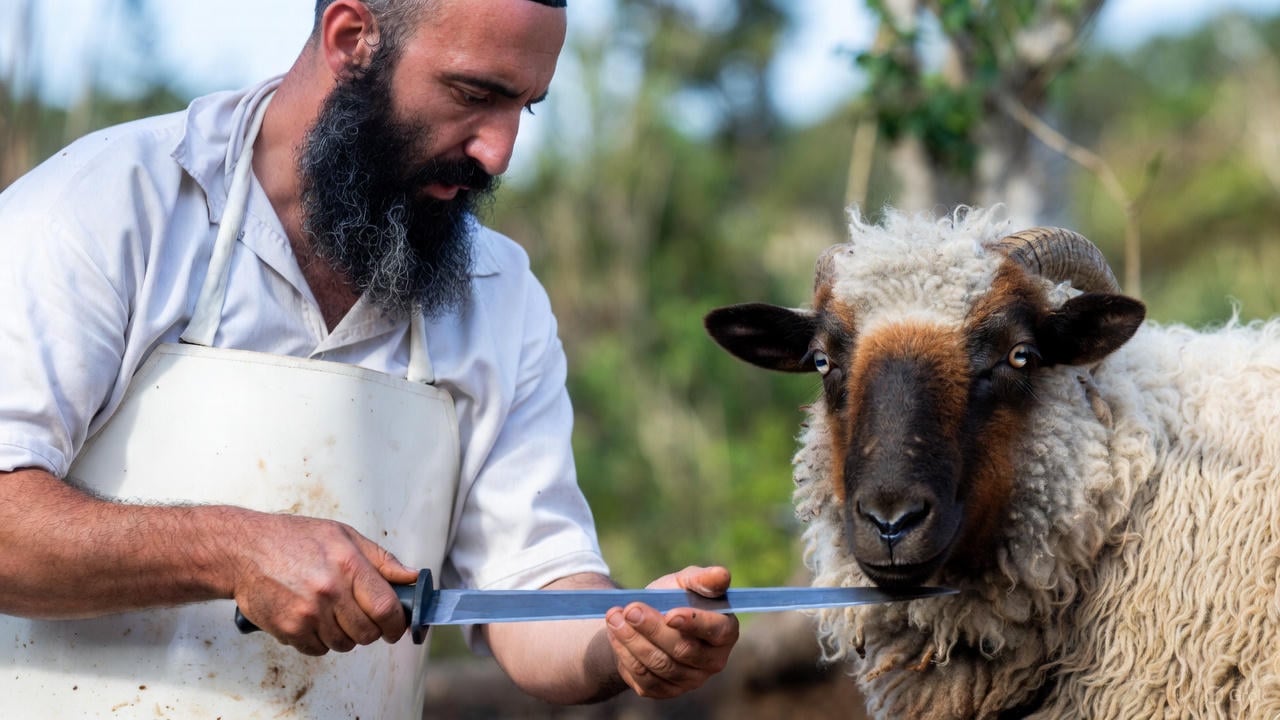
Image courtesy Grok AI
When a sincere non-Jew coworker begins asking questions about Judaism, he usually does so from a place of genuine love for God. To him, their understanding is life itself. The idea that his beliefs could be avodah zarah (עבודה זרה, foreign worship) never crosses his mind. After all he does not bow to statues. He prays to what he believes is the one true God. How, then, do we help such a person discover the pure monotheism of the Torah without triggering defensiveness?
My friend, who is training to become a shochet (שוחט, ritual slaughterer), once lamented that these conversations quickly feel like arguments. I answered him with an analogy drawn from the very laws he is mastering.
In shechitah (שחיטה, kosher slaughter), the knife, called the chalaf (חלף), must be perfectly smooth. It can have no pegimah (פגימה, nick or flaw), not even one invisible to the naked eye. Why? The Torah commands a precise and painless cut that severs the simanim (סימנים, trachea and esophagus) in one fluid motion. This act fulfills the five halachot given to Moshe at Sinai (Chullin 9a). A single nick causes ikkur (עיקור, tearing instead of slicing) and renders the animal a neveilah (נבלה, carrion) even if it bleeds out completely. The animal dies either way, yet only the flawless blade produces life-sustaining meat for the Jew.
The Torah itself links physical shechitah to spiritual sensitivity. When Hashem first permits meat after the Flood, He immediately warns: “Only flesh with its soul, its blood, you shall not eat” (Genesis 9:4). Rashi explains that this verse teaches tza’ar ba’alei chayim (צער בעלי חיים, the prohibition of causing pain to living creatures). The Rambam (Moreh Nevuchim 3:48) goes further. He states that the entire detailed system of shechitah, including the flawless knife, was given specifically to train us in compassion and precision.
Kal vachomer (קל וחומר, how much more so), teaches the Torah (see Bereishit Rabbah 44:1), when the soul on the table is human.
If we must calm a powerful adult ram, settle its strength and spirit, and use a mirror-smooth blade so it feels no pain while we take its life for food, how infinitely more careful must we be when trying to liberate a sincere gentile from the subtle avodah zarah he never chose?
Most non-Jews do not wake up wanting to rebel against the God of Israel. They simply inherited a theology that placed an intermediary between them and the One who said, “I am Hashem your God who brought you out of Egypt. You shall have no other gods before Me” (Exodus 20:2-3). Tell them harshly, with even the tiniest “nick” about “your messiah” or “your mistaken scriptures,” and the blade catches. Fear rises. Defenses lock. The truth never enters. The conversation becomes derasa (דרסה, pressing) or shehiya (שהייה, hesitation), both of which invalidate shechitah and invalidate kiruv (קירוב, drawing close).

Instead, calm the person first. Show genuine respect. Listen. Only then, with a chalaf polished smooth by chesed (חסד, loving-kindness) and sharpened by emes (אמת, truth), present the pure Oneness of Hashem as it was proclaimed at Sinai. When the words glide without resistance (“You can speak directly to the Creator who took us out of Egypt, with no middleman at all”), something remarkable happens. The mistaken belief falls away like a veil, often with a sigh of relief rather than a cry of pain.
The ram never feels the perfect knife. The soul, treated with greater reverence still, need not feel it either.
Here is the question the laws of shechitah will not let us evade: If a single microscopic nick disqualifies an entire side of beef, should we even be sitting down to that kosher steak dinner when our own words, our spiritual knives, are still rough with sarcasm, impatience, or superiority? The Torah commands flawless compassion for the ram. Kal vachomer for the human being created in the image of God. Let us love our neighbor more than the steak, and polish all our blades accordingly.
Related Topics
Related Posts