


Only a Broad Jewish-Arab Bloc Can Put Peace on the Agenda of the Next Government
It has been a tense couple of weeks for what remains of the Israeli left wing. Yes, even after or perhaps because of October 7, there is still a left wing in Israel that is defined not solely by its opposition to Prime Minister Benjamin Netanyahu but by its opposition to the continued occupation of the Palestinian territories and oppression of the Palestinian people. These are the people who understand that Israel will never be a true democracy as long as the Palestinians beyond the Green Line live under an apartheid regime and those within the Green Line suffer from discrimination. These are the people for whom unity is not a value if it doesn’t rest on a foundation of equality.
During the past few weeks, we have watched Moshe Feiglin, Ofer Winter, and Tally Gotliv situate themselves for positions of influence if the opposition bloc fails to put together the next government. The media has been busy reporting on who is hooking up with whom and what the various alliances mean in terms of numbers, but little is being said about the harrowing significance of the strengthening of the ultraright. We may yet come to miss the days when the Smotrich-Ben-Gvir duo represented the worst the Israeli Government had to offer. Horrifying as it is to fathom, Israel’s 38th government could be one in which war crimes underpin the coalition agreement.
At the same time that the ugliest faces of the ultraright were splashed across our screens, the absence of a left-wing alternative was underscored by none other than Naama Lazimi of the Demokratim. On August 24, Lazimi gave an interview to Kan radio in which she said that the next government should aspire to reach a political agreement that does not include a Palestinian state. After being crowned the superstar of the left by Haaretz only a few days earlier, Lazimi fell into line with the position of party leader Yair Golan, who has repeatedly said that while he supports a two-state solution in the long term, now is not the time.
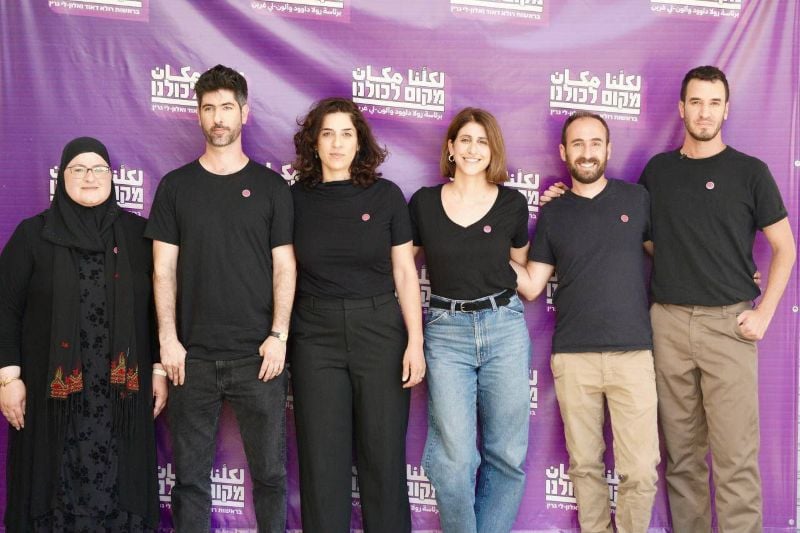
With even the Demokratim dismissing the idea of a peace agreement with the Palestinians in the foreseeable future, one would have hoped to see a swell of support for Makom Lekulanu (A Place for Us All), the Jewish-Arab party launched in June by members of the Standing Together movement. Instead, the party has been the subject of harsh criticism from its target electorate not for its positions, not for its list of candidates, not for anything other than the audacity of daring to throw its hat in the ring. It is painful to watch the contortions of left-wingers who identify with everything the party stands for and believe in its platform of peace, social welfare, human rights, and climate justice as they try to explain why they will not vote for it.
The Makom Lekulanu leadership has made it clear that if polling shows that it will not pass the electoral threshold, the party will withdraw rather than risk wasting votes and hurting the chances of the opposition bloc. In order to avoid that outcome, the party sought to forge an alliance with one or more of the Arab parties, but failed. It was rebuffed with the same hollow argument heard from the Zionist left: a great idea but premature.
Nothing could be further from the truth. Makom Lekulanu is the only party that addresses all the issues of concern to progressive Israelis, and it is needed now. While indications are that an independent run would likely end in failure, it is not too late for Ra’am or the Hadash-Ta’al-Balad alignment to welcome the party into its ranks. There are no ideological differences that run so deep that they would rule out such an alliance. The inclusion of Makom Lekulanu would likely attract some of the left-wing voters who are supporting the Demokratim for lack of an alternative. Such a broad Jewish-Arab bloc might garner enough seats to actually influence the trajectory of the next government.
If the Arab parties fail to reach an agreement with Makom Lekulanu and it is forced to withdraw, left-wing voters will have to choose which of their beliefs they will abandon at the ballot box in order to defeat Netanyahu. It is sad to think that replacing a maniacal despot with the originator of the Dahiya Doctrine (a military strategy involving the use of disproportionate force and large-scale destruction of civilian targets) will then become the best possible outcome of the election.