


Mathematics Teaching Professor, Author
Only in America: Weitzman National Museum of American Jewish History
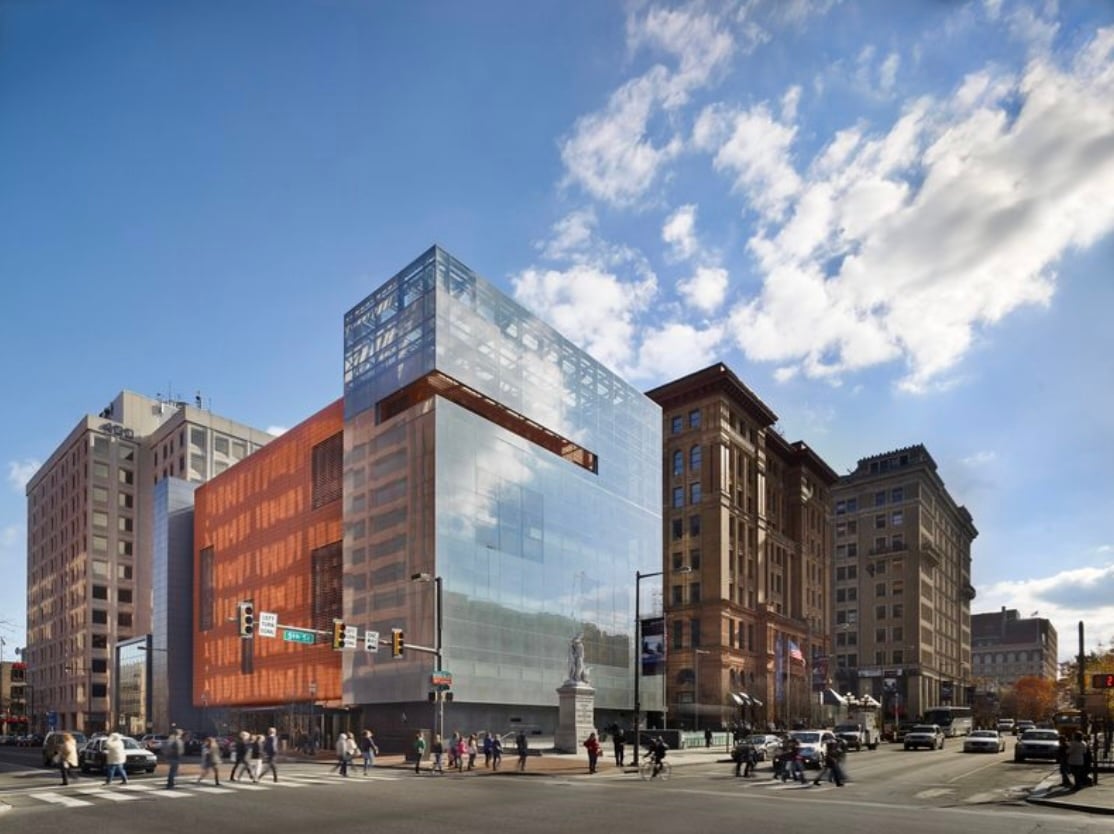
Weitzman National Museum of Jewish History (Source: Weitzman National Museum of Jewish History, Philadelphia)
The Weitzman National Museum of American Jewish History in Philadelphia is the only museum in the nation dedicated exclusively to telling the American Jewish story. Established in 1976, the museum explores how Jewish people arrived in America, built communities, flourished, and continue to contribute to the nation’s history and culture.
The Weitzman will reimagine its core exhibition over the next several years, reflecting its commitment to presenting the American Jewish experience in new and meaningful ways.
From 1976 to 2010, the museum was housed at historic Congregation Mikveh Israel, a congregation and synagogue I wrote about in an earlier blog this summer, before moving to its current home on Independence Mall. Today, its work centers on three pillars: Exhibitions, Education and Public Programs.
I would like to thank Dan Tadmor, President and CEO, for his support and guidance.
Exhibitions
In 2026, The Weitzman has exhibitions that highlight different aspects of the American Jewish experience.
The Weitzman is marking America’s 250th anniversary with The First Salute, which opened in April 2026. The exhibition tells the largely untold story of Jewish contributions to the American Revolution, focusing on the Caribbean island of St. Eustatius and the roles of Jewish merchants, religious freedom, and international trade.
The exhibition features rare artifacts, including the 1781 “Rodney Roll,” which lists Moses Myers among Jewish residents whose property was confiscated by British forces, and a 1778 army rations receipt belonging to Jewish patriot Mordecai Sheftall. Through these objects and stories, The First Salute highlights Jewish resilience and the important role Jewish communities played in the fight for American independence and religious freedom.

Colors of Creation is a new family gallery experience at The Weitzman opened in July. Designed for children and families, the exhibit follows the day-by-day story of creation through a joyful, immersive environment filled with color, music, movement, and interactive play. Visitors can experience interactive projections, responsive sounds, concert-style lighting, and large-scale visuals that transform the familiar creation story into an exciting multi-sensory experience.
The experience also includes The Lab, a hands-on discovery space where children can explore color, patterns, creation, and imagination through open-ended activities. Colors of Creation welcomes visitors of all ages and backgrounds and provides a fun way for families to learn, explore, and experience the story of creation together. Walk-ins are welcome.

Testimonies: Antisemitism in America Today is a new exhibition at the Weitzman opening in the fall. It explores contemporary antisemitism through personal stories of Jewish Americans who have experienced harassment, violence, discrimination, and vandalism in their everyday lives. Approximately eight full-size video projections will share these real-life testimonies, creating an immersive experience that encourages visitors to confront antisemitism and develop greater awareness and empathy. The stories include experiences such as physical attacks, harassment for wearing Jewish symbols, and vandalism of Jewish businesses and synagogues.
In partnership with the Anti-Defamation League (ADL), the exhibition will also feature the interactive H.E.A.T. Map™, showing incidents of hate, extremism, antisemitism, and terrorism across the United States. Together, the testimonies and interactive displays aim to help visitors better understand and recognize contemporary antisemitism.
The museum also displays “OY/YO” by Deborah Kass, a large, bright yellow sculpture located outside the museum at 5th and Market Streets. The sculpture uses the words “OY” and “YO” to connect Yiddish and Philadelphia culture and has become a popular landmark for visitors.
In addition, the Core Exhibition & Virtual Tour presents the history of Jewish life in America, beginning with the first permanent Jewish settlers in the 1600s and following generations of Jewish Americans as they faced challenges, made contributions, and shaped and were shaped by American society.
Education
Education is central to The Weitzman’s mission. Its programs teach the diverse stories of Jewish life in America while connecting Jewish values with American ideals. The Stories That Shaped a Nation curriculum offers ready to use lessons on Jewish history, values, identity, and belonging for educators and students.
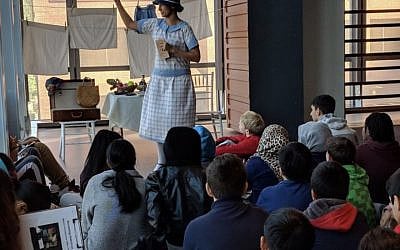
Becoming American: Jewish Immigration in the Early 20th Century is a flagship program for students in grades 3 to 7. Through the Traveling Suitcase, students examine replica objects and become storytellers, detectives, and historians while learning about the life of Eva Baen, a Jewish immigrant.
After the classroom experience, students can visit the museum in person or virtually to see the original artifacts and meet Eva through a historical interpreter. The program can also be brought directly to schools, synagogues, and community centers through in-person or virtual options.
For students and adult learners, The Weitzman also offers programs about Jewish history, immigration, religious freedom, civic participation, and antisemitism. These programs encourage discussion, empathy, and critical thinking while helping learners recognize and understand antisemitism and its impact.
Public Programs
Past programs at The Weitzman have included cultural, educational, and community events. In 2026, Philadelphia Jewish Film and Media was integrated into the museum to expand Jewish cultural programming in the region.
The museum has also hosted a Tu B’Shevat program featuring a guided nature tour and discussion of the Jewish New Year for the Trees, as well as the Greater Philadelphia Antisemitism Town Hall, which brought together local leaders to discuss ways to address rising antisemitism.
The Weitzman also leads Jewish American Heritage Month (JAHM) each May, celebrating the diverse American Jewish experience. Its Understanding Antisemitism program provides educational resources on the history, impact, and recognition of antisemitism.
Museum Store
The Weitzman also has a large and popular Museum Store, which offers much more than a typical museum gift shop. The store is known for its creative and unique Jewish-themed merchandise and has gained attention online for products that have gone viral.
Virtual Museum
The Weitzman’s Virtual Museum offers virtual tours, online exhibitions, artifacts, stories, family activities, and events, allowing visitors to explore nearly four centuries of American Jewish history from home.
Other programs have included The Chosen Toys author discussion with Michael Kimmel and Jewish Heritage Night with the Philadelphia Union, featuring conversations about Philadelphia sports, Jewish identity, and soccer.
Historical Backgrounds
In 1650, the territory that is now the United States was a fragmented region. Far from being a single nation, the land was predominantly governed by independent Native American tribes. In was in that year, 1650, that the first Jews arrived in the area that would become Philadelphia.
The first recorded individual Jewish resident was Jonas Aaron in 1703, and organized Jewish life truly took root with the arrival of Nathan and Isaac Levy in 1737. They formed Philadelphia’s first congregation, Mikveh Israel.
Between 1750 and 1800, Philadelphia’s Jewish community evolved from a small handful of merchant families into an organized, patriotic, and influential group. They were deeply integrated into colonial commerce, actively supported the American Revolution, and founded the city’s first permanent congregation.
Jewish life in Philadelphia from 1800 to 1900 transformed from a small, established Sephardic and German merchant community into a massive, bustling Eastern European enclave. Driven by immigration, the city’s Jewish population swelled from a few thousand to tens of thousands, centering primarily on institutions in South and Central Philadelphia.
Between 1900 and 1975, Philadelphia’s Jewish community evolved from an influx of working-class Eastern European immigrants in South and North Philadelphia into a thriving, upwardly mobile suburban population.
Which brings us to 1976.
Life in 1976 America was shaped by the Bicentennial celebration, changing politics after Watergate, and everyday analog life. Families watched shows such as Happy Days, All in the Family, and Charlie’s Angels, while popular fashion included bell-bottoms, polyester shirts, and platform shoes.
Philadelphia in 1976 was a city with strong industrial roots and distinct neighborhood identities. The Bicentennial celebration brought national attention to Philadelphia and highlighted its importance in American history.
Philadelphia’s Jewish community in 1976 was the third largest in the United States, with about 350,000 people. Many Jewish families were moving from city neighborhoods to the suburbs while remaining connected to Jewish culture, institutions, and global Jewish causes.
It was in this year, 1976, that the National Museum of American Jewish History was established as the only museum in the nation dedicated exclusively to exploring and interpreting the American Jewish experience. Since 2010, the museum has been located in a 100,000 square foot James Polshek designed building on Philadelphia’s Independence Mall, across from the Liberty Bell and Independence Hall. The museum was renamed in 2021 in recognition of a transformative gift from philanthropists Jane and Stuart Weitzman.
Today, The Weitzman remains an important part of Philadelphia’s cultural life, offering exhibitions, programs, and events that explore the history and diversity of Jewish life in America. Founded by members of historic Congregation Mikveh Israel, the museum continues a long tradition of connecting Jewish history with the American experience.
With more than 30,000 objects in its collection and over 100 exhibitions presented throughout its history, The Weitzman preserves and shares an important part of American Jewish heritage. Through its exhibitions, education programs, cultural events, and collections, the museum continues to tell stories of identity, community, freedom, and belonging for generations to come.
Contact Information:
The Weitzman National Museum of Jewish History, 101 South Independence Mall East, Philadelphia, PA 19106
Phone: (215) 923-3811
Email: info@theweitzman.org
Website: https://theweitzman.org/