Orthodox’s Misplaced Outreach
Orthodoxy’s Misplaced Outreach
We observant Jews spend the 49 days between Passover and Shavuot trying to elevate our spiritual side, in preparation for accepting the Torah. We count the Omer, not just to remember the deaths of the students of R. Akiva, but to purify ourselves going forward. After reciting the daily number, we pray that G-d should restore the Temple service quickly, in our day. Nusach Sefard adds a mystical prayer at the end, reciting the day’s combination of Sefirot – mystical Divine Attributes – and the hope that this will save us from all spreading evil and spiritual flaws, to purify and sanctify us with G-d’s holiness.
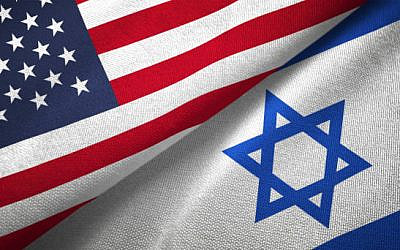
In that context, with Shavuot just days away, a reckoning seems in order. Specifically, two events, one in Israel and one in the US, show high-profile Orthodox religious leaders pushing away, when they should embrace, and embracing, when they should steer clear. Both involve prayer, though in different ways.
In Israel, in a last-minute attempt to buy time before facing the voters, the governing coalition, at the behest of its Orthodox party factions, proposed a law giving the rabbinate control over religious practice at the Kotel complex. The law essentially seeks to prohibit Masorti and other egalitarian services there. A compromise, which the Prime Minister had approved and now seemingly disavows, would have allowed mixed-gender prayers in a remote section at Robinson’s Arch.
The incident in the US occurred earlier this week in Washington, DC. It involved a prayer service on the National Mall, the vista near the White House, between the Washington and Lincoln Memorials. Videos showed the trappings of a church, with crosses galore and other attributes on a giant screen. All but one of the speakers, delivering homilies or offering prayers, were Evangelicals or Catholics (such as the retired Archbishop and former Cardinal Dolan of New York). The one outlier: a prominent Orthodox rabbi, the scion of a Lithuanian dynasty.
Orthodox values dictate the opposite course of conduct. So does tradition. When it comes to egalitarian prayer at the Kotel, the compromise should prevail; when it came to the Mall, the rabbi should have stayed away.
The Torah teaches us to encourage Kotel prayers. When King Solomon dedicated the Temple, which sat on holier ground than the Kotel Plaza and Robinson’s Arch, he beseeched G-d, ”Also to the gentile who is not of Your people, Israel, and who comes [on a pilgrimage] from a distant land for Your name’s sake, for they will have heard of Your . . . mighty hand . . . and will come and pray [here at] this House. You will hear from the Heavens [and answer the gentile’s requests].” 1Kings 8:42-43.
Similarly, the Talmud tells us (Gittin 56a) that the priests in the Temple accepted sacrifices from idol worshippers, who also recognized our G-d. The text recites the story of Bar Kamza, a Jew, who slandered the Jews to the Emperor of Rome. The Emperor did not believe him and sent a sacrifice to test the loyalty of his subjects. Through chicanery, Bar Kamza set a trap. He defiled the animal in such a way to render it unfit for the Holy Temple, but not the Roman temples. No question the rabbis would otherwise have allowed the sacrifice. Here, some wanted to kill Bar Kamza to prevent him from informing in Rome and others to accept it for the sake of peace. Neither happened and the Temple went up in flames.
To this day, we allow Christians to pray at the Kotel. I recall years ago, a monk in full regalia arriving at the prayer area of the Kotel and crossing himself in front of us worshipers. Nobody, not even security, said a word. Yet, when Jewish monotheists want to pray and an agreement, for the sake of peace, allows them to do so in a separate area, the Orthodox induced the government to try to ban it. The rabbinate would turn fellow Jews away if it could.
The incident on the Mall seems more straightforward. On a political level, some argue that the rabbi allowed himself to be manipulated by Christian Nationalists seeking to co-opt the Jewish religion to their cause in a turbulent midterm election year in the US. Regardless, he should have stayed away. Would he have participated in an indoor church service?
King Solomon said the gentile must come to us, not the other way around.