
Outsourcing Humanity
The rise of AI-based systematic thinking and its implications on the human psyche and fate.
Even I can’t imagine doing a university assignment today without consulting AI first. What began as a clever shortcut has quietly become my default first step, a tiny hit of certainty and relief every time I feel stuck. If this is true for a 27-year-old fourth‑year university student, what does it mean for teenagers growing up with it in their pockets from day one?
Humanity is growing in numbers and technology, yet shrinking in the qualities that make it human. We are becoming secondary to the process of thinking itself. The same capacity that once made us unique and creative is now quietly eroding under the comfort of AI‑based, systematic thinking. If we uproot that first, messy stage of struggle and curiosity, we hand our fate to something, or someone external.
This erosion is most worrying in the very place meant to protect our ability to think: education. School and university are supposed to be training grounds for critical thinking, creativity, problem‑solving and character. These are called “soft skills,” but in reality they are the hardest skills of all: the courage to form an independent opinion, the resilience to fail and try again, the curiosity to keep asking questions, and the ability to work and communicate with others. For children and teens whose brains are still wiring their habits of attention and reward, the combination of instant answers and constant validation is dangerously close to an addiction.
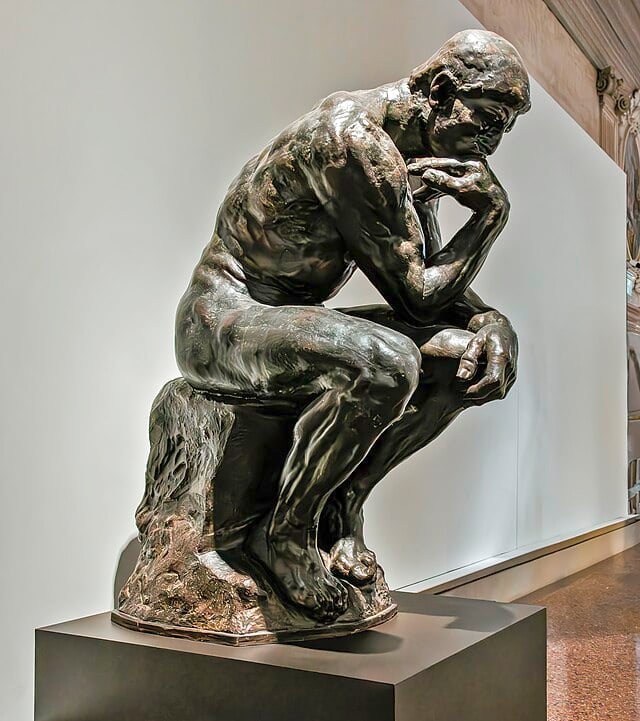
AI, used uncritically, short‑circuits each of these. Faced with an unfamiliar problem, many of us now turn first to a chatbot instead of turning inward or to our peers. When we meet uncharted waters, we no longer take the first strokes ourselves; we hail a passing machine and climb aboard. The work may look polished, but the muscles of the mind barely moved.
In classrooms this is no longer hypothetical. In only three years of access to the technology, 88 percent of students have integrated AI into their submissions (Higher Education Policy Institute in the UK, 2025), fundamentally altering how we approach the act of learning. One student uses it to better understand a concept; another uses it to avoid thinking altogether. Education is competitive and increasingly demanding. A student who genuinely wants to learn, but knows others are using AI for a “competitive edge,” feels compelled to outsource their own original thinking just to keep up.
Unregulated AI use in education is like a drop of poison in a well. No single act looks catastrophic, but over time the entire source is contaminated. In the most extreme scenario, the student who uses AI to craft an assignment and the lecturer who uses AI to design, grade and respond to it both become secondary to the actual thinking process. They are simply passing information between robots.
The answer is not to ban AI from classrooms, but to find ways to still stimulate curiosity and authenticity, and come up with initial ideas independently. Used intelligently, AI can search academic papers, condense long texts and sharpen writing. It should be a power tool, not a replacement for the entire shed.
Long before the drastic rise of AI, debate was a skill any child could benefit from. Learning to build an argument, listen and change their mind. In an AI‑saturated world, it is no longer a luxury but a necessity. When pupils regularly stand in front of real people, defend a position, hear sharp questions and have to answer in real time, they practice the curiosity, resilience and intellectual sovereignty, and they do it through teamwork and live communication no chatbot can authentically simulate.
Trying to enforce old ways of thinking with new tools is like putting a band‑aid on a bleeding chest wound. Instead, education must pivot toward values, soft skills and authenticity, as the anchor that keeps us human in an age of intelligent machines. AI will keep getting stronger, faster, more prevalent and more convincing; our only real defense is the quality of our relationships and our ability to think. We must act now, while we still possess the independent agency to decide for ourselves.