

Mathematics Teaching Professor, Author
Over 150 years of Jewish Life: Park Row Synagogue of Bristol, England
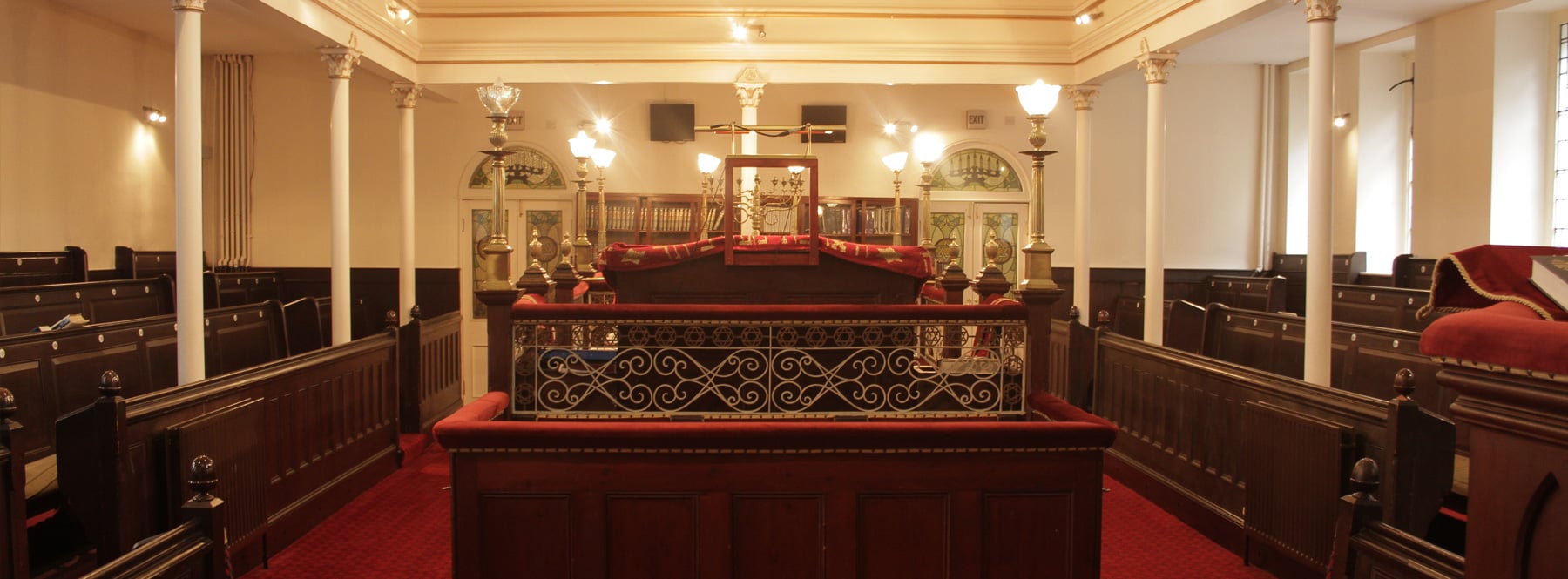
Park Row Synagogue (Source: Park Row Synagogue, Bristol England)
Park Row Synagogue is home to the Bristol Hebrew Congregation, a modern Orthodox Jewish community with roots dating back to the seventeenth century. The present synagogue, consecrated in 1871, is Bristol’s first purpose-built synagogue and celebrated its 150th anniversary in 2021.
Today, Park Row remains an active center of Jewish life, supporting religious services, education, festivals and community events. Although relatively small, the congregation is strengthened by families, university students and members of Bristol’s wider Jewish community.
I would like to thank Tony Gordon for his support and guidance.
Synagogue
Park Row Synagogue in Bristol is designed according to traditional Jewish principles, with the building facing towards Jerusalem and the site of the ancient Temple. Many of its features reflect Jewish history and traditions connected with the Temple.
Above the Aron Kodesh, the Holy Ark, hangs the Ner Tamid, an eternal light that remains permanently lit as a reminder of the light that once burned in the Temple. An unusual feature is the ten commandments on two glass panels presented to the community by Lazarus Jacobs, a glassmaker who came to Bristol in 1770. The Aron Kodesh houses the synagogue’s Torah scrolls, adorned with antique silver ornaments, some over 200 years old. The scrolls are handwritten in Hebrew on parchment by skilled scribes. The central Bimah, a raised platform, is used by the service leader for prayers and readings.
The synagogue also contains an eight-branched menorah used during Hanukkah. Its design is particularly interesting, as it dates from seventeenth-century Holland and has an eighteenth-century brass base believed to have been made in Bristol. Beside the Aron Kodesh is a wooden panel displaying a traditional prayer for the Royal Family, which originally came from Sir Moses Montefiore’s Synagogue in Ramsgate.
Religious Events
Park Row Synagogue holds a Shabbat service every Saturday morning at 10:30am. As a small community, members and visitors are encouraged to take part in the service, including receiving an aliyah or opening the Ark. Women are also invited to say Kaddish.
The Shabbat morning service has three main parts: Shacharit, the extended morning prayers; Kriyat HaTorah, when a Torah scroll is taken from the Ark and a passage is traditionally chanted; and Musaf, an additional service that recalls the sacrifices once offered in the Temple in Jerusalem.
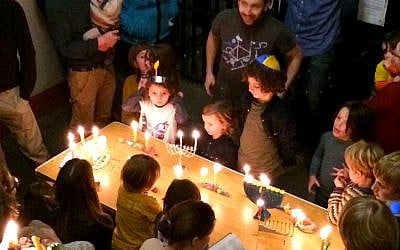
Park Row Synagogue celebrates a range of Jewish festivals and traditions throughout the year. Chanukah is marked with candle-lighting, singing, dancing, storytelling and traditional food, while Tu B’Shvat, the New Year for Trees, has been celebrated through family activities, learning and sharing the Seven Species.
The synagogue also plays an important role in supporting members through significant stages of Jewish life. These include welcoming new babies through Brit Milah or Simchat Bat, celebrating coming-of-age through Bar and Bat Mitzvahs, and supporting couples through marriage ceremonies. These celebrations bring together family, friends and the wider community, making Park Row Synagogue an important center for both religious practice and community life.
Bristol Jewish Burial Society
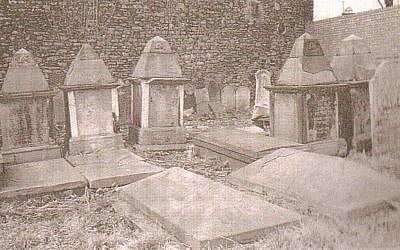
The Bristol Jewish Burial Society, also known as the Chevra Kaddisha, was established in 1743 to support the Jewish community in Bristol. It is a registered charity that operates independently of both the Bristol Hebrew Congregation and Park Row Synagogue. Its members work voluntarily to ensure that funeral preparations and services are carried out according to Orthodox Jewish practice.
Burial in one of Bristol’s Jewish cemeteries is available regardless of membership in a Jewish congregation, provided that the deceased is recognized as halachically Jewish. Individuals can also make arrangements for their burial in advance by reserving a cemetery plot.
Education
Education is an important part of community life at Park Row Synagogue, with programs designed for different ages, interests and levels of knowledge. The synagogue holds family events throughout the year to celebrate Jewish festivals and learn together. There is an active Cheder for children of all ages.
Adult education is also an important part of the program, with Rabbi Mendy Singer leading talks on subjects ranging from learning Hebrew and exploring Jewish traditions to biblical philosophy and important Jewish texts.
Park Row Synagogue also welcomes visits from schools, adult groups and community organizations. These visits provide an opportunity to learn about the synagogue, Jewish history in Bristol and what it is like to live as a Jewish person in the city. Visitors can also learn about Jewish worship, practices and beliefs, with presentations adapted to suit the age and interests of each group.
Community Service
Park Row Synagogue is part of Bristol’s diverse and multicultural community and participates in the city’s Multi Faith Program. The synagogue works closely with other local faith communities.
The wider Jewish community is also supported by practical services, including a kosher food delivery service with regular deliveries from London.
Historical Backgrounds
Jewish people first arrived in England following the Norman Conquest of 1066, when William the Conqueror invited Jewish merchants and financiers from Rouen, Normandy. Jews settled in Bristol during the late 11th century, with a more established community developing under William the second (1087 to 1100).
During the medieval period, Bristol became an important Jewish center. The community faced discrimination, restricted rights and periodic violence. A medieval synagogue is believed to have been located in the crypt of a former Church, while a Jewish cemetery stood on the site now occupied by a school, where Hebrew-inscribed artefacts were discovered.
Jewish life in Bristol ended in 1290, when Edward I expelled Jews from England. There were occasional Jewish residents afterwards, including Marranos, Jews who secretly practiced their faith, but no permanent community existed for several centuries.
Jewish settlement returned in the 1650s following Oliver Cromwell’s readmission of Jews to England. By around 1743 to 1751, a permanent community had begun to develop, with services initially held in a private home. In 1786, the congregation moved into a former Weavers’ Hall on Temple Street, which was fitted out as a synagogue with financial support from the prominent glassmaker, Lazarus Jacobs.
The community then moved to a former Quaker chapel in 1842.
Which brings us to 1871.
As the area was later redeveloped, the congregation moved once again, arriving at Park Row Synagogue in 1871. The present building is the fourth used by the Bristol Hebrew Congregation and the first purpose-built synagogue in Bristol. A modern Orthodox community, the congregation continues to maintain an active religious and communal life. The synagogue celebrated its 150th anniversary with a civic service in 2021, attended by civic leaders and representatives of the local community.
The synagogue is an important example of Victorian synagogue architecture. The Grade II-listed building has survived largely in its original form, despite some damage during the Second World War and alterations made in the 1970s.
Over the years, the congregation has experienced periods of growth and decline. Today, it remains a relatively small community, supported by families, students from Bristol’s universities and Jewish residents from across the city. The synagogue continues to provide regular Shabbat services, religious education and celebrations of Jewish festivals.
The community’s survival has also been supported by the generosity of past and present members and by properties owned by the congregation, which provide rental income. In recent years, the community has benefited from the presence of Chabad Rabbi, Mendy Singer, and continues to maintain an active program of worship, education and community life.
Park Row Synagogue is more than a historic building; it is a living center of Jewish life in Bristol. From its Victorian architecture and centuries of Jewish history to its Shabbat services, education programs, festivals and community activities, the synagogue reflects the continuing presence of Judaism in the city. Despite periods of change and challenges faced by a small community, Park Row Synagogue continues to preserve its traditions while welcoming new generations and engaging with Bristol’s wider community. Its history and ongoing role make it an important part of both Bristol’s Jewish heritage and the city’s diverse cultural landscape.
Contact Information:
Park Row Synagogue, 9 Park Row, Bristol BS1 5LP, United Kingdom
Phone: 0117 427 0613
Email: info@parkrowsynagogue.org
Website: https://parkrowsynagogue.org/