


Mathematics Teaching Professor, Author
Over 175 Years of History: Congregation Beth Israel of Honesdale, Pennsylvania
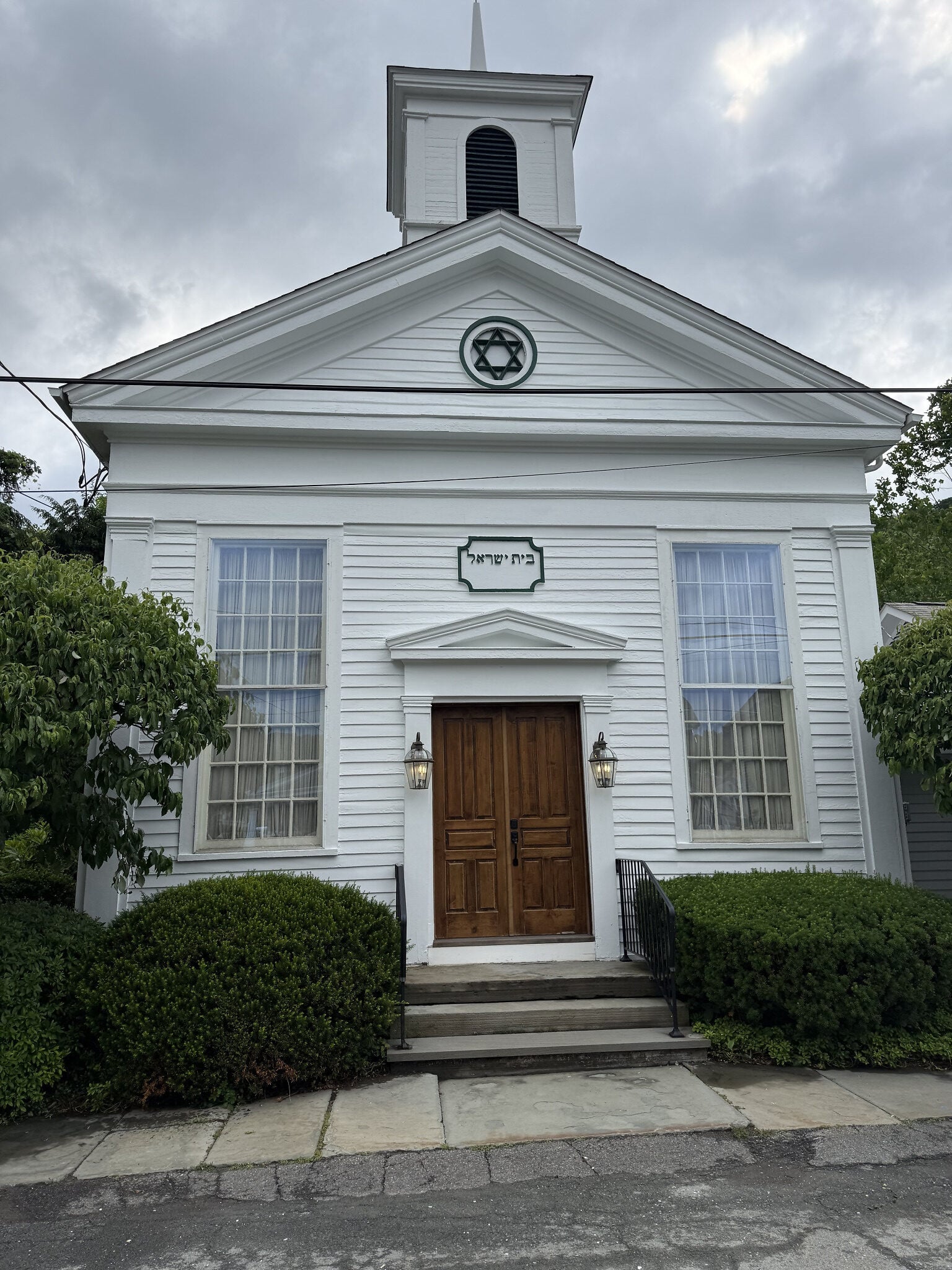
Beth Israel (Source: Congregation Beth Israel of Honesdale, PA)
Since 1856, the same sanctuary has welcomed generations of worshippers to Congregation Beth Israel in Honesdale, Pennsylvania. Founded in 1849, it is recognized by the congregation as the oldest continually operating synagogue in the United States still housed in its original building. One hundred and seventy-five years after its founding, the synagogue remains a living testament to Jewish faith, tradition, and community. Remarkably, descendants of three of the original eleven founding families continue to be involved, connecting today’s congregation directly to the men who first gathered to establish a Jewish home in Honesdale.
I would like to thank the esteemed Rabbi Kleinman for his guidance.
Historical Backgrounds
Jews first arrived in Pennsylvania in the mid-1600s, drawn by opportunities for trade and commerce along the Delaware River. The earliest recorded Jewish presence dates to 1655, and by 1703, individual settlers and merchants, including Jonas Aaron, were documented in the region.
Between 1650 and 1849, Pennsylvania’s Jewish community evolved from a small population of itinerant traders and merchants into an established center of Jewish religious, cultural, and communal life. The colony’s Quaker-influenced tradition of religious tolerance, combined with expanding economic opportunities, helped make Pennsylvania an important destination for Jewish settlers. Philadelphia, in particular, emerged as a significant center of Jewish life in early America, while later waves of German Jewish immigration contributed to the growth of communities throughout the state.
Which brings us to 1849 and the beginnings of a story that would eventually lead to Congregation Beth Israel of Honesdale, Pennsylvania.
In 1849, the United States was a nation experiencing significant growth, change, and westward expansion. Zachary Taylor assumed the presidency on March 5, succeeding James K. Polk, and the country consisted of 30 states. The California Gold Rush was drawing thousands of people westward in search of opportunity, while advances in medicine, politics, and society marked a changing era in American life.
That same year, Elizabeth Blackwell became the first woman in the United States to earn a medical degree, graduating from Geneva Medical College in New York. Former President James K. Polk also made history on February 14, becoming the first sitting U.S. president to be photographed.
In 1849, Honesdale Pennsylvania was a growing company town shaped by the anthracite coal industry and its importance to the East Coast. Among its residents were Jewish families and merchants seeking to establish roots and preserve their religious traditions.
It was in this year, 1849, that eleven Jewish men gathered at the home of F. G. Waller on upper Main Street for High Holy Day services. With no synagogue building or land of their own, they borrowed a Torah scroll from New York to conduct the service. Meeting just a few blocks from the congregation’s present location, they laid the foundation for what would become Congregation Beth Israel, originally an Orthodox congregation.
In 1849, there was no synagogue building, no congregational property, and no permanent sanctuary. There was, however, a community willing to come together, a borrowed Torah, and a commitment to establishing Jewish life in Honesdale.
By the end of the year, the congregation had acquired a Torah scroll, a shofar and a Megillah. The congregation also purchased land to establish a cemetery, securing a lasting place for the Jewish community to honor its deceased.
In 1852, Congregation Beth Israel formally adopted its constitution. Samuel Frankel became the first president, William Weiss served as treasurer, and F. G. Waller, Joseph Levy (also spelled Levi), and Joseph Silverstone served on the committee. Rev. Henry Kuttner was hired to fulfill the roles of rabbi, cantor, teacher, ritual slaughterer, and ritual circumciser, receiving an annual salary of $200.
It was in 1856 that The Delaware and Hudson Canal Company deeded a parcel of land between the Lackawaxen River and Third Street (now Court Street) to the Trustees of the Congregation of the House of Israel for the symbolic sum of one dollar. The land was designated for a building devoted to religious worship and education. The company’s chief engineer, Russell Farnham Lord, supported the project and contributed toward construction when funds ran low. At his insistence, a steeple was added to the building.
That same year, Congregation Beth Israel’s synagogue was built, and it has remained in continuous use ever since. The original deed, still preserved by the congregation, includes a remarkable provision: if the congregation ceased to operate, the property would revert to the Delaware and Hudson Canal Company, which itself ceased operations in 1923.
As construction of the synagogue progressed in 1856, the congregation encountered a financial challenge: it lacked the funds to complete the building within the time specified in the deed. The members turned to Russell Farnham Lord, the Delaware and Hudson Canal Company’s chief engineer and general manager, for assistance. Lord agreed to help finance the remaining work.
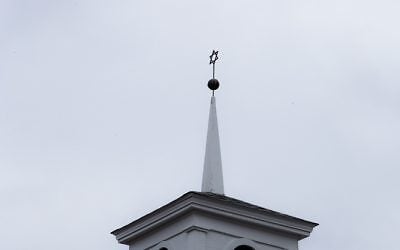
According to a story passed down through generations of the congregation, Lord’s wife insisted on one condition: the synagogue should resemble the other churches in town and have a steeple. Although no historical evidence confirms this account, the story remains part of the congregation’s oral tradition. Today, the building’s unusual steeple, topped with a Star of David, is a distinctive feature. The belfry is solid and contains no bell, serving an architectural rather than functional purpose.
Because Honesdale was a company town, the congregation had to use the Delaware and Hudson Canal Company’s architects and purchase building materials through the company. The architects were familiar with German church design but apparently had little experience designing synagogues. The result was a building whose architecture reflects the circumstances of its creation.
The balcony, sometimes mistaken for a traditional women’s seating section, reflects the influence of German church architecture, particularly the choir lofts common in Lutheran churches of that period. As a German-Jewish congregation, Beth Israel followed a tradition in which men and women could sit together, although separate seating arrangements and seating privileges varied among congregations.
The sanctuary’s most unusual feature is its Aron Kodesh, or Holy Ark, which houses the Torah scrolls. Rather than building the Ark against the sanctuary’s flat rear wall, the architects created an opening through the wall and constructed the Ark so that it projects beyond the back of the building, toward the river immediately behind the synagogue.
Congregation Beth Israel is proud of its distinction as the oldest continually operating synagogue in America still housed in its original building. Although older synagogues exist, Beth Israel’s uninterrupted use of its 1856 building makes its history particularly remarkable.
Several of the synagogue’s original pews remain in the balcony, along with unusual hinged wooden supports that have inspired stories passed down through generations. Were they kneelers, reflecting the Christian church furnishings familiar to local craftsmen working for the Delaware and Hudson Canal Company? Or were they simply footrests, designed to lift worshippers’ feet off the cold floor during lengthy services?
The answer remains uncertain, and both explanations have become part of the congregation’s lore. Like the building’s distinctive steeple and unusual Holy Ark, these small details offer a glimpse into the resourcefulness of Beth Israel’s founders and the unique circumstances surrounding the creation of their synagogue.
In 1860, the women of Congregation Beth Israel formed a Woman’s Society, with Theresa Weiss, second wife of William Weiss, serving as its first president. Later known as the Hebrew Ladies Aid, the organization became today’s Beth Israel Sisterhood, which continues its work in support of the congregation.
The women played an important role in congregational life, teaching Sabbath school and helping prepare young people for Bar and Bat Mitzvahs and Confirmation, while also raising funds for religious and educational activities. Their generosity extended to music as well: in 1882, they presented the congregation with its first melodeon, or reed organ. It was later replaced by a small organ.
The Civil War began in 1861, during Congregation Beth Israel’s early years. Although the congregation’s meeting minutes rarely reflected the larger events unfolding across the nation, members are known to have served in the conflict, including at least one who fought at the Battle of Gettysburg.
One particularly revealing entry appears in the congregation’s minutes in June 1865, just two months after President Abraham Lincoln’s assassination on April 14. The congregation’s president read a letter from the Lincoln Memorial Society requesting a contribution to its fund. The members agreed to donate $5.
In 1875, after conducting services in Hebrew and German for decades, Congregation Beth Israel voted to introduce English into its services. German remained central to congregational life, with meeting minutes continuing to be recorded in German until 1899.
Throughout the nineteenth and twentieth centuries, Jewish residents played a significant role in Honesdale’s business community, owning department stores, clothing factories, and textile businesses. Their contributions helped shape the town’s economic and cultural life for generations.
In May of 1942, a devastating flood swept through Honesdale, destroying buildings along the riverbank and severely damaging Beth Israel. The flood destroyed the synagogue’s beautiful Tiffany stained-glass windows and devastated its interior, yet the building survived when many neighboring structures did not. Following repairs, the congregation continued its life in the historic sanctuary, which one local minister later referred to as “Divine Providence on Court.”
Beth Israel’s members have also served in the United States Armed Forces, with some making the ultimate sacrifice during the World Wars. More recently, a congregant was among the first responders killed in the September 11, 2001, attacks.
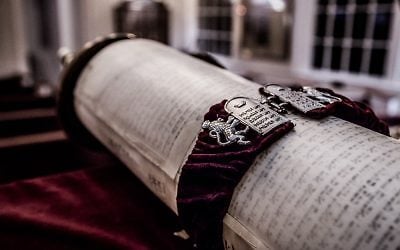
The congregation also preserves a Holocaust Czech Torah scroll, a treasured reminder of Jewish communities destroyed during the Holocaust. Beth Israel is perhaps the smallest congregation in the world to have a Holocaust Czech Torah scroll.
Shabbat at Congregation Beth Israel is a time for worship, reflection, and community. Friday evening services feature prayers and readings in Hebrew and English, music, Torah readings, and a sermon, followed by an Oneg Shabbat where members gather for refreshments and conversation. Families can also participate in religious school, holiday celebrations, and other congregational activities. Beth Israel Sisterhood, affiliated with Women of Reform Judaism, enriches congregational life through luncheons, holiday dinners, special events, and Friday evening Onegs. Its annual Yizkor Book of Remembrance, prepared for Yom Kippur, helps fund these activities and support building maintenance while providing opportunities for members to honor loved ones and strengthen community ties.
The sounds of young people talking and learning now fill the pews alongside the songs and prayers of the small Jewish community that has endured in Honesdale for nearly two centuries. As Rabbi Kleinman reflects, these are the “tidbits of Jewish life that make this synagogue come alive for 175 years.” Though its historic building and many of its members have grown older, Beth Israel’s enduring spirit lives on through generations of families who continue to worship, learn, volunteer, and preserve the traditions that make this congregation a lasting part of Honesdale’s history.
That continuity is especially evident in the congregation’s current president, a fifth-generation member of her family in Honesdale and the fifth generation to serve as president. Her great-great-great-grandfather was one of the eleven men who helped establish the congregation in 1849. Her family’s legacy embodies Beth Israel’s remarkable history: a community rooted in faith, sustained by generations of commitment, and still welcoming new voices to carry its traditions forward.
Contact Information:
Congregation Beth Israel, 615 Court Street, Honesdale, PA 18431
Phone: (570) 253-2222
Email: honesdalerabbi@gmail.com
Website: http://congregationbethisraelhonesdale.org/