


Foreign Policy Analyst | India, Israel & Middle East
Pakistan and Israel: Between Ideals and Interests
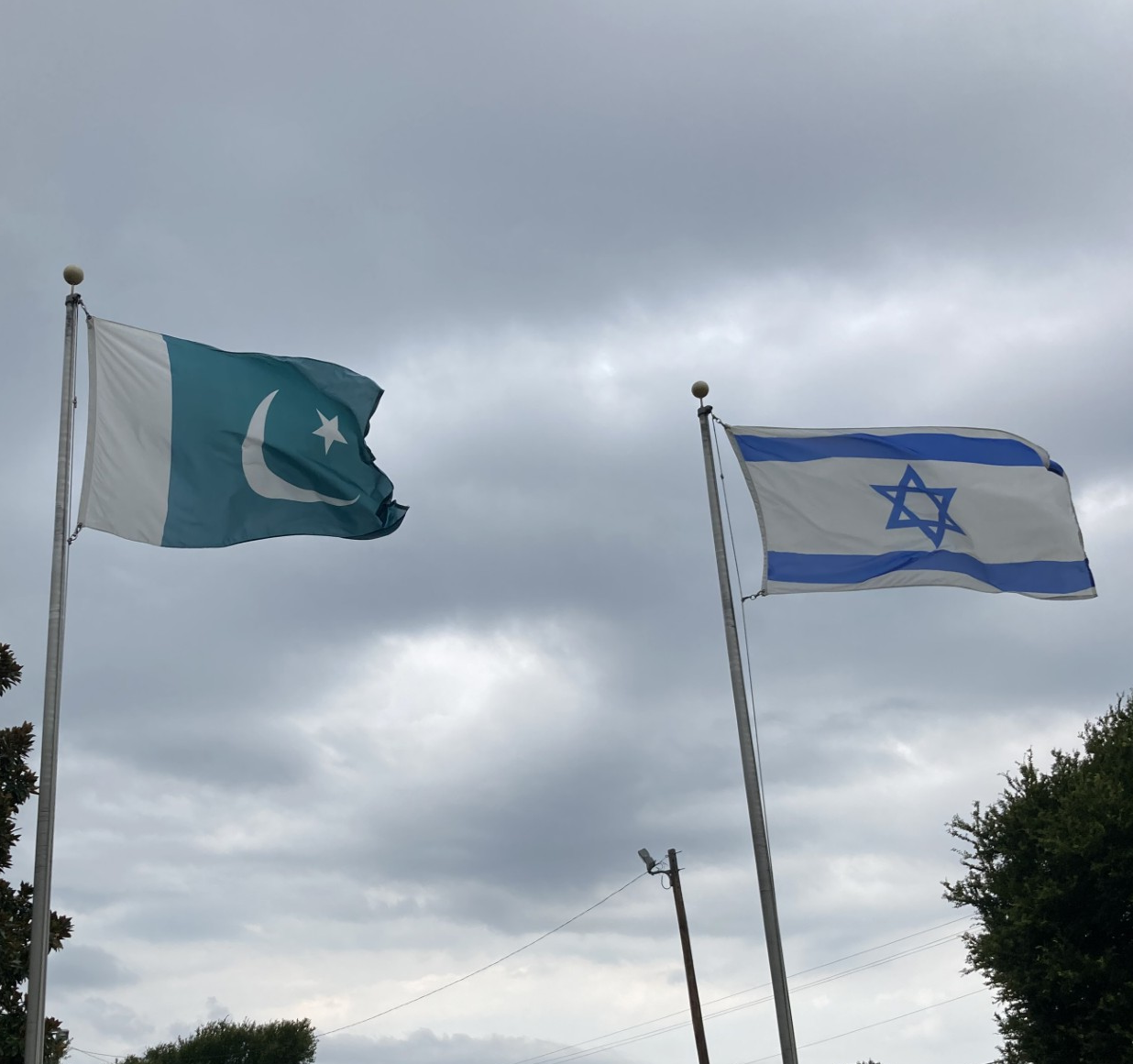
Over seven decades, the relationship between Pakistan and the State of Israel has been characterized by a paradoxical coexistence of official nonexistence and quiet operational continuity. Of the few Muslim-majority nations that still refuse to recognize the Jewish state, Pakistan has always had as its foundation a firm commitment to the Palestinian cause. However, beneath this official language lurks a complicated history of back-channel diplomacy, intelligence collaboration, and strategic objectives that has often called into question the public portrayal of the relationship.
The current geopolitical environment has fundamentally changed the decision-making framework for both countries. The Abraham Accords, the deepening strategic partnership between India and Israel, the signing of a Mecca Pact, and the ongoing effects of the Gaza conflict have together redrawn the region’s security architecture. For Pakistan, the matter is no longer whether to engage Israel, but instead how and when to respond to a dilemma that reveals an expanding gap between ideological posturing and strategic necessity.
Historical Background and Strategic Significance
The animosity between Pakistan and Israel predates the establishment of the Jewish state. Pakistan emerged in 1947 as the most vocal opponent of the UN partition plan for Palestine, with its first foreign minister, Sir Zafrulla Khan, leading the Islamic resistance. Speaking in the General Assembly, Khan said that the United Nations lacked legal jurisdiction to split Palestine, conveniently ignoring the unpleasant similarities between Pakistan’s division and the Jewish state’s claim to statehood.
In spite of intense public opposition, the founders of both states recognized some commonalities in their circumstances. Both countries emerged out of partition and were founded on different ideological identities: Pakistan as a homeland for Muslims and Israel as a homeland for Jews, and both experienced serious security threats from neighboring states. David Ben-Gurion, the inaugural Prime Minister of Israel, even wrote to Muhammad Ali Jinnah, the founder of Pakistan, to suggest that they establish diplomatic relations. However, Jinnah did not respond. Nevertheless, the two nations began communicating almost immediately, despite their apparent animosity.
As P. R. Kumaraswamy notes, “both countries have been silently chasing each other from the start.” These encounters went beyond formal diplomatic engagements and gradually revealed areas where Israeli and Pakistani interests intersected, even as both governments maintained a clear public distance. Meetings were held in Washington, London, New York, and other diplomatic centres, often on the sidelines of events organized by third countries.
Pakistan’s strategic stance against Israel has long been associated with its rivalry with India. It has employed the ‘Israel card’ to undermine India’s credibility and strengthen its position in the Arab world. Thus, its endeavors to establish an Islamic alliance were motivated less by its opposition to Israel than by its aspiration to counteract India’s influence in the region. While India sought Arab support by emphasizing its secular identity, Pakistan pursued a comparable objective by leveraging its Islamic identity.
The Strategic Dilemma Behind Pakistan’s Israel Policy
Pakistan’s official policy on Israel has been remarkably constant for more than seven decades. This long-standing position has faced unprecedented strain due to recent geopolitical pressures. Three events in particular have put more pressure on Islamabad to explain and defend its position on a regular basis. Among these are the ongoing humanitarian crisis in Gaza, Pakistan’s emerging role as a mediator between Washington and Tehran, and President Trump’s renewed push to expand the Abraham Accords. In conjunction, these developments have rendered Pakistan’s stance on Israel more apparent than it has ever been.
At the core of Pakistan’s position is the principle that it will not recognize Israel without a just settlement of the Palestinian question and the establishment of an independent Palestinian state. Pakistan continues to support a two-state solution based on pre 1967 lines with East Jerusalem as capital of a viable Palestinian state. This stance has been consistently reaffirmed by Pakistan’s Ministry of Foreign Affairs and subsequent administrations. Despite its explicit dedication to the Palestinian cause, this position serves a variety of strategic objectives. It reinforces the ideological foundation of Pakistan’s Islamic identity, aligns the country with the broader Muslim world, and assists successive administrations in avoiding domestic political backlash. In May 2026, Defense Minister Khawaja Asif reiterated this view, calling Pakistan’s potential membership into the Abraham Accords “unacceptable” since it would contradict the country’s “fundamental ideologies.” He also maintained that Pakistan has not made any move or received any request to join the agreements, dismissing concerns about probable US-backed involvement. Asif’s mention of Pakistan’s passport policy, which prohibits travel to Israel, demonstrated that the country’s viewpoint goes beyond diplomatic rhetoric and is incorporated in its official policies.
Pakistan’s refusal to normalize relations is not only an ideological stance. It also suggests a deliberate decision that the political cost of recognizing Israel is more than the possible advantages at this point. Public opinion in many Muslim-majority nations remains firmly hostile to normalization, especially in light of the ongoing conflict in Gaza. The political weight of this opposition is significantly increased in Pakistan due to the country’s highly contested political environment, which is characterized by the significant influence of religious parties and the frequent reinforcement of anti-Israel sentiment by media coverage. These domestic pressures are further complicated by Pakistan’s economic vulnerability. The country continues to be significantly reliant on financial assistance from Gulf states, many of which have already established diplomatic relations with Israel. This places Islamabad in a difficult position. Theoretically, its economic dependency on these nations might lead to more convergence with their emerging regional policies. At the same time, this dependency also renders Pakistan more vulnerable to public opinion across the Muslim world. Any notion that Islamabad has abandoned the Palestinian cause might lead to internal instability and put extra strain on an already fragile economy.
These internal and economic restrictions grew even more pressing as Washington exerted pressure on Pakistan to alter its stance toward Israel. President Trump’s decision to link the expansion of the Abraham Accords with efforts to resolve the Iran crisis has introduced a new dimension to Islamabad’s crisis. In May 2026, Trump urged Saudi Arabia, Qatar, Pakistan, Turkey, Egypt, and Jordan to join the treaties as part of a larger attempt to build a more connected Middle East. For Pakistan, however, the proposition posed a difficult choice. The proposal’s rejection could have resulted in significant domestic opposition, while progressing toward normalization could have undermined its expanding diplomatic influence between Washington and Tehran. Islamabad ultimately maintained its current position, opting to maintain its diplomatic credibility with Iran and resist pressure to modify its policy toward Israel.
The Gaza crisis has bolstered Pakistan’s public stance against normalization with Israel and provided Islamabad more diplomatic flexibility to sustain that posture. At the same time, Pakistan has strived to stay engaged in international efforts to pacify Gaza, trying to combine support for the Palestinian cause with a more active regional diplomatic role. This delicate balance was particularly intriguing in October 2025, when Indian media outlets reported that Pakistan had engaged in confidential discussions with the CIA and Israel’s Mossad regarding the potential deployment of Pakistani troops to Gaza. Islamabad categorically denounced the accusations as false and denied any such meetings or agreements. The episode underscored the complexity of the decisions that Islamabad must make and the increasing speculation surrounding Pakistan’s discreet engagement with regional diplomatic initiatives, despite the fact that the claims were never substantiated.
Despite Pakistan’s unequivocal refusal to participate in the Abraham Accords, there are indications that the broader diplomatic environment surrounding Israel is becoming more fluid. The military establishment continues to be a critical component of any significant change in Pakistan’s foreign policy, despite the absence of any public indication that Islamabad is preparing for normalization. One significant incident was in November 2025 at the World Travel Market in London when the Director General of Israeli Tourism was spotted talking to an aide to Pakistan’s prime minister. The event garnered attention due to the absence of diplomatic relations between Pakistan and Israel. While the encounter does not necessarily signify a policy change, such meetings are noteworthy because they demonstrate that informal contact is becoming more difficult to distinguish from the larger regional diplomacy around Israel. For the time being, Pakistan continues to resist official involvement in the Abraham Accords while navigating a Middle Eastern context in which Israel is growing more integrated.
The Regional Chessboard: Mecca Agreement and Countervailing Alliances
In addition, the regional equilibrium has been evolving beyond the issue of Pakistan’s relationship with Israel. In August 2026, Saudi Arabia, Turkey, and Pakistan signed the Mecca Joint Defense Agreement, which established a new security framework among the three main Muslim powers. The agreement included a mutual defense commitment, which stipulated that an assault on one would be considered an attack on all. For Israel, the agreement is crucial because Pakistan’s military and nuclear capabilities give the grouping substantial strategic weight. However, its long-term potential remains questionable due to the three nations’ differing objectives and connections with Iran. These disparities were underscored by Pakistan’s decision to serve as a mediator between Washington and Tehran during the US-Iran conflict. The pact has also helped to foster better collaboration with nations on the opposite side of the regional divide, notably India, the UAE and Israel. Consequently, the emerging regional landscape is less characterized by two distinct blocs and more by overlapping partnerships. States such as India, the UAE, Turkey, Saudi Arabia, and Pakistan are attempting to balance their cooperation with their competing strategic interests.
Future Prospects: The Path Forward
Pakistan’s future ties with Israel are likely to remain characterized by cautious engagement rather than immediate normalization. Given that Islamabad continues to prioritize Palestinian statehood as the primary prerequisite for recognition, it is difficult to envision a formal diplomatic breakthrough in the near future. Hence, a serious political settlement leading to a viable Palestinian state might be the single most crucial element that can change Pakistan’s posture. If such a development does take place, Islamabad would have more political leeway to reassess its approach without seeming to forsake the Palestinian cause.
External pressure might also become more prominent. The potential for Islamabad to reevaluate its stance in the long term may be prompted by Washington’s ongoing efforts to broaden the Abraham Accords and Pakistan’s increasing reliance on Gulf partners that have already established relations with Israel. However, Pakistan’s recent rejection of the Abraham Accords illustrates that economic and diplomatic pressure alone are unlikely to result in a rapid policy shift. Islamabad seems more concerned with maintaining diplomatic flexibility and a role in regional mediation than with embracing a normalization framework on Washington’s terms.
Additionally, the military establishment is a significant factor. The Pakistani military’s longstanding influence over foreign and security policy would almost certainly necessitate the support of the military leadership to effect any significant change toward Israel. However, there is insufficient public evidence to infer that the military has resolved to pursue normalization. There is a progressive increase in Pakistan’s involvement in regional diplomatic initiatives that involve the United States and other states that maintain relations with Israel. These changes suggest a shifting diplomatic climate, but they do not necessarily imply a shift in Pakistan’s official stance.
Conclusion
Pakistan-Israel relations are still characterized by a significant disparity between the official hostility and the increasing strategic complexity. While Pakistan continues to deny recognition of Israel and has refused to sign the Abraham Accords, its growing involvement in Middle Eastern diplomacy, the strengthening India-Israel relationship, and shifting regional alignments are progressively altering the geopolitical landscape. Normalization might provide diplomatic, economic, and security gains for Islamabad, but internal political costs and the unsolved Palestinian crisis remain big hurdles. As of now, Pakistan is expected to maintain this meticulous equilibrium, interacting with the evolving regional order without officially acknowledging Israel. A dramatic shift would need real progress on Palestinian statehood, changes in domestic political views, and better strategic incentives. The relationship is unlikely to alter drastically in the near future, but the gap between Pakistan’s official stance and its changing strategic goals is becoming more impossible to ignore.