
Pakistan’s Seat at the Table, Israel’s Security on the Line
At the end of a long and punishing war, representatives of a young and battered United States arrived in Paris in 1783 to sign the treaty that would formally end the American Revolutionary War. What made the Treaty of Paris historic was not merely the end of fighting, but Britain’s recognition of American independence, American sovereignty, the ceding of territory, and the arrival of a new political reality. For the Americans who had fought through years of uncertainty, exhaustion, and sacrifice, the treaty settled fundamental questions about power, legitimacy, and their right to exist and govern themselves.
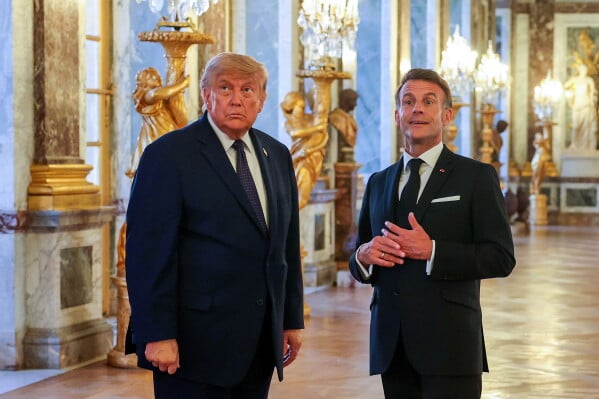
Years later, amid another scene of European grandeur, a very different diplomatic document was signed. In 2026, President Donald Trump signed a U.S.-Iran memorandum at the Palace of Versailles following a G7 gathering hosted by French President Emmanuel Macron. At the same time, Pakistani Prime Minister Shehbaz Sharif celebrated from Islamabad, presenting the “Islamabad Memorandum of Understanding” as a breakthrough for regional stability and portraying Pakistan as a broker of peace. The mediation itself was between Washington and Tehran and didn’t involve Israel directly. Yet that distinction does not reduce its importance for Jerusalem. On paper, it promised an end to immediate hostilities and a path toward de-escalation. Inside Israel, however, the memorandum was met not with relief, but with unease.
At its core, the framework calls for an “immediate and permanent” end to military operations on all fronts, including in Lebanon, while pressure on Iran begins to ease before the hardest issues are resolved. That matters because Lebanon is not an abstract front for Israel. It is the arena through which Hezbollah, Iran’s most powerful proxy, has repeatedly attacked Israeli civilians and tested Israel’s northern border. The naval blockade begins to come down immediately and is to be fully ended within 30 days. Commercial passage from the Persian Gulf to the Sea of Oman is to restart, economic mechanisms worth hundreds of billions of dollars are to be developed, and oil-related waivers arrive before a final deal is complete. Meanwhile, the disposition of enriched material, IAEA supervision, enrichment, enforcement, and the long-term nuclear framework are pushed into the next stage of negotiations. This is the imbalance. Relief first, verification later; economic oxygen first, nuclear enforcement later; a diplomatic umbrella over Lebanon first, Israel’s security needs after the fact.
Living through war for decades has taught Israelis the price of conflict more deeply than most nations. There is nothing wrong with peace. After years of rocket and missile attacks, terror waves, military operations, and now a multi-front conflict stretching from Gaza to Lebanon and involving Iran directly, many Israelis are simply exhausted. They want this war to end. They want their children to grow up without sirens, reservists to return permanently to their families, and entire communities to stop living between periods of uneasy calm and the next round of violence. But Israelis are not looking for a temporary pause that merely postpones the next confrontation. They want a peace that is stable, durable, and enforceable, not a cycle in which Iran regroups, rearms its proxies, and returns every year with a new campaign.
And for such a peace to be achieved, and for war to truly end, the mediator must be both credible and trustworthy. Even when a mediator is not negotiating directly on Israel’s behalf, its worldview matters if the deal it produces places limits on Israel’s freedom of action in Lebanon while leaving Iran’s nuclear questions unresolved for a later stage. Before Pakistan is celebrated as a stabilizing force in a framework that affects Israel’s security, its own record must be examined with clarity. There is an old saying about the fox guarding the chicken coop. In this case, Pakistan is not guarding Israel directly. But it is helping shape the fence around a conflict in which Israel’s security is directly exposed, and that makes the identity of the fox impossible to ignore.
Diplomacy begins with recognition, and Pakistan does not recognize Israel. This is neither a minor technicality nor a temporary diplomatic disagreement. It is a foundational political position. The Pakistani passport itself has long carried the message that it is valid for travel to all countries except Israel. A state that officially excludes Israel from the map of legitimate nations cannot be treated as a neutral moral authority in any regional framework that affects Israel’s security. Recognition is the first test of neutrality. Pakistan fails before the talks even begin.
On this issue, the problem is not merely diplomatic. It is not simply that Pakistan is a Muslim country, nor is it that Pakistan supports Palestinian statehood. Many countries sympathize with the Palestinian cause and still maintain civilized, even productive, relations with Israel. The issue is much more basic. Pakistan has long cultivated a role for itself as a vanguard of the Islamic world armed with nuclear weapons, while repeatedly using antisemitic rhetoric as a tool for domestic mobilization.
Real neutrality requires at least a basic acknowledgment that the countries affected by a deal exist as legitimate political actors. Pakistan has instead built its public position around rejection, ideological hostility, and solidarity with forces that deny Jewish sovereignty. This is not the posture of a disinterested regional broker. It is the posture of a state that wants the prestige of mediation while rejecting the legitimacy of one of the countries most affected by the consequences of the deal.
Open hostility from Pakistan’s leadership makes this lack of neutrality current, public, and political. In April, as Islamabad presented itself as a venue for de-escalation, Pakistan’s defense minister, Khawaja Asif, in a now-deleted tweet, described Israel as “evil,” “a curse for humanity,” and a “cancerous state.” He invoked European Jews in a way that was not merely anti-Israel but unmistakably antisemitic. No Israeli should have to pretend that such rhetoric is normal. No serious diplomat should pretend it is irrelevant. And no government whose defense minister speaks about Israel in that language can expect Israelis to trust its role in shaping any agreement that can benefit Israel.
Nor is this hostility limited to one minister or one deleted tweet. Pakistani political and religious spaces have repeatedly served as platforms for Hamas representatives and pro-Hamas mobilization. After the October 7 massacre, Hamas figures addressed gatherings in Pakistan, including the October 2023 Mufti Mehmood Conference in Peshawar, where Khaled Mashal praised Hamas’s global Islamist mission and spoke of expelling Israeli Jews from Palestine. By January 2024, Hamas representative Dr. Khaled Qaddoumi was received by members of Pakistan’s Senate on a special invitation. During the meeting, Senator Mushahid Hussain recalled Pakistan’s past $1 million donation to the Hamas government and said that “Palestine is part of our DNA.” This was not neutral diplomacy. It was open political sympathy for Hamas inside Pakistan’s parliamentary space.
In June 2024, Jamaat-e-Islami’s Gaza Million March in Karachi demanded that Pakistan recognize Hamas’s legal status, and by February 2025, Hamas representatives appeared at a Kashmir Solidarity and Hamas Operation “Al Aqsa Flood” conference in Pakistan-occupied Kashmir alongside figures from Lashkar-e-Taiba and Jaish-e-Mohammed. One does not need to exaggerate the point. Pakistan is not Iran. It is not Hamas’s chief sponsor. But the record is already serious enough. The same country now presenting itself as a mediator in a U.S.-Iran framework that affects Israel’s security has publicly platformed Hamas officials, permitted senior political figures to praise the worst massacre of Jews since the Holocaust, and allowed Hamas-linked networks to rapidly expand their footprint in Pakistan.
Such duplicity is not new. Pakistan’s strategy has often been to keep two faces, one for international forums and another for its domestic audience. Abroad, it speaks of peace. At home, it glorifies conflict. Abroad, it condemns terrorism in abstract language. At home, terrorists receive funerals with state-like symbolism, public sympathy, and ideological protection. For decades, it has played a double game, acting as a Western ally during the War on Terror while sheltering and funding multiple terror groups. The international community itself has repeatedly raised concerns about Pakistan’s record on terror financing. Pakistan was placed on the Financial Action Task Force grey list in June 2018 and remained under enhanced monitoring until October 2022, after FATF-linked reviews identified serious deficiencies in its anti-money laundering and counter-terrorist financing framework.
The most famous symbol of that double game remains Abbottabad. Osama bin Laden, the architect of September 11, was killed by U.S. forces in 2011 not in a cave in some remote tribal wilderness, but in a compound in Abbottabad, near Pakistan’s military academy. During the War on Terror, Pakistan received enormous American support while the Taliban continued to find sanctuary across the border. When the United States withdrew from Afghanistan, the symbolism was impossible to miss. Pakistan’s intelligence chief was soon photographed in Kabul, at a moment when the Taliban’s return was being celebrated by many in Pakistan’s strategic establishment as a victory over American power.
Here, even the first Trump administration once recognized the problem clearly. In January 2018, Trump accused Pakistan of giving the United States “nothing but lies & deceit” and of providing safe haven to terrorists. Washington then suspended security assistance. Today, under geopolitical pressure, the same Pakistan is being recast as a trusted intermediary for a U.S.-Iran arrangement that Israel is expected to take seriously. Geopolitics always contains reversals, and necessity often produces strange partners. But Israelis should not confuse diplomatic convenience with moral clarity.
Even in its own neighborhood, Pakistan has not stabilized the region around it. It remains trapped in unresolved conflicts with its neighbors, from its violent and unsettled border with Afghanistan to its decades-long hostility with India. A state that has repeatedly failed to resolve the fires it helped ignite in its own backyard cannot credibly present itself as a stabilizing force in someone else’s conflict. In 2026, Pakistani airstrikes inside Afghanistan killed civilians, including children, while Islamabad said it was targeting militants responsible for attacks inside Pakistan. The Taliban authorities in Kabul deny Pakistan’s claims and accuse Islamabad of violating Afghan sovereignty. This is not the profile of a regional state that has mastered peace. It is the profile of a state still wrestling with the terrorist ecosystem it helped cultivate.
Between Pakistan and India, the record is equally fraught. India continues to face terror attacks from Pakistan-sponsored terror groups. The wounds are still fresh from the 2025 Pahalgam attack in Kashmir that killed 26 innocent civilians. Groups that carry out constant attacks against India, including Lashkar-e-Taiba and Jaish-e-Mohammed, continue to operate under the protection and tolerance of Pakistan’s military establishment.
Education also reveals a deeper political culture behind this hostility towards the Jewish state. Israel is not presented as a normal country with a history, people, security concerns, and legitimate sovereignty. Jews and Israel are often embedded in a worldview of suspicion, conflict, and religious opposition. In a Grade 8 Geography textbook from the Punjab board, while discussing Pakistan’s role in the Middle East, the language is framed in openly partisan terms. Students are told that Pakistan supported Middle Eastern countries “on every front” in their war against Israel. This is not a neutral history. It is a moral instruction. The lesson is not merely that a war happened. The lesson is that Pakistan’s natural place is against Israel.
Similarly, the same pattern appears when the United States and Iran are discussed. A Pakistan Studies Grade 9 textbook from the Punjab board portrays American intentions toward Iran in hostile terms and presents Iran as the side deserving sympathy against Western pressure. The student is not given a balanced understanding of Iran’s ideological regime, its regional proxies, its nuclear ambitions, or its repeated threats to wipe Israel off the map. Instead, the conflict is framed in a way that aligns Pakistan emotionally with Iran against the United States and, by extension, against Israel.
This matters enormously in the present moment. If Pakistan’s classrooms have taught students to see Israel as an enemy, the United States as an aggressor, and Iran as a state resisting Western pressure, then Pakistan’s mediation is not emerging from neutrality. It is emerging from a society whose educational material has already chosen sides. A country that has not made peace with the legitimacy of Jewish sovereignty cannot simply rebrand itself as the Middle East’s new steward of peace because Washington finds it tactically useful.
Despite this record, there are reasons the United States might use Pakistan. Islamabad has channels to Tehran. It has an interest in lowering Gulf tensions because oil shocks harm Pakistan’s fragile economy. It may be useful as a messenger. It may be acceptable to Iran in ways that Western mediators are not. It may even have played a constructive role in keeping lines of communication open. But a messenger is not the same thing as a guarantor. Pakistan can be tactically useful to Washington and strategically untrustworthy for Jerusalem at the same time.
Even so, the language surrounding this agreement is already becoming dangerously sentimental. The world is being told that peace has been signed, that the region has stepped back from the brink, and that Pakistan helped broker calm. But Israelis have heard such words before. Peace is not a photo opportunity. It is not a social-media announcement. It is not a memorandum with unresolved annexes and deferred enforcement.
No serious Israeli can ignore what the Treaty of Paris represented for the Americans. It recognized the core demand of the party that had fought for independence, which was sovereignty. Israel’s concern with the Islamabad Memorandum is precisely that this principle is being weakened. Iran continues to use Hezbollah as a proxy to attack Israel, and it is not in Israel’s interest to simply absorb fire and pull back from South Lebanon without dismantling Hezbollah’s military threat. Israel has the sovereign right to protect its citizens. These issues will not be brought into the center of Pakistani mediation because Pakistan does not care about Israel’s security in the first place. Israelis understand this well. Israel’s deputy foreign minister, Sharren Haskel, has herself made it clear that Israel has “little trust in the intentions of a radical, fanatic regime that is deeply antisemitic.”
Today, Pakistan may have moved closer to the Trump administration. It may have gained a seat at the table. It may even have helped produce a document that temporarily lowers regional tensions. But usefulness is not credibility, access is not neutrality, and mediation is certainly not legitimacy. A state whose political rhetoric, educational material, and strategic culture have long treated Israel as illegitimate cannot be trusted to shape outcomes that touch Israel’s security.
In the end, Pakistan’s deeper problem is reputational. It has built its image not by dismantling extremism, but by managing it, exporting it, denying it, and then offering itself as a partner against it. It speaks the language of peace when it needs international legitimacy, while the infrastructure of jihad continues to operate in its shadow.
Sustainable peace is not made by those who teach hatred and then sell mediation. It is made by those who accept reality. Israel exists and will continue to exist. Ideological hostility cannot be repackaged as diplomacy. Until Pakistan accepts these truths, it is not the guardian of the coop. It is the fox offering security after the feathers are already on the ground.
This deal, therefore, cannot be treated as durable peace simply because it carries diplomatic language. If it postpones verification, empowers Iran early, places Israel’s security behind procedural promises, and relies on a mediator that does not even recognize the Jewish state, then it does not settle the conflict. It only rearranges the risks. Sovereignty is not a technical detail to be managed by hostile intermediaries. It is the foundation without which every promise of peace becomes another illusion of stability.