
Parashah Mishpatim: When Justice Becomes Life
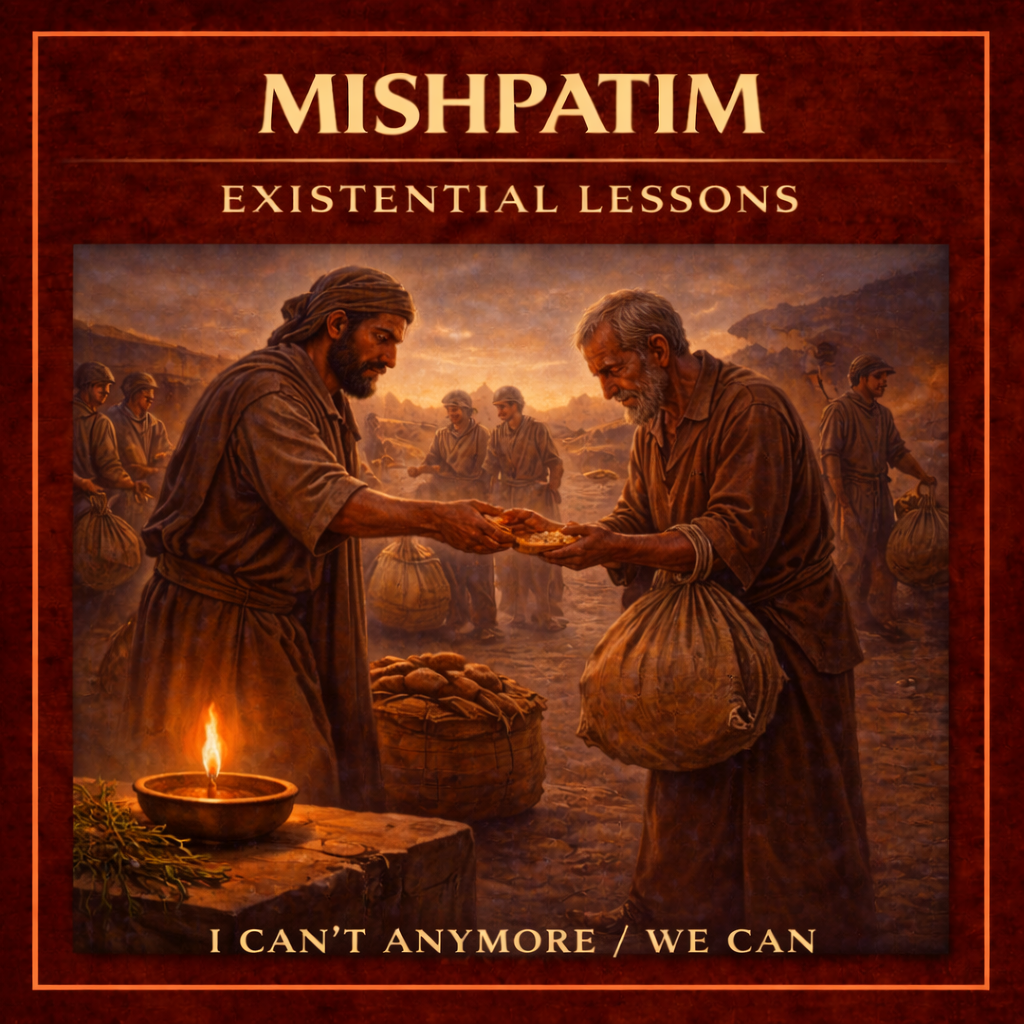
Parashah Mishpatim — Existential Lessons: When Justice Becomes Life
After the fire comes the test — not on the mountain, but in the market, in the queue, at home, in fatigue, in the middle of an ordinary afternoon. Because listening is easy when everything trembles. Living what you heard is something else. Mishpatim does not ask what you felt at Sinai. It asks what you do on a Tuesday afternoon, when no one is watching, when you are tired, distracted, in a hurry. That is where truth begins.
The first lesson is uncomfortable: spirituality is not measured by emotions, but by decisions. You can cry in prayer, tremble during a reading, speak about God beautifully, and still lie, exploit, twist reality when it suits you. The Torah is not impressed. It watches you walk. It watches how you speak to the cashier, how you answer when someone slows you down, how you behave when no one is keeping score.
And then the weak appear. They always appear. Not as an idea, not as a theory, but as a person standing in front of you — someone slower, poorer, more confused, more exposed. Someone you could easily ignore. There, who you are is revealed. Not in what you say. In what you do when you could walk past. Whoever protects the fragile protects Sinai. Whoever ignores them quietly extinguishes it.
Mishpatim teaches that harming is not only breaking things. It is breaking the world. Every lie snaps a thread. Every abuse loosens the fabric. Every injustice leaves a crack. And every honest repair stitches something back together. This is not bureaucracy. It is creation. To repair is to say again to the world, without speeches and without excuses: I want you to stay alive.
Then comes the gaze. Before you steal with your hand, you steal with your eyes. Before you betray, you decide not to see. Corruption begins in the pupil, in the small inner voice that says it’s not so serious, everyone does it, I can’t change anything anyway. That is where the fall begins. And, quietly, that is also where return can begin.
Then time appears. You work, you push, you run, you produce, you answer messages, you chase deadlines, until one day you no longer know why you are doing any of it. Shabbat breaks in like a brutal truth: you do not own the world, you do not own time, you do not even own yourself. Resting is not losing. It is trusting. Whoever does not know how to stop remains a slave, even if they look successful.
Then comes the real covenant. Not the poetic one. The costly one.
Na‘aseh ve-nishma — we will do, and then we will understand.
First commitment. Then clarity. You say yes without guarantees, without a map, without control, without knowing how it will turn out. And in that risk, identity is born. Mature faith does not wait for certainty before walking.
Mishpatim also teaches something hard: you cannot be just alone. You need others — people who hold you when you weaken, who confront you when you start lying to yourself, who remind you who you are when you get lost. Isolated justice turns into pride. Shared justice becomes a path you can actually walk.
And a final truth appears. The law does not exist to control you. It exists to protect your humanity, so that you do not become a predator, or a permanent victim, or a cold machine that only knows how to function. It exists so that you remain a person, capable of responsibility, tenderness, and restraint.
Many people search for high spiritual experiences, intense moments, powerful emotions. Mishpatim looks for something else: that you return what is not yours, that you speak without humiliating, that you do not look away when it is uncomfortable, that you stop before you destroy yourself, that you repair when you fail. This is embodied mysticism. This is Sinai in trainers, walking through ordinary streets.
The teaching is simple and fierce. Faith is not proven in the temple. It is proven in treatment — in how you pay, how you listen, how you correct, how you apologise, how you stop, how you begin again. There, God is still speaking.
Mishpatim does not promise perfection. It promises a path: falling, repairing, learning, returning, again and again, until justice is no longer an effort, but a natural way of living, like breathing, like walking, like speaking truth without calculating the cost.
Because true freedom is not doing whatever you want.
It is being able to do what is right
without destroying yourself.
And that…
is learned by walking.