Parashah Vaerá — Existential lessons
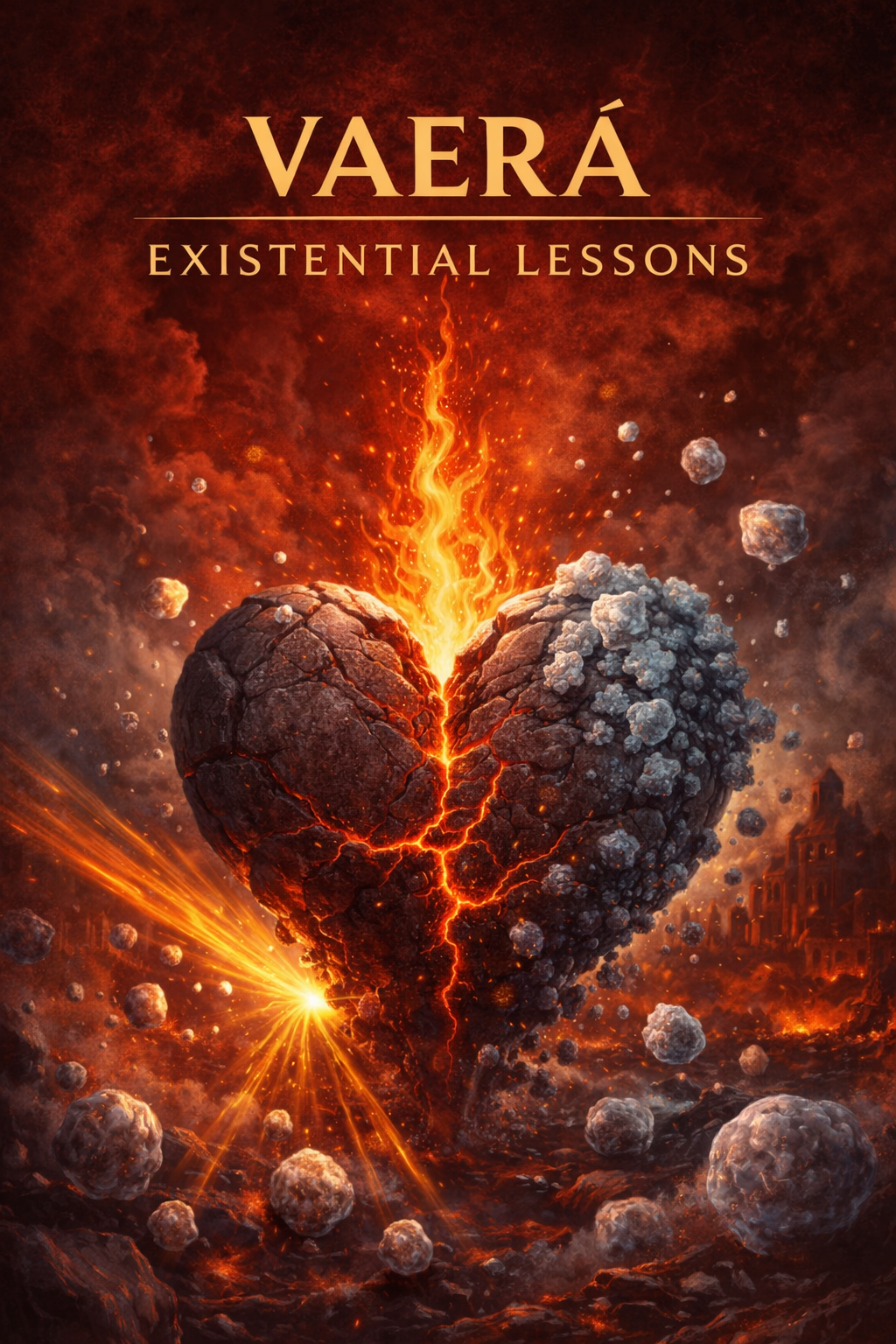
Parashah Vaerá — Existential lessons
Revelation does not always bring relief: sometimes it brings collision. Vaerá destroys the childish fantasy that “if God speaks, everything improves”. Here the opposite happens: God reveals Himself, and the world hardens. Light appears before the heart has the capacity to receive it. This is the first ontological principle of Vaerá: truth does not arrive when you are ready; it arrives when it is necessary. And many times, when it arrives, it hurts.
The Name that is revealed is not information; it is presence. “Ani HaShem” is not an argument, nor a theory, nor a doctrine. It is a naked affirmation: “I am here.” And that presence enters precisely where the human being has run out of air. That is why Vaerá does not show a God who explains suffering, but a God who descends inside suffering without asking you to understand it. Mature faith is not comprehension. It is allowing presence to exist even when life makes no sense.
The people do not “not believe”; they cannot listen. Torah says it with brutal precision: mi-kotzer ruach — lack of spirit, lack of breath. When the soul is crushed, the promise does not comfort: it wounds. Not because it is false, but because it touches what can no longer respond. That is why Vaerá reveals an uncomfortable truth: there are states where hope feels like cruelty, because remembering freedom when you cannot breathe is another form of pain.
Moshe is at the most human point in the whole story: his incapacity. “Uncircumcised lips” is not shyness; it is ontological blockage. The voice does not come out because identity is not yet aligned with the mission. But here the central inversion occurs: HaShem does not wait for Moshe to become “capable” in order to call him. He calls him inside his fracture. This teaches that vocation is not born of competence, but of fidelity in the midst of insufficiency. True authority does not come from strength, but from inner truth.
Vaerá introduces the most dangerous mystery: the hardened heart. Pharaoh is not only a tyrant. He is a psychological structure: rigidity that would rather destroy the world than let go of control. That is why the plagues are not understood as simple moral punishment. They are ontological exposure: signs that reveal the real price of closing the heart. Hardening is not an “error”; it is a decision repeated until it becomes nature. The deepest evil is not violence: it is the inability to change.
The plagues are a language addressed to the soul, not to ideology. Blood, frogs, living dust, darkness, fire and ice together: creation itself is thrown out of joint. It is as if the world were saying: “your order was a lie.” When the human being clings to false control, reality breaks in order to unmask it. Vaerá teaches that reality is not neutral: it reacts to closure. Where the heart closes, creation becomes a brutal mirror.
And yet, Vaerá shows something even more disturbing: seeing is not enough. Pharaoh sees. Pharaoh suffers. Pharaoh even confesses at times. But he closes again. This reveals the core of slavery: it is not outside; it is inside. A human being can pass through enormous signs and remain the same. That is why freedom is not that “the plagues occur”. Freedom occurs when a sign enters down to the bone and reorganises the interior.
In Vaerá, Moshe changes while Egypt hardens. That is the silent inversion. The parashá is not only about plagues: it is about transformation of the messenger. Moshe stops speaking from the need to be believed and begins to speak as a channel. He no longer tries to “win” reality. He embodies it. This is the operative secret: the system does not fall merely because it is attacked; it falls when someone appears who no longer belongs to it.
Vaerá teaches that HaShem does not act according to human receptivity. Divine fidelity does not withdraw because the people have no air and the leader doubts. Revelation insists even when the receiver is closed. This defines a radical principle: redemption does not depend on your emotional state. It depends on a persistence that works beneath your capacity to believe.
And therefore the final message is brutal and liberating: darkness is not always ignorance. Sometimes it is choice. Light insists until that choice becomes visible. And when it becomes visible, the heart can no longer pretend innocence. The exit begins there: when hardness stops being defence and reveals itself as decision.
Vaerá does not promise comfort.
It promises exposure.
It promises that closure cannot hide forever.
And that the light —implacable and faithful— will keep insisting until the heart breathes again.