
A Mermaid in Jerusalem
Parashat Eikev: Between survival and mercy
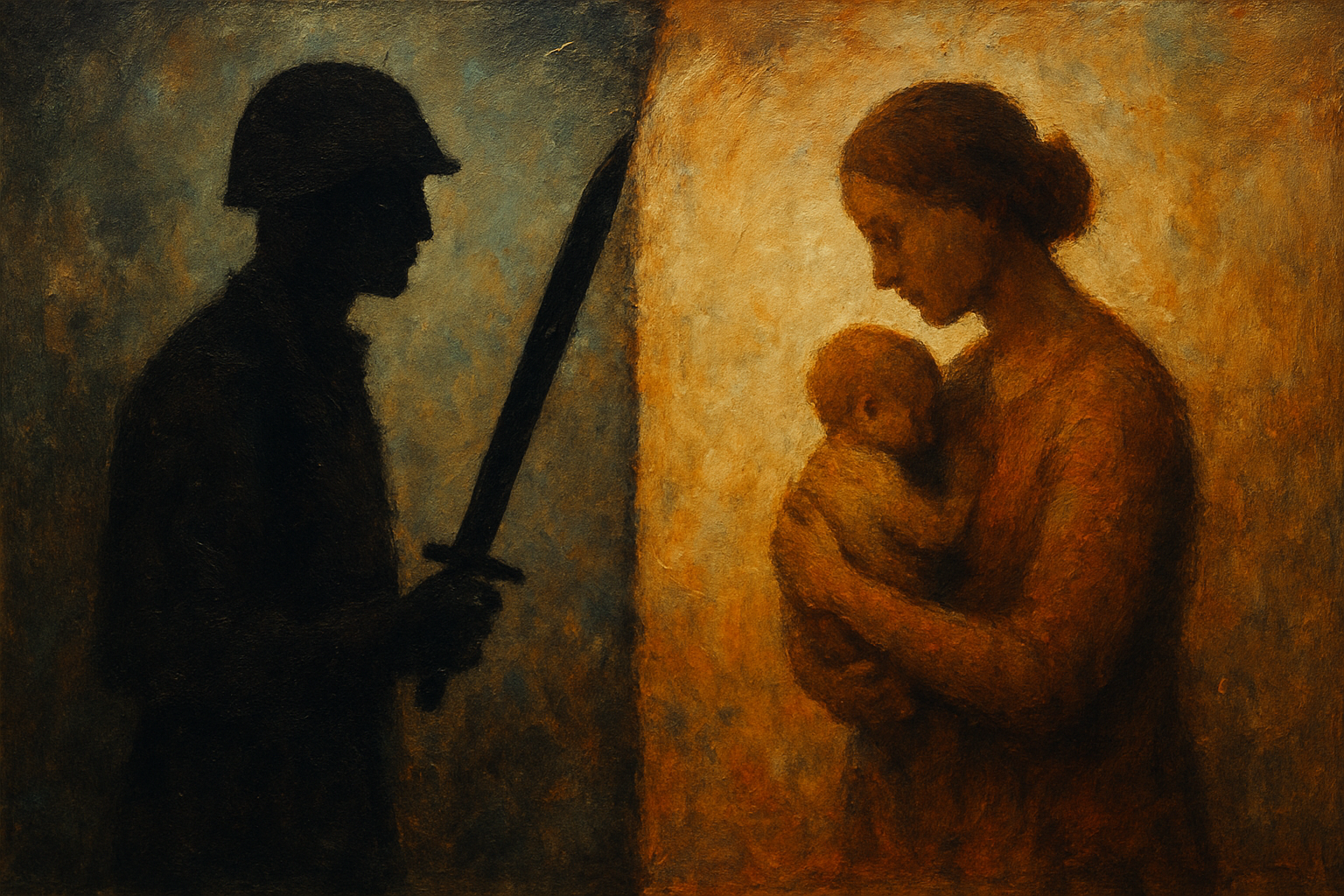
The air is thick in Jerusalem and it’s a vibe because in this week’s Torah portion, Eikev, the air is thick with command and consequence. Some passages carry the iron taste of survival — the reminder that there are times when mercy becomes a luxury we cannot afford. Others carry the ache of memory — the charge to hold the stranger close, because we once walked in their skin.
The text does not resolve this for us.
It lets the two truths stand in the same breath, unblinking.
And so we are left to live in the space between them.
In that space, the world is not tidy. In that space, the boundaries between good and evil are real — but the map is written on shifting sand. In that space, the hand that feeds can also hold a sword, and the hand that strikes can also reach for bread.
Eikev seems to know we will always live here — on the knife-edge between who we must be to survive, and who we are called to be to remain human. It’s not an ancient riddle; it’s the architecture of Jewish history. We have been both the ones pushed to the brink and the ones holding the gates shut. We have carried the trauma of Egypt into every generation, and we have carried the stubborn belief that even strangers can be brought into the circle.
Right now, in this unbearable season, that space between feels smaller than ever.
The walls close in when we see the faces of our kidnapped and murdered — children murdered in their beds, men forced to dig their own graves, women beaten until they forget their own names. We are commanded, in the marrow of our being, to protect them – those still alive and those who are a memory – to ensure that no more of us are swallowed whole.
And yet, in the next breath, the images change — skeletal children in Gaza, ribs pushing through skin, their mothers holding them the way our mothers held us. There is no comfort in looking away, and no peace in looking too long.
So what do we do with this?
If we give ourselves entirely to rage, we risk building a wall so high around our hearts that nothing can grow there again. If we give ourselves entirely to compassion for the other, we risk leaving our own people exposed to the next blow.
The portion doesn’t give us a formula. It gives us a demand: to keep wrestling. To hold the line of defense with one hand and the thread of compassion with the other, even when the rope cuts into our skin.
This is the agony of moral responsibility: there will be no pure victories here. There will be no story in which we emerge untouched. But maybe that is the point — that to live as a people bound by covenant is to live in a permanent state of moral tension, refusing to let go of either side even when the weight becomes unbearable.
And so we walk this narrow road. We carry our dead and our kidnapped on one shoulder, the stranger’s child on the other. We hear the echo of the desert wind, reminding us that we have been both hunter and hunted. And we pray — not for an end to the wrestling, but for the strength to keep wrestling without losing ourselves.
Related Topics
Related Posts