Parashat Ki Tavo: A Heart to Know, Eyes to See, Ears to Hear
Some verses mark a turning point in consciousness. One of them appears near the end of Parashat Ki Tavo, describing a shift in the way Israel understands its past and imagines its future.
The book of Deuteronomy repeatedly revisits the formative events of Israel’s story—sometimes emphasizing them differently, sometimes retelling them with subtle changes. Yet the sense of awe before the long list of curses in our parasha strikes us as though it were being voiced for the very first time.
Between the Torah’s Conclusion and the Year’s End
As we approach the closing chapters of the Torah, one might expect a reflective wrapping-up of what has already been revealed. But one verse tells us otherwise: all along we may have thought we knew and perceived, while in fact only now a new threshold is reached in Israel’s biography. As the parasha says: “Yet the Lord has not given you a heart to perceive, and eyes to see, and ears to hear, until this day” (Deut. 29:3). Until this moment the heart, the eyes, and the ears were functioning only partially; from “this day” onward perception itself is transformed.
We recognize this narrative from our own lives: there are times when our understanding seems settled, until a paradigm shift reinterprets everything—our past and our horizon alike. This spirit of summation and renewal belongs not only to Deuteronomy but also to the season of Elul: a time of looking back at the year, trying to take it in as a whole, even as we prepare for the cycle that will begin anew with Tishrei.
The tension of change—just before Israel takes leave of Moses and crosses into the land (still imagining it will be simple)—is mirrored in the rhythm of our own year. The annual Torah reading cycle brings us, again and again, to the sense that what we have lived through is already “past,” while a new “present” is about to unfold. The conclusion of the Torah and the anticipation of the High Holidays converge. Alongside the awe of the “Days of Awe,” there is also joy—the joy of walking into the unknown, carrying prayers and hopes.
But can we say that this is how we approach the Torah’s ending this year, after these last two years? Can we step into this Shabbat while the tremors of this past week still reverberate? The relentless stream of events—in Israel, the Middle East, the United States, across the globe, and in the most intimate circles of our lives—floods us. The familiar rhythm of accumulating experiences until the moment of closure and the opening of a “new page,” whether in the Jewish calendar or in our sense of standing in judgment, feels profoundly altered.
The vigilance with which we now walk stems not only from awe of God and not only from the encounter with the unknown. Heavy fears we once only anticipated have already materialized; others we never imagined have surged upon us. They have become part of us. These are the faces of collective trauma, with deeply personal consequences.
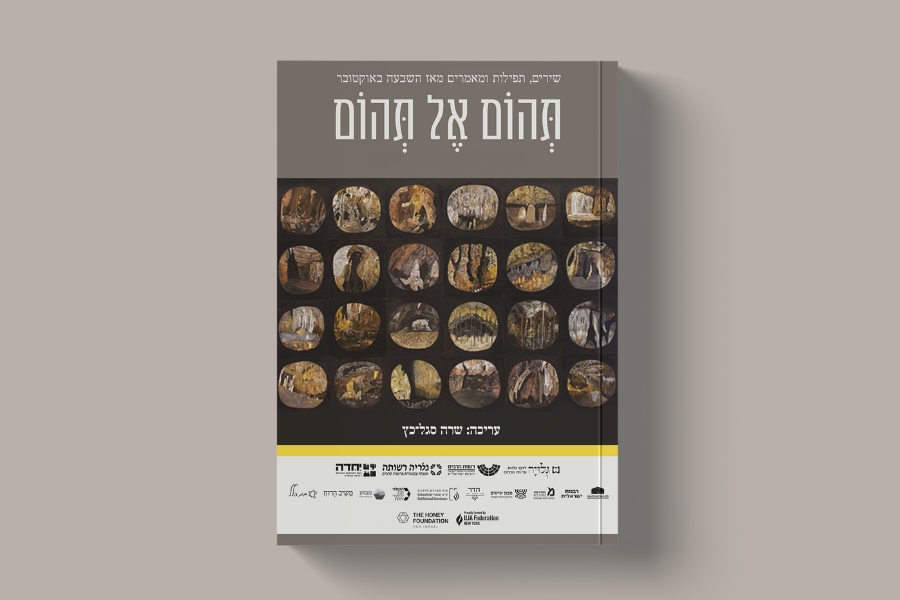
Curator, Reshuta Gallery: Jenny Aharon
Poetry of Fear, Trembling, Collective Trauma—and the Persistence of Faith
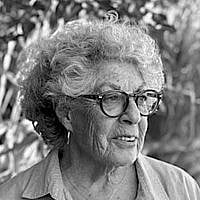
The poet Tamara Lilach Mezuman captures this condition with rare sharpness: fear of the dark is not merely physical, but the experience of a looming force—greater than love, even greater than God—a power that swallows and overwhelms the world. Darkness here becomes the very image of cumulative dread, leaving us with nothing but the impulse to hide and wait, as children do from their imagined monsters. Only here, the terror proves all too real.
* (I am scared of the dark) by Tamara Lilach Mezuman
I am scared of the dark
that there is something larger than love
that there is someone larger than God
who swallowed Him
and now walks the earth.
More and more fears
more and more darkness
and all that is left for us is to
hide under the bed
and wait for the monster to leave.
*Translated by Jeremy Kuttner
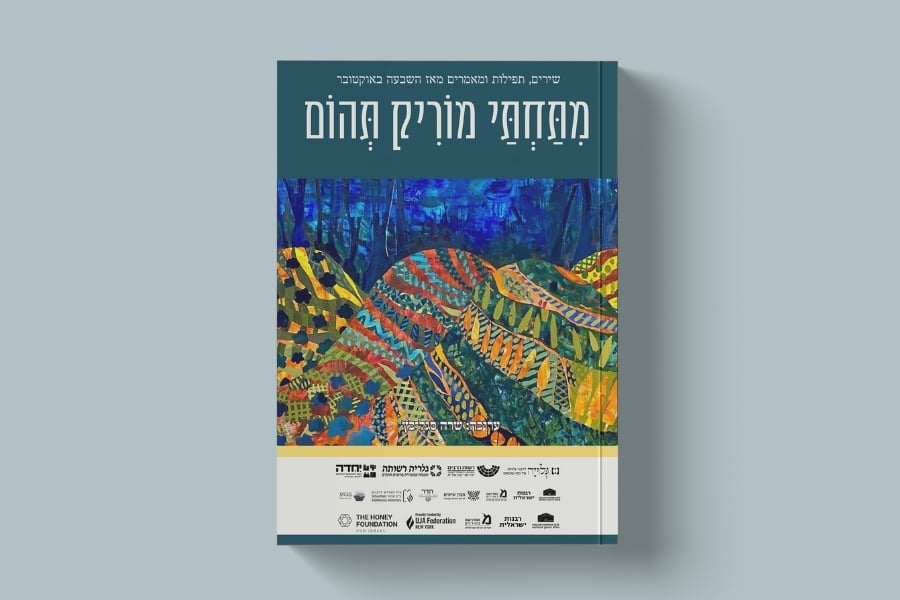
Immediately after October 7, at Gluya magazine we began gathering hundreds of texts—poems, prayers, essays—written in the midst of shock and terror. Some came from veteran writers, others from people writing for the very first time, grasping for words when silence could not contain the weight. By the first anniversary, it was clear that renewal of the year and the holiday season could not pass without ritual response. We curated a series of six digital anthologies, shared with communities across Israel and abroad, to accompany the High Holidays and the weeks beyond. They were read at prayer services, around family tables, and even at memorials marking eleven months of mourning and the “full year.” The anthologies were published in Hebrew, with selected texts translated into English.
Here I share a few poems as fragments of the path we have walked since. Hearts, eyes, and ears opened anew by devastation—the ongoing war, the hostages not yet returned, the lives destroyed. All of this leaves us with a long labor ahead: to process, to understand, to heal.
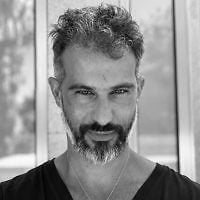
The poet Iris Elya-Cohen lingers in the territory of unknowing. “I do not know” is her refrain, a mantra of helplessness before war and a wounded soul. The very title speaks of a rift in two: personal collapse, but also deep fractures—disputes, distances, uncertainty before abysses both vast and small. She enumerates all that has ceased to be certain: a stricken heart, a restless spirit. The larger question hangs suspended: how can we live under the heavens when so many lie dead upon the earth?
The poem resounds with “I do not know,” yet at its end dares, in parentheses, to gesture toward the possibility of new faith—whatever its meaning may be.
A Great War Once Tore Our Lives in Two by Iris Elya-Cohen
I don’t know what will be
I don’t know how to breathe
(A spasm of cloud cuts through the air before me—a sign
that there is air.)
I don’t know what we will know
When the day comes,
If the too late strikes again
(My mother says, “It’s never too late.”)
I don’t know the meaning of “we will see”
What the day will bring
(A sign that there is a tomorrow.)
I again don’t know where I will go
From here. If there is still a here
If there is still a there
I don’t know my soul. My heart struck dumb
I don’t know what to say
I write to myself: So many lie dead upon the earth—
Could there be enough heaven to hold them all?
I don’t know if I’ll believe again
(I believe I will.)
*Translated by Levi Morrow
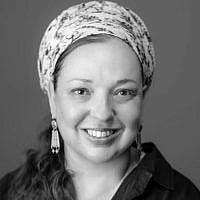
A similar voice of fracture is heard in the work of Rabbi Oded Mazor, which gradually turns into a prayer. His words rise as a supplication to God and the Shekhinah: everything is crushed, we are shards. Out of helplessness is born a plea—to hold pain together with hope, to recognize hearts bursting with love and companionship alongside trembling souls. His prayer asks for the ability to break fully, without restraint, and to leave space for silence greater than any cry. The hope is that if there is room for what is shattered, there may also be room to be rebuilt anew.
In the Days When Each Hour Collides by Rabbi Oded Mazor
“Kohelet Wasn’t Right,” Yehuda Amichai
In the days when each hour collides with the next
We have no choice but to cry and to laugh with the same eyes
To mourn and to dance at the same time
And the long arc of history is compressed into one day and one hour
We ask for the strength to contain
The intensity of our bursting hearts.
To rejoice with those who will be able to embrace today,
To enfold all of those leaning into their longing, souls trembling,
To hold on to hope without letting go,
And to leave some quiet space for a silent scream.
Please, grant us the room to shatter into pieces,
And the spirit to be rebuilt, anew.
*Translated by Rabbi Ayelet Cohen
Hearts, Eyes, and Ears Open to Light—even in Darkness
The darkness of Ki Tavo is not named as “darkness,” but it pervades the parasha’s long litany of curses. The land fails, the body falters, enemies encircle, the future withers. In such a world, the heart, eyes, and ears are described as if they had never functioned fully until “this day”—a state of blindness, of unknowing, of walking without clear light. This darkness is the experience of lived reality saturated with threat and confusion.
And yet, against this backdrop of darkness, Isaiah’s haftarah resounds with a different call: “Arise, shine; for thy light is come, and the glory of the Lord is risen upon thee.”(Isa. 60:1) It does not deny that “…the darkness shall cover the earth…”(Isa. 60:2); it insists that the darkness itself is the ground for light to be revealed. The parasha presents “…until this day” (Deut. 29:3) as the awakening of heart and senses; the haftarah offers this awakening a future horizon.
In other times we might have celebrated such a paradigm shift. Now, it seems, our eyes have opened to the dark—and we must live with the ongoing struggle this reveals. The uniqueness of this moment lies not only in seeing the past anew, but in being invited into what may yet come. The heart opened by rupture knows fear, but it also expands and contains. The poems we have read above testify to this double movement: lament and prayer, fracture and hope.
Perhaps this is what it means, in these days, to have “a heart to perceive, and eyes to see, and ears to hear”: not a heart tranquil and untroubled, but a heart able to bear complexity, trauma, and hope together. To recognize darkness, not conceal the shattering, but work with it—until “and the days of thy mourning shall be ended.” (Isa. 60:20).