Parshah through the Mediator’s Lens: Matot-Masei
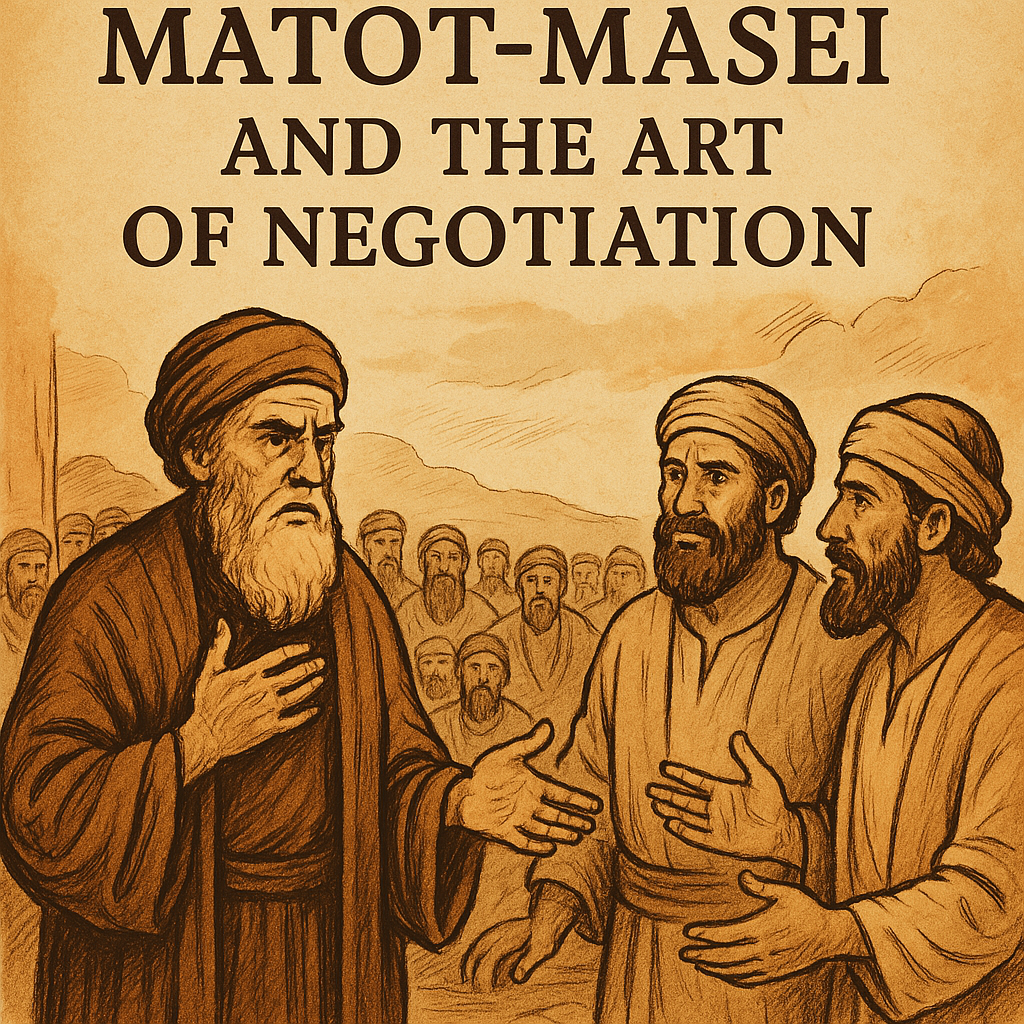
The double Torah portion Matot-Masei (Numbers 30:2–36:13) closes the Book of Numbers with a tapestry of laws, journeys, and negotiations. Matot opens with the laws of vows and oaths, emphasizing the importance of speech and the power of commitment. It then recounts the Israelites’ battle with Midian and the division of spoils. Masei lists the forty-two encampments of the Israelites from Egypt to the edge of the Promised Land, outlines the boundaries of the land, and introduces the concept of cities of refuge for accidental killers.
But within these chapters is a compelling conflict that speaks directly to the heart of mediation: the request by the tribes of Reuben and Gad to settle east of the Jordan River.
The Conflict: Reuben and Gad’s Request
The tribes of Reuben and Gad, possessing vast herds, saw the pasture-rich lands of Transjordan and asked Moses to let them settle there instead of crossing into Canaan. Moses initially responds with sharp rebuke: “Shall your brothers go to war while you sit here?” (Numbers 32:6), referring to the upcoming war in Canaan.
Moses fears the other Israelites falling in line and believing that the land east of the Jordan River is “good enough.” Moreover, he fears a repeat of the demoralizing episode of the spies (where they convinced the people to not go forward, undermining G-d’s commands, and leading to an entire generation not entering the Promised Land), suspecting that these tribes are shirking their communal responsibility and undermining national unity.
The Resolution: Negotiation and Reframing
The heart of the conflict lies in how Reuven and Gad present their request. By using language that places their cattle before their people, and seemingly placing their personal prosperity above national unity. They provoke distrust by Moses, whose rebuke forces the tribes to clarify their intent: they approach Moses to promise to first lead the charge in conquering Canaan alongside the other tribes and ensure their stability in the Promised Land, only then returning to settle the Transjordan. Moses agrees, but only after reaffirming their obligations publicly and in writing.
This reframing transforms the conflict from one of perceived abandonment to one of strategic support and utmost trust. Moses accepts their proposal, formalizes it with conditions, and the tribes uphold their promise in the Book of Joshua.
Modern Application: Mediating Misunderstood Intentions
As a legal mediator, especially in business-to-business negotiations, I often encounter disputes rooted in miscommunication and false assumptions. One party perceives betrayal; the other believes they are acting responsibly. Simple reframing of language portrays interests in a manner that fosters trust instead of suspicion. The Reuben-Gad episode teaches us:
- Listen beyond the surface: Moses’s initial reaction was emotional and protective. But he allowed space for dialogue.
- Clarify interests, not just positions: Reuben and Gad weren’t rejecting the collective mission; they were seeking a way to balance personal needs with communal duty.
- Craft conditional agreements: Moses’s insistence on public declarations and a double condition (if you do X, then Y; if not, then Z) mirrors modern contract clauses that protect both sides and reduce future disputes.
Final Thought
Matot-Masei teaches that words are powerful, and silence, or poorly chosen speech, can cause conflict. As we journey through complex relationships, whether in families, businesses, or legal disputes, the way we communicate our needs can determine whether we build bridges or barriers.
May we learn to speak with clarity, hear with empathy, resolve with integrity, and build trust.
In today’s polarized world, Matot-Masei offers a blueprint for bridging divides: not by erasing difference, but by honoring it within a framework of mutual responsibility.
—
Each week, Ari Sliffman, a Jewish legal mediator in Philadelphia, Pennsylvania discusses the week’s Parshah “through the lens of a mediator.” Ari focuses on one or two sections of the Parshah and discuss how a mediator could have assisted with the relevant conflict.