International Speaker, Author, Educator, Tour-Guide, Artist, Zionist
Passover, Bar Kochba and Zionism
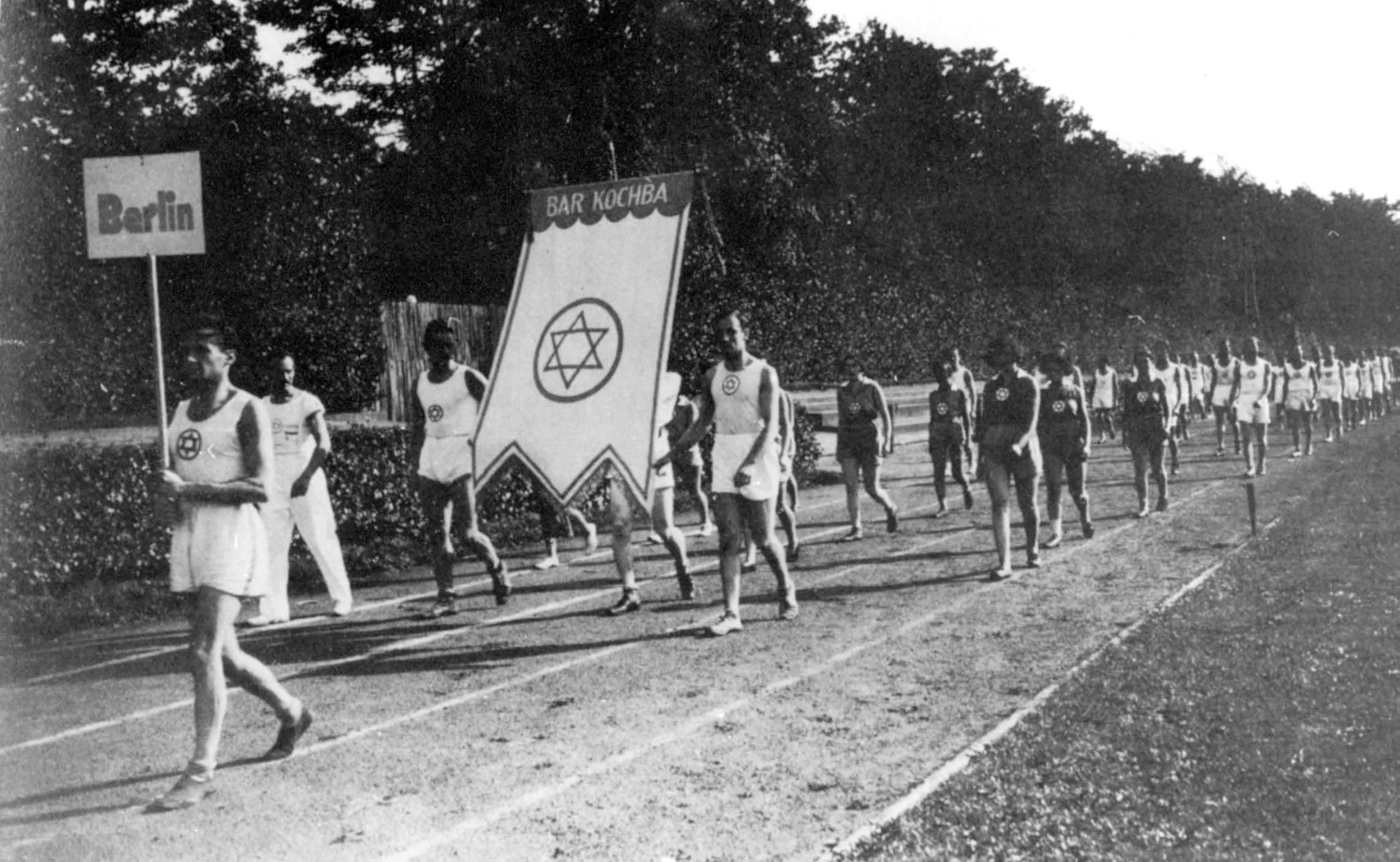
Members of the Bar Kochba sports club from Berlin at the last pre-war Macabiah games in the Land of Israel. Photo (c) Yad Vashem, 2025
Every Passover Seder the legendary second century CE warrior Bar-Kochba features in the Haggadah incognito during the unusual tale of the five rabbis sitting in ancient Bnei Brak:
It once happened that Rabbi Eliezer, Rabbi Yehoshua, Rabbi Elazar Ben Azaryah, Rabbi Akiva and Rabbi Tarfon were reclining in Bnei Brak. They were discussing the Exodus from Egypt all that night until their students came and said to them: ‘Our teachers, the time has arrived to read the morning Shema.’
The big question is, why these leading scholars in Judea of the second century CE did not know that it was time for the morning Shema prayer? The simple answer is that they were hiding in a cave during the Roman persecution, which marked the culminating stages of the ill-fated Bar Kochba Revolt (132-135 CE).
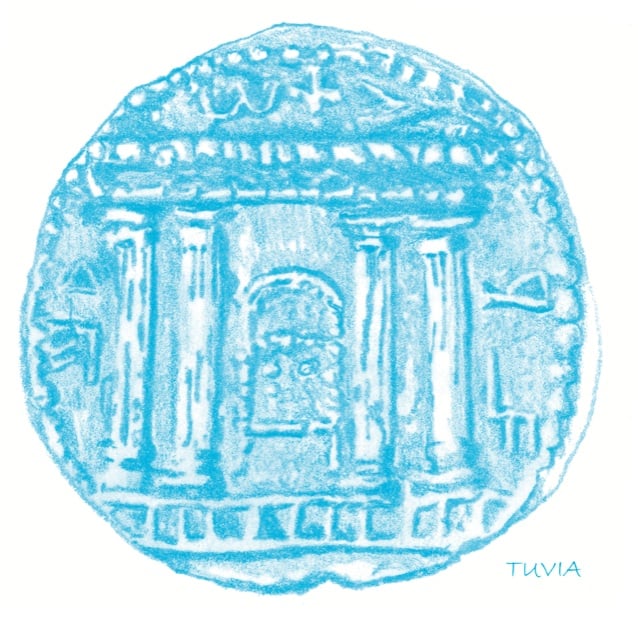
Following the aftermath of the Bar Kochba Revolt, which followed hard on two other epic, but ultimately futile, attempts by the Jews to destroy the Romans by force of arms (the Great Revolt, 66-73 CE and the Diaspora Revolt, 115-117 CE), the Rabbis came to the realisation that the survival of Judaism would depend on the ability to study and pass down the traditions as opposed to physical resistance. The Rabbis felt that if the Jews continued to engage in these disastrous wars with their resulting heavy losses, the outcome might be the decimation of the Jews and ultimately Judaism itself. To this end they downplayed the revolt, “demilitarised” the Talmud and emphasised that Messianic redemption would be achieved by merit of Torah study and not by military might. This remained the predominant Jewish philosophy until recent times. All this changed with the advent of the modern Zionist movement. Yael Zerubavel noted that,
The Zionist search for roots in the ancient national past clearly led to the enhancement of Bar ’s positive image…Bar Kochba was a “giant” figure who represented the greatness of the ancient Jewish past.
In contrast to the tendency of the rabbinic tradition to gloss over the revolt, early Zionists eagerly seized on the story as proof that Jews, when faced with persecution, were capable of fighting for their dignity and self-respect. Max Nordau (1849–1923), an early popular Zionist leader, wrote in an essay about “muscle-Jews” that: “Bar Kochba was the last embodiment in world history of a bellicose, militant Jewry.” Many Zionist sports clubs that sprang up in the interwar years in Europe were named Bar Kochba, in honour of the legendary hero who symbolised the “new Jew.” They saw him as the antithesis of the weak Diaspora Jew, constantly fleeing persecution, as portrayed scornfully by Chaim Nachman Bialik (1873–1934) in his epic poem, “In the City of Slaughter” (“Like scampering mice they fled, they hid like fleas and died the death of dogs.”) The story of the Bar Kochba Revolt came to represent the hope that as the Jews returned to their homeland, they would be able to regain their honour by reclaiming their land, their language, and their ability to defend themselves. Rabbi Benny Lau observed:
The Zionist movement emphasised the historical connection between the Bar Kochba Revolt and the modern struggle for Jewish independence. The Israeli national dream was kindled by the embers of the Bar Kochba Revolt.
When Yigal Yadin, a representative of the new Jewish State and a general in the new Jewish army, symbolically uncovered the words of the last Jewish general in Israel, it was almost as if Bar Kochba’s letters had been waiting to be reclaimed by his spiritual descendants. Yadin wrote:
It was centuries of persecution of the Jews and their yearning for national rehabilitation that turned Bar Kochba into a people’s hero, an elusive figure who they clung to because he had demonstrated, and was the last to demonstrate, that Jews could fight to win Jewish and political independence.
—
Dr. Tuvia Book is the author of Jewish Journeys: The Second Temple Period (Koren, 2021) excerpts of which appear here. His forthcoming book on the First Temple Period, will be published by Koren later this year. He also is a free-lance Ministry of Tourism Licensed Tour Guide and an IDF reserve soldier in the current “Swords of Iron” war. www.booktuvia.com
Related Topics
Related Posts