
CEO of Time to Stand Up for Israel
Peace Is More Than a Word
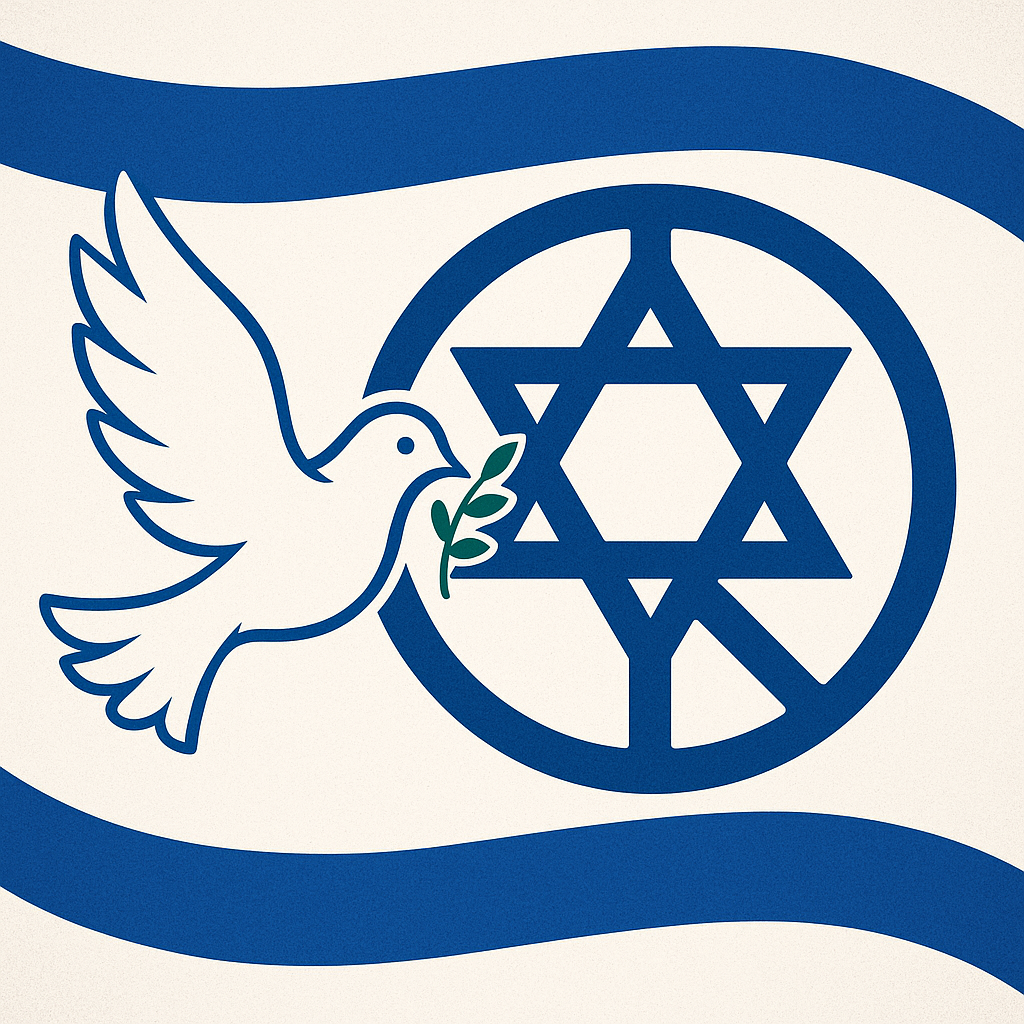
Photo Credits: Sabine Sterk (AI)
PEACE.
Such a small word, five letters, one syllable, but in Israel, it weighs more than mountains. It is written on posters, chanted in protests, whispered in prayers. Israeli’s long for it. They speak of it with hope, with hesitation, sometimes with a bitter smile. Because in Israel, peace is not a luxury. It is a question of survival.
A State Born in Conflict, Raised on Resilience
Since the moment Israel was reborn in 1948, they have lived with the impossible paradox: the dream of peace, and the constant necessity of defense. For many Israelis, especially those who served in the IDF or lost loved ones to terror, peace is not a political slogan. It is a prayer in uniform. It is the soldier who spares a child, the mother who sends her son to guard the border, the bus driver who keeps driving despite the risk.
Israelis do not romanticize war. They are tired of it. But they are also realists. Peace cannot be built on fantasies or on one-sided demands. It must be rooted in mutual recognition, security, and truth.
What Peace Really Means to Israelis
To Israelis, peace is not the absence of rockets, it is the presence of trust.
It is not a paper agreement signed under pressure, it is a genuine end to incitement.
Peace means that children can go to school without sirens interrupting their lessons.
Peace means no more glorification of martyrdom in the textbooks just across the fence.
Peace is when the Arab neighbor and yourself can both speak proudly of your identities, without fear, without blame, without shame.
The Hard Truths Behind the Headlines
The world often reduces this conflict to hashtags: Free Palestine, End the Occupation, Two-State Solution. But here on the ground, things are not so simple.
Most Israelis supported peace deals, even painful ones. They gave up Gaza in 2005, evacuating families and synagogues, in hopes of peace. What followed? Rockets. Terror tunnels. A regime that uses its own civilians as human shields.
So when Israelis speak of peace, they mean real peace, not wishful thinking. Not peace that demands Israel’s silence while their people bleed. Not peace that asks them to accept lies about their history or deny their right to exist as a Jewish state.
Peace Must Be Just and Honest
Peace will never be achieved through delegitimization. Calling Israel an “apartheid state,” accusing it of genocide, or supporting boycotts? These do not promote peace. They feed the flames of hate. True peace requires seeing each other’s humanity. Acknowledging their pain, yes, but also their truth.
Israelis are not foreign occupiers. They are a people indigenous to this land. Jews prayed toward Jerusalem for 3,000 years. Their return is not a colonization, it is a homecoming.
A Vision for the Future
Despite it all, Israelis still believe in peace. Because they are just that; Israelis. They believe in innovation, in resilience, in making the desert bloom. They believe that Arab and Jew can live side by side as many already do within Israel, where Arabs serve as doctors, judges, and Knesset members.
Israelis are not looking for revenge. They are looking for a future.
One where they do not need to justify their existence. One where their children do not need to wear gas masks in school drills. One where their neighbors build bridges, not bombs.
Peace, for Israelis, is sacred. But it must be earned, protected, and shared. It must be based on truth, not propaganda. On courage, not capitulation.
Israelis are ready to walk that path. But not alone.
Peace is not just a dream. It is a decision, a decision the world must make, to stand with those who seek life over death, truth over narrative, and coexistence over destruction.
And here in Israel, despite the scars, they have not stopped dreaming.
Related Topics
Related Posts