Jewish values, leadership, and honest conversation
Peace will yet come. And until it does, we sing
(Courtesy)
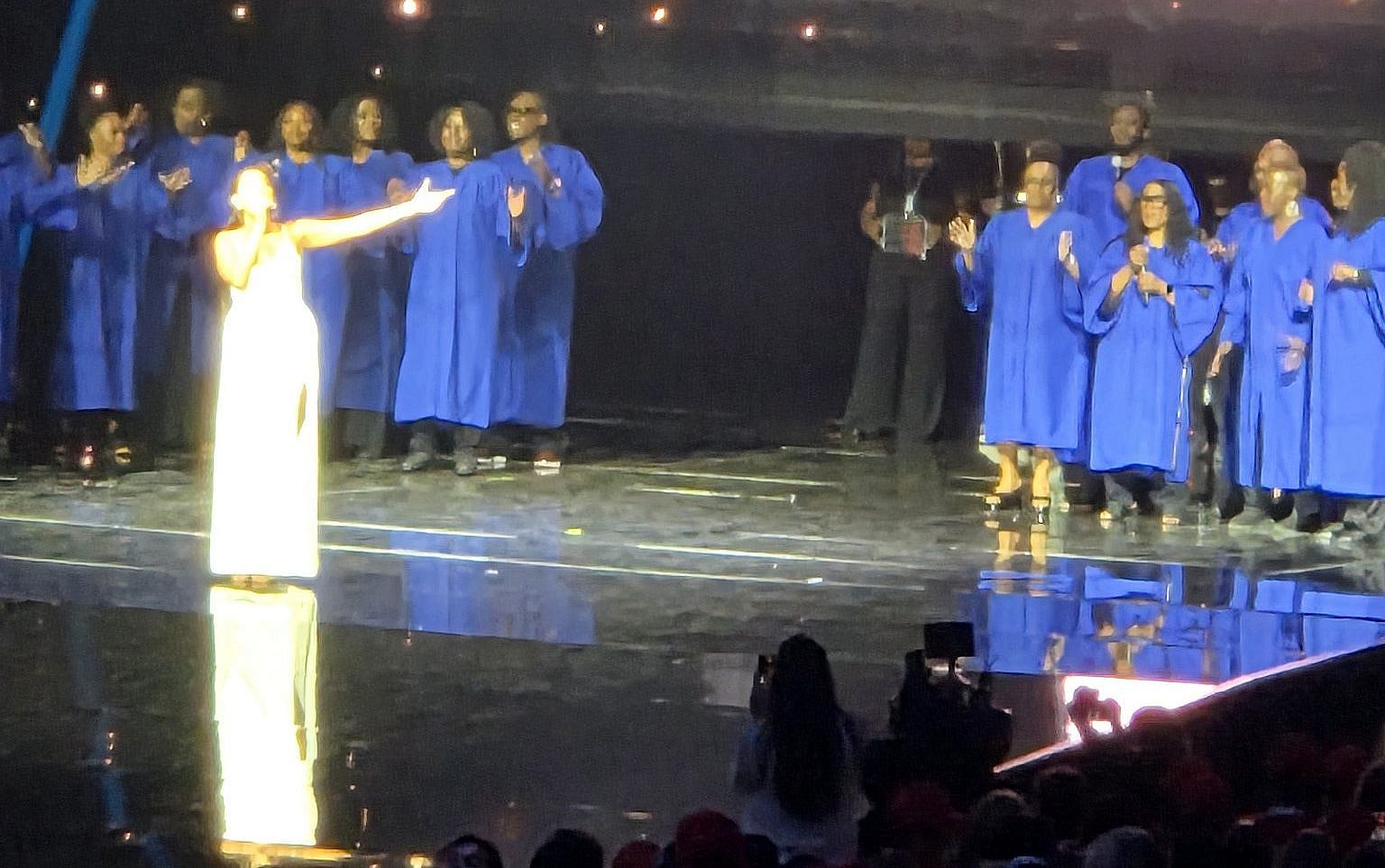
Last night I sat among more than eight thousand people in the TD Coliseum in Hamilton as three thousand young athletes from across the world marched in to open the JCC Maccabi Games — a festival of sport, of peoplehood, of Jewish values worn with pride rather than apology. There was joy the size of a stadium. And there was memory. We paused for the eleven Israeli athletes murdered in Munich in 1972, and for the wound still open in all of us since October 7. Grief and celebration in the same breath. That braid is one of the oldest things about us.
Then Yuval Raphael sang, and I nearly cried.
You know her story. On the morning of October 7, she was at the Nova festival near the Gaza border. When the terrorists came, she crowded into a roadside bomb shelter with dozens of others. For eight hours she lay beneath the bodies of the dead, playing dead herself, shrapnel in her leg, as the gunmen returned again and again. Of the many who took cover in that shelter, only a handful walked out. She was one of them.
And then she chose to sing. She won Israel’s “Rising Star,” then took “New Day Will Rise” to Eurovision in Basel — booed by a hostile crowd, and voted the winner by the public all the same, second overall. Last night, on the shores of Lake Ontario, she stood before eight thousand of us — secular to religious and everyone in between — and led us in the peace anthem, *Od Yavo Shalom Aleinu* — “peace will yet come upon us” — one prayer sung in Hebrew and Arabic at once.
Not all of us knew the words to her song. It didn’t matter. She did not have to teach us to sing — that we already know how to do; it is who we are. A woman with every reason on earth to be finished with the word “peace” stood, and a people who carry song in their bones followed her into it.
I have heard a great deal of singing in my life. I have never heard anything like eight thousand voices, strangers to one another a moment before, folding into one. It did not sound like a performance. It sounded like a people saying out loud, together, what it still dares to want.
I thought of the exiles by the rivers of Babylon: “How shall we sing the Lord’s song on foreign soil?” (Psalm 137:4). It has always read as a question with no answer. Last night, on foreign soil, we answered it. We sang.
I thought, too, of Miriam at the sea. The instant the people reach the far shore, it is a woman who takes the timbrel in her hand and leads the nation in song and dance (Exodus 15:20). Song, for us, has always been the mother tongue of deliverance. Yuval stood in that ancient line.
We are, right now, in the seven weeks of consolation that follow Tisha B’Av, when we read Isaiah’s: “Comfort, comfort My people” (Isaiah 40:1). Consolation, the rabbis understood, is not the absence of ruin; it is what you build on top of it. In the Talmud, Rabbi Akiva and his colleagues stand amid the rubble of the Temple Mount and watch a fox trot out of the Holy of Holies. They weep; he laughs. The prophets who foretold the destruction, he reminds them, also foretold the return — old men and women again in the streets of Jerusalem, children again at play. If the first came true, so will the second. “You have comforted us, Akiva,” they answer (Makkot 24b).
That is what Yuval did in that arena. She comforted us. And last night the second prophecy was no longer hope but fact: every hostage is finally home, the redemption of so many black months real at last. Peace itself is still unfinished, the war’s grief still not a song — but the consolation is built, exactly as the rabbis said, on the ruin.
Notice the word our tradition keeps reaching for — “od”: still, yet, again. Our anthem does not claim our hope has triumphed; it insists “od lo avda tikvatenu” — “our hope is not yet lost” (Hatikvah). The peace song does not announce that peace has arrived; “od yavo shalom” — it will yet come. “Od” is the whole grammar of Jewish survival — not naive optimism that things will simply improve, but what Rabbi Jonathan Sacks z”l called hope: the active, covenantal faith that, together, we can make them better. Optimism waits. Hope works.
This is how we outlive and outthrive those who libel us: not by matching their hatred — we would lose ourselves in the trade — but by refusing to let them narrow us; by bringing forth, out of the very worst done to us, a young woman who leads the world in a song of peace. She showed us how a people carries an unfinished story: upright, unbroken, singing.
If she can stand where she stood and sing what she sang, then our resilience has no ceiling, our audacity no limit, our hope no expiry.
“Od yavo shalom.” Peace will yet come. And until it does, we sing.
Related Topics
Related Posts