Peace With Israel is Lebanon’s Only Option to Prevent Future Wars
Lebanon has been through this cycle before. The debris, the ceasefire, the cautious hope, the slow process of rebuilding, and then, almost predictably, the next conflict arises. Different reasons, yet the same devastation, the same funerals, and the same WhatsApp groups buzzing with “is your family okay?” One thing that Lebanon’s recent history has shown us time and again is that the current situation doesn’t lead to peace; it merely creates pauses between wars.
However, this time feels different. The regional dynamics are shifting in ways that make the old excuses harder to justify and the previous arrangements more difficult to defend. The United States and Israel have significantly increased their pressure on Iran, targeting its nuclear infrastructure and proxy networks in a campaign that has fundamentally weakened Tehran’s ability to project power across the region. For the first time in decades, Iran seems less like an untouchable ally and more like a liability. And Lebanon — remarkably, almost quietly — seems to be taking notice.
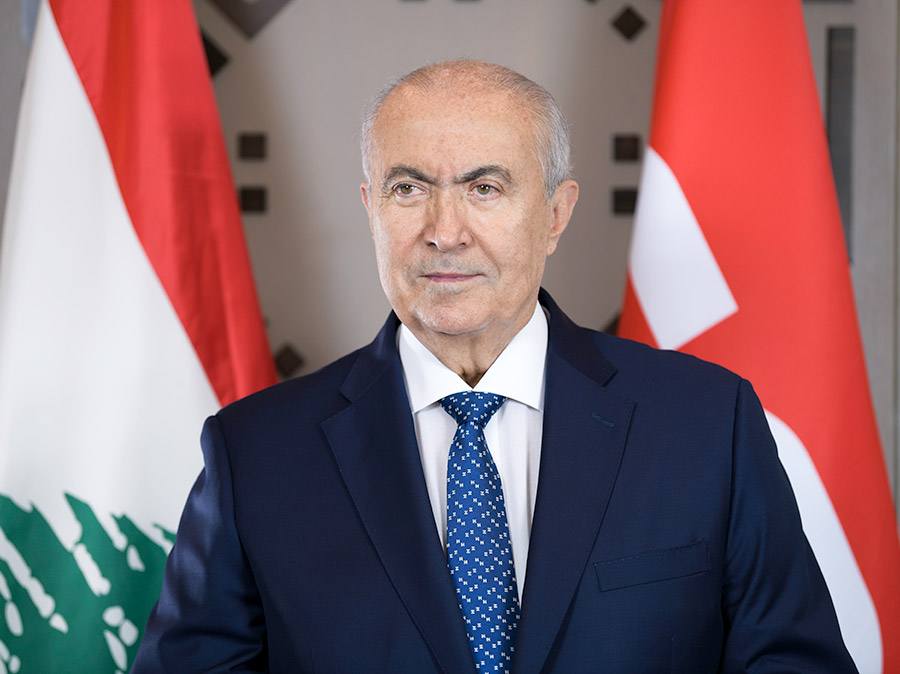
On peace with Israel, in an exclusive interview with This Is Beirut, MP Fouad Makhzoumi presented a sharp and direct vision for Lebanon's future, focusing on peace, state sovereignty, and the weapons of the Iranian-backed Hezbollah militia:
"Peace is the only option… so that no… pic.twitter.com/VgC5iGQ0Vn— SyriacPress (@SyriacPress) April 6, 2026
The Lebanese government’s decision to declare the Iranian ambassador persona non grata was a significant signal that the state is ready to assert itself in ways that would have seemed unimaginable just two years ago. Even more noteworthy are the voices coming from within Iran — citizens and dissidents who are openly questioning why their country continues to funnel resources into Hezbollah while people in Iran are struggling to make ends meet. The notion that Lebanon must always be linked to Tehran’s strategic goals is starting to lose its grip on both sides of the relationship. And across Lebanon, those who once whispered about peace with Israel are now starting to speak up more loudly. This is the context in which Fouad Makhzoumi has stepped into this space with a message that many in Lebanese politics have long avoided stating so plainly.
???????????????? Lebanese MP Fouad Makhzoumi said that in order to stop future wars in Lebanon, there has to be peace with Israel.
He also called for scrapping the dusty 1955 Boycott Law that’s been blocking any real dialogue.pic.twitter.com/sTe7FDbfqX https://t.co/kHsmpeIjj6
— Mario Nawfal (@MarioNawfal) April 6, 2026
His argument doesn’t get lost in ideological jargon or a longing for the past. Instead, it’s grounded in a clear-eyed view of reality: Lebanon can’t keep being a battleground for conflicts that serve interests outside its own borders. If we want stability, recovery, and a functioning state, then it’s time for the country to rethink its approach—beginning with the most delicate topic of all, peace with Israel.
???? #EXCLUSIVE: Parliamentarian Fouad Makhzoumi told This is Beirut that peace with Israel is Lebanon’s only option to prevent future wars. He also called for dismantling the outdated 1955 Boycott Law, which has been misused to block dialogue with Israel.
By @ClaudiaGroeling and… pic.twitter.com/Wq9jBPrve2
— This Is Beirut (@ThisIsBeirut_) April 6, 2026
For many, just bringing this idea up feels like crossing a forbidden line. Years of political culture have made any talk of normalization feel like giving up. But that way of thinking is getting harder to maintain in a country where the burden of ongoing conflict falls almost entirely on everyday people. Makhzoumi’s stance pushes back against that instinct. He’s not calling for ideological agreement or pretending history didn’t happen; he’s saying that endless hostility has led to diminishing returns and increasing losses. At some point, sticking to old ways becomes a risk in itself.
This is why he frames peace not as a concession, but as a necessity. Lebanon’s economic collapse, the flight of its diaspora, and its chronic instability are not happening in isolation. They are tied, directly or indirectly, to a security environment that remains volatile and unpredictable. Without a shift toward de-escalation and clarity in its external relations, the country will continue to struggle to attract investment, rebuild trust, or even define a coherent national strategy.
However, in his perspective, peace can’t thrive in isolation. It’s deeply linked to the issue of sovereignty. A state that lacks control over all armed forces within its borders can’t negotiate with coherence or credibility. This is where Makhzoumi’s call for “one state, one army, one authority” becomes crucial. The existence of a parallel military structure—regardless of its justification—creates a split that undermines governance at its very foundation. Decisions about war and peace become disjointed, accountability gets murky, and the state’s authority becomes conditional.
He expands this critique to point out a deeper political trend: the exploitation of fear to sustain the status quo. For years, the threat of civil war has been brought up as an excuse to avoid challenging discussions. In this story, stability is seen as depending on ignoring certain issues. But there’s a real difference between maintaining peace and fostering stagnation. When the concept of “civil peace” becomes a barrier to reform, it stops safeguarding the country and starts to entrap it.
????Makhzoumi is the exception
While every other candidate for the premiership trades in ambiguity, Fouad Makhzoumi is the only member of parliament willing to say what the moment demands: peace with Israel is not a concession, it is Lebanon’s last remaining exit from the cycle of… https://t.co/gHxKPE3Kl4
— Bechara Gerges (@BecharaGerges) April 6, 2026
Another pillar of his argument is the need to dismantle outdated legal frameworks, particularly the 1955 Boycott Law. What once represented a wider regional agreement now feels out of place in a Lebanon that’s trying to reconnect with the global economy. More than just a legal hurdle, it has turned into a symbol of a mindset that clings to the past, even as the world around it evolves. While getting rid of it won’t solve Lebanon’s problems overnight, it would show a readiness to move beyond old beliefs and focus on practical solutions.
Abolishing this law wouldn’t mean Lebanon agrees with every policy of the Israeli government. Nations often maintain diplomatic and economic ties with countries they fundamentally disagree with. What repealing this law would signify is that Lebanon has faith in its citizens to think critically, engage in discussions, and make their own decisions — instead of letting a law from 1955 dictate their thoughts. In a nation that urgently needs foreign investment, re-engagement with its diaspora, and economic partnerships free from the constraints of outdated Arab League politics, holding onto this law is not a matter of principle. It’s a form of self-sabotage disguised as ideology.
None of this will succeed — not the peace negotiations, not the legal reforms, not the economic recovery — unless Lebanon faces the fundamental question at the heart of it all: Hezbollah’s weapons.
Makhzoumi has been straightforward where others have hesitated. He’s not suggesting a managed reduction of Hezbollah’s stockpile or a political arrangement that allows its military framework to remain while everyone acts as if it’s not an issue. He’s calling for a complete dismantling — military, security, financial — and for the Lebanese state to be recognized as the sole legitimate authority over arms in Lebanon. One state. One army. One decision-making center.
Prime Minister Nawaf Salam, the Lebanese people are not protected by slogans, but by decisions. After what we have witnessed, Lebanese civilians being used as human shields by Hezbollah and the IRGC in Aisha Bakkar, Raouche, Baabda, Saida, Jnah, and most recently Ain Saadeh How…
— Fouad Makhzoumi (@fmakhzoumi) April 6, 2026
It’s becoming increasingly clear that Lebanon is running out of time to make some tough decisions. The challenges facing the country have shifted from being just cyclical to deeply structural. Simple tweaks and clever wordplay won’t cut it anymore. Regardless of whether you agree with Makhzoumi’s specific suggestions, his main point is hard to overlook: the current situation isn’t just neutral; it’s costing us dearly.
This debate he’s sparked goes beyond just one policy or one politician. It’s really about whether Lebanon is ready to rethink its priorities in a way that focuses on survival instead of sticking to old habits. In this light, peace with Israel isn’t seen as a magic solution, but rather as part of a larger shift towards stability, sovereignty, and economic recovery.
What sets this moment apart from past instances of reformist hope in Lebanon is the unique regional backdrop. Iran is not just facing diplomatic isolation; it’s also structurally weakened. Its nuclear ambitions are under direct military threat, its economy is in a chokehold, and its domestic credibility is fading. The intricate web of proxy relationships that Iran has nurtured for four decades—Hezbollah being the most prominent—has become costly to sustain and harder to justify to an Iranian populace that’s starting to question the value of that investment in terror infrastructure. The resistance axis isn’t what it used to be. For the first time in ages, Lebanon has a slim opportunity to break free from it without facing the full force of Iranian retaliation, which once made such a move seem impossible.
Lebanon has long been described as a country of resilience. But resilience, on its own, is not a strategy. Endurance without change only prolongs the inevitable. If there is to be a different future, it will require confronting ideas that once seemed untouchable and making decisions that once seemed impossible.
The path out of endless conflict is not without risk. But staying on the current path has already proven what it leads to.