


Persistent Attribution Risk: North Korea, Iran and the Nuclear Transfer Problem
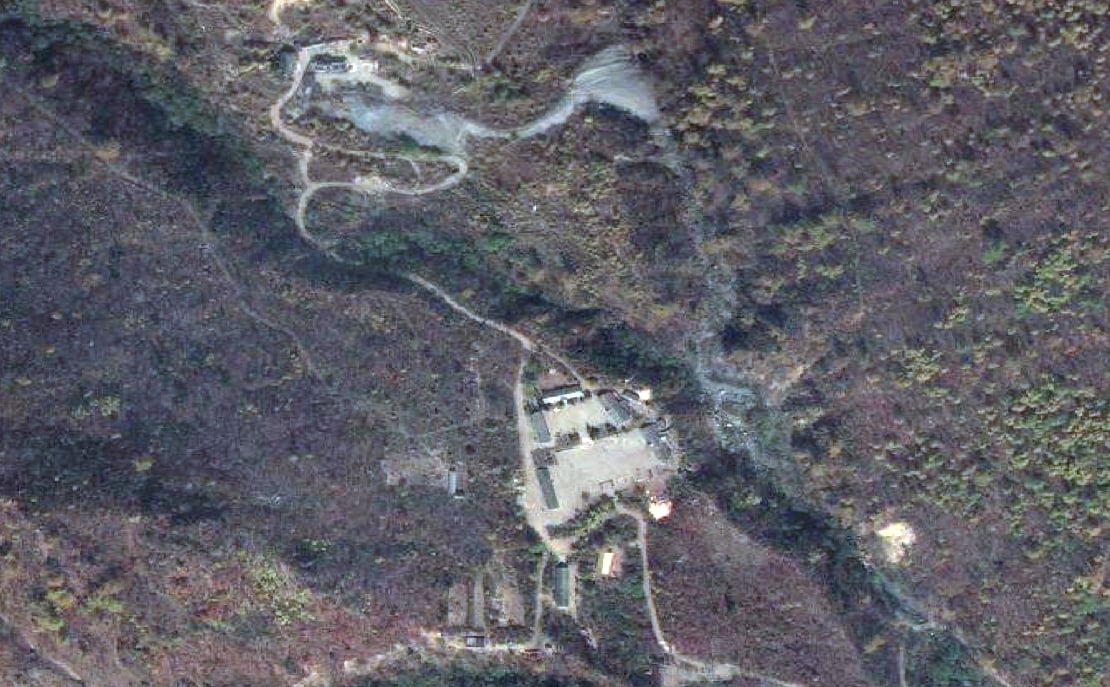
Strategic warning after nuclear denial—and why North Korea belongs in Israel’s nuclear-warning horizon before a crisis.
Counterproliferation can fail strategically by looking too narrowly at the capability it is trying to destroy. Counterproliferation necessarily concentrates attention on facilities, inventories, procurement networks and the state pursuing them. But successful denial can change the strategic problem faster than it changes strategic attention. Once one acquisition pathway becomes more difficult, policymakers must ask not only how effectively it was damaged, but what alternatives survive and what other nuclear actors may become relevant to the choices that remain (George and Smoke, 1974; George, 1991).
For Israel, Iran remains the immediate case. Preventing an Iranian nuclear weapon has understandably centered on Tehran’s indigenous nuclear programme. Yet degrading that programme does not establish what happens next. Iran could rebuild, preserve nuclear latency, accept restrictions, revise its objectives or, under narrower circumstances, investigate external assistance. These possibilities are not interchangeable. An indigenous programme offers sovereignty, replenishment and control; foreign acquisition creates dependence, transport vulnerability, technical uncertainty and political exposure; latency can itself provide strategic value (Mehta and Whitlark, 2017; Volpe, 2023). Denial changes a choice environment. It does not determine the choice.
Successful denial can therefore create an attention problem. Governments understandably continue measuring results against the pathway they have just attacked: facilities destroyed, inventories affected, reconstruction observed and capabilities restored. Those questions remain essential. But damage assessment concerns principally the route that has just been denied, while the adversary’s decision problem is broader. The danger is not that North Korea must become Iran’s alternative supplier. It is that concentration on the damaged indigenous pathway can delay reassessment of external routes until they become intelligence findings rather than warning contingencies.
The evidentiary boundary is especially important in Iran’s case. The IAEA estimated that, as of 13 June 2025, Iran possessed 440.9 kilograms of uranium enriched up to 60 per cent U-235, of which 432.9 kilograms had been verified. After attacks on Iranian nuclear facilities and loss of inspector access, the Agency lost continuity of knowledge over affected inventories (IAEA, 2025). On 7 September 2026, Director General Rafael Mariano Grossi reported that more than a year had passed without the information and access required to verify relevant declared material and facilities, a situation he described as a serious proliferation concern (IAEA, 2026). That establishes a verification deficit. It does not establish an Iranian weapon, diversion, or selection of an external supplier.
The purpose of strategic warning is not to predict which contingency will become history. It is to identify consequential pathways early enough for proportionate policy before evidence becomes unmistakable. Warning scholarship has long distinguished capability from demonstrated intent and emphasized competing explanations and the totality of evidence (Grabo, 2010; Gentry and Gordon, 2019). The question here is therefore prospective rather than predictive.
North Korea and the surviving choice set
North Korea belongs in that wider assessment for reasons that establish relevance without establishing intent. The IAEA reported on 7 September 2026 that enrichment operations appeared to continue at Kangson and Yongbyon, while it monitored a new Yongbyon building resembling the Kangson enrichment facility and indications of continued reactor activity (IAEA, 2026). These observations establish continuing development of relevant production capability. They do not establish how additional material would be used. Indeed, a larger, more diverse or more survivable North Korean arsenal provides a strong rival explanation: increased production need not create an exportable surplus.
Historical precedent is similarly bounded. The United States concluded that Syria covertly constructed the Al Kibar reactor with North Korean assistance; the IAEA later assessed the destroyed Dair Alzour structure as very likely a reactor that should have been declared (United States Department of State, 2017). This establishes historical North Korean involvement in clandestine sensitive nuclear assistance abroad. It does not establish transfer of a finished weapon, transfer of North Korean weapons-usable material, or present intent toward Iran.
North Korean procurement networks add a third fact. Hastings (2022) documents adaptation under sanctions through intermediaries, obfuscation and jurisdictional differences. In 2023, the U.S. Treasury identified Choe Chol Min as a Beijing-based North Korean procurement representative connected to weapons programmes and reported that he had worked with weapons-trading officials to purchase electronic equipment for Iranian customers (United States Department of the Treasury, 2023). That establishes interaction between North Korean procurement actors and Iranian customers in a non-nuclear context. Experience with concealment cannot substitute for evidence of nuclear intent.
Taken together, the public record establishes capability, a historical repertoire of sensitive assistance and experience with concealed international activity. It does not establish the proposition that matters most: a present North Korean decision to provide Iran with a nuclear weapon or weapons-usable material. Capability, historical behavior, present intent and future action are separate propositions.
North Korea’s relevance to Israeli strategy does not depend on evidence of a present transaction. Its expanding nuclear capabilities and historical involvement in sensitive nuclear assistance make it relevant to assessing external acquisition pathways even when no transfer to Iran is established. Geographic distance is therefore not a reason to exclude North Korea from Israeli nuclear warning; it is a reason to specify the pathway connecting North Korean capability to Israeli security rather than assume one.
External acquisition itself contains at least three distinct routes. A finished weapon could shorten the transition to possession but creates extraordinary problems of authentication, reliability, command and control, transportation and dependence. Weapons-usable material could bypass part of fissile-material production while leaving weaponisation and secure movement problems. Sensitive nuclear assistance—technology, equipment, designs, facilities, expertise or training—could accelerate an indigenous programme while preserving greater recipient autonomy. Evidence supporting one route cannot simply be transferred to the others (Kroenig, 2009a; Kroenig, 2009b).
A clandestine external transaction also requires two decisions. Denial can alter the recipient’s choice among surviving pathways, but a foreign route becomes available only if a capable supplier independently concludes that the benefits of assistance exceed its expected costs. Denial changes the recipient’s alternatives; persistent attribution risk changes the supplier’s calculation.
Persistent attribution risk
The possibility of deterring North Korean nuclear transfer is not new. After North Korea’s first announced nuclear test in 2006, President George W. Bush warned that transfer of nuclear weapons or material would be considered a grave threat and that North Korea would be held accountable (Bush, 2006). Levi (2008) subsequently examined supplier deterrence and the role and limits of attribution. Nuclear forensics, meanwhile, is one technical component of a broader attribution process, not an infallible national fingerprint (NASEM, 2021).
The contribution developed here lies at the intersection of those ideas after successful denial. A prospective supplier must consider not only whether a clandestine transaction can remain concealed while it occurs, but whether responsibility can remain concealed across the politically relevant future.
Nuclear forensics can provide information about isotopic composition, processing, material age, impurities, morphology and production history, but source inference depends on available evidence and reference holdings. Material can be altered or mixed, databases can be incomplete and different processes can share characteristics. Credible attribution therefore requires convergence with other evidence: intelligence concerning facilities and activity, procurement and financial records, transportation information, communications, documents and human sources (NASEM, 2021). No observation should establish more than it supports.
Time complicates the problem further. Evidence can disappear: documents are destroyed, witnesses die, intelligence access deteriorates and material is dispersed or transformed. Persistent attribution risk therefore does not mean that attribution becomes continuously more probable with time. But evidence can also emerge. Governments change, facilities become accessible, archives survive, intermediaries cooperate and information collected independently can later be combined. Syria provides a bounded illustration: political change in 2026 altered IAEA access to evidence concerning nuclear activity from an earlier government (IAEA, 2026). Present concealment does not determine future knowledge.
The relevant temporal asymmetry is therefore between operational completion and evidentiary closure. A supplier may be able to end the transaction, but it cannot determine when—or whether—the evidentiary history of that transaction is closed.
Persistent attribution risk is the continuing uncertainty faced by a clandestine nuclear supplier when successful completion of a transfer cannot guarantee that evidence establishing supplier responsibility will remain concealed indefinitely. A prospective supplier does not need to believe attribution is certain. It needs to doubt that permanent anonymity is certain and care about the interests later attribution could place at risk.
This mechanism can affect more than a binary decision to transfer or refuse. Greater expected exposure could alter the form, timing, price or degree of assistance. A supplier might reject a finished-weapon transfer while considering technical assistance, demand greater compensation, delay cooperation or withdraw as evidentiary risk rises. Those intermediate effects make the mechanism more useful analytically than a simple claim that deterrence either succeeds or fails.
The policy implication is deliberately narrow. Israel and its partners should communicate in advance that deliberate transfer of a nuclear weapon or weapons-usable material to Iran would create enduring supplier responsibility and that successful delivery should not be assumed to guarantee permanent anonymity. The principle is persistent responsibility, not automatic retaliation. Governments cannot know in advance what evidence, allied positions or escalation environment would accompany a future attribution case, and public attribution or coercive action would require evidence proportionate to their consequences.
Preparation must also never become evidence for the threat that motivated it. More North Korea-Iran contacts discovered because surveillance increased do not themselves establish a nuclear transaction. Mapping procurement networks does not raise the probability of a deal merely by identifying more actors. Preparing to compare forensic signatures cannot make North Korea the presumed source. A warning architecture must be capable of downward as well as upward revision if it is to remain warning rather than confirmation.
As of 10 September 2026, there is no verified public evidence that Iran is seeking a North Korean nuclear weapon or weapons-usable material, and there is no verified public evidence that North Korea has decided to provide either. North Korea should therefore be treated as a supplier contingency requiring proportionate warning and preparation, not as an accused supplier.
That assessment should weaken if Iran restores durable safeguards and restrictions that reduce the incentive for weapon acquisition; if Tehran persistently rejects external dependence; if North Korean fissile production is demonstrably absorbed by domestic force requirements; if Pyongyang repeatedly refuses extraordinary proliferation opportunities despite substantial incentives; or if diplomatic developments materially increase the costs of sensitive proliferation. The three external pathways should also move separately rather than collapse into one risk score.
Conclusion
The purpose of warning is to identify a consequential pathway while there is still time to influence the decisions that would make it real, not to claim certainty before the evidence can support it.
For Israel, that means continuing intensive attention to Iran’s indigenous capabilities without treating the Iranian programme as though it exhausts the nuclear-acquisition problem. North Korea belongs in the warning horizon because its capability, historical behavior and international networks make it relevant to external-acquisition analysis, not because present evidence establishes a transfer. The same discipline should govern any broader assessment of North Korean relevance: specify the pathway, distinguish capability from intent and revise the judgment as evidence changes.
The ideal result of supplier deterrence would leave little observable proof of success. There would be no intercepted North Korean weapon, no emergency attribution investigation and no retaliatory crisis. A dangerous pathway would simply remain insufficiently attractive for either side to choose it.
Strategic warning should therefore be judged by whether it identified a consequential pathway early enough to support proportionate action under the evidence then available, not by whether later events make the pathway appear obvious in retrospect.
The significance of denial lies not only in what it eliminates, but in how it changes the decisions that survive it.
References
Bush, G.W. (2006) ‘President Bush’s statement on North Korea nuclear test’, 9 October. Available at: https://georgewbush-whitehouse.archives.gov/news/releases/2006/10/text/20061009.html (Accessed: 3 September 2026).
Gentry, J.A. and Gordon, J.S. (2019) Strategic warning intelligence: History, challenges, and prospects. Georgetown University Press.
George, A.L. (1991) Forceful persuasion: Coercive diplomacy as an alternative to war. United States Institute of Peace Press.
George, A.L. and Smoke, R. (1974) Deterrence in American foreign policy: Theory and practice. Columbia University Press.
Grabo, C.M. (2010) Handbook of warning intelligence: Assessing the threat to national security. Scarecrow Press.
Hastings, J.V. (2022) ‘North Korean trade network adaptation strategies under sanctions: Implications for denuclearization’, Asia and the Global Economy, 2(1), 100031. Available at: https://doi.org/10.1016/j.aglobe.2022.100031.
International Atomic Energy Agency (IAEA) (2025) Verification and monitoring in the Islamic Republic of Iran in light of United Nations Security Council Resolution 2231 (2015). GOV/2025/50. International Atomic Energy Agency. Available at: https://www.iaea.org/sites/default/files/documents/gov2025-50.pdf (Accessed: 3 September 2026).
International Atomic Energy Agency (IAEA) (2026) ‘IAEA Director General’s introductory statement to the Board of Governors’, 7 September. Available at: https://www.iaea.org/newscenter/statements/iaea-director-generals-introductory-statement-to-the-board-of-governors-7-september-2026 (Accessed: 3 September 2026).
Kroenig, M. (2009a) ‘Importing the bomb: Sensitive nuclear assistance and nuclear proliferation’, Journal of Conflict Resolution, 53(2), pp. 161–180. Available at: https://doi.org/10.1177/0022002708330287.
Kroenig, M. (2009b) ‘Exporting the bomb: Why states provide sensitive nuclear assistance’, American Political Science Review, 103(1), pp. 113–133. Available at: https://doi.org/10.1017/S0003055409090017.
Levi, M.A. (2008) Deterring state sponsorship of nuclear terrorism. Council Special Report No. 39. Council on Foreign Relations.
Mehta, R.N. and Whitlark, R.E. (2017) ‘The benefits and burdens of nuclear latency’, International Studies Quarterly, 61(3), pp. 517–528. Available at: https://doi.org/10.1093/isq/sqx028.
National Academies of Sciences, Engineering, and Medicine (NASEM) (2021) Restoring and improving nuclear forensics to support attribution and deterrence: Public summary. The National Academies Press. Available at: https://doi.org/10.17226/26167.
United States Department of State (2017) 2017 report on adherence to and compliance with arms control, nonproliferation, and disarmament agreements and commitments. United States Department of State. Available at: https://2017-2021.state.gov/2017-report-on-adherence-to-and-compliance-with-arms-control-nonproliferation-and-disarmament-agreements-and-commitments/ (Accessed: 3 September 2026).
United States Department of the Treasury (2023) ‘Treasury targets procurement agents who supply prohibited components for DPRK missile development’, 15 June. Available at: https://home.treasury.gov/news/press-releases/jy1539 (Accessed: 3 September 2026).
Volpe, T.A. (2023) Leveraging latency: How the weak compel the strong with nuclear technology. Oxford University Press. Available at: https://doi.org/10.1093/oso/9780197669532.001.0001.
Suggested citation
Hight, Jeshurun (2026) ‘Persistent Attribution Risk: North Korea, Iran and the Nuclear Transfer Problem’, The Times of Israel, 10 September.