
Peterson’s Parenting wisdom-order where chaos once reigned
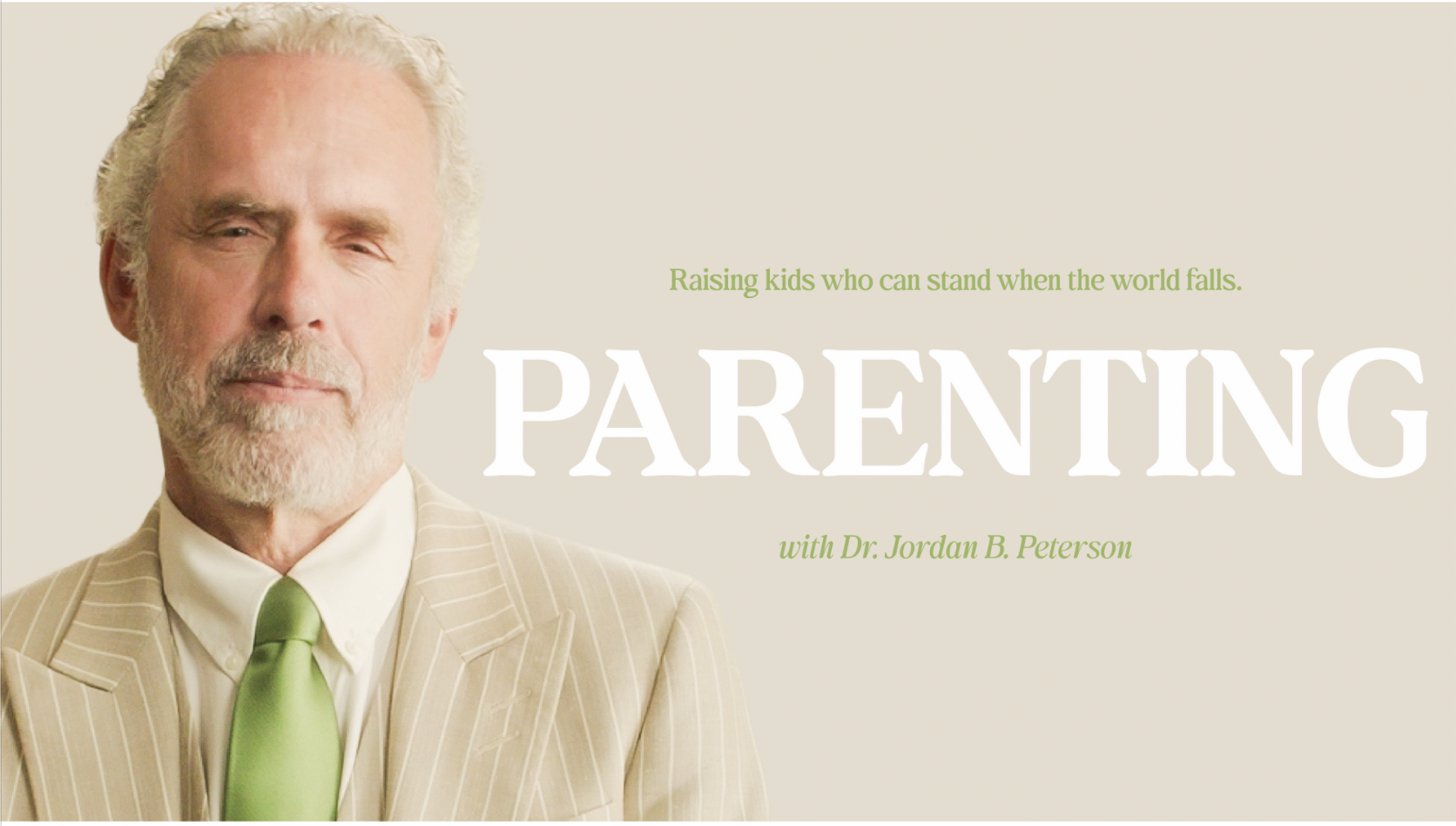
“There is nothing you’ll do in life that’s more challenging, difficult and rewarding than being a parent, “there is nothing with greater highs or lower lows” Jordan Peterson
In his new DailyWire Parenting series, noted clinical psychologist Jordan Peterson sits face to face with parents troubled by child-raising issues. The problems they face will no doubt resonate with parents everywhere – reoccurring disruptions to daily life largely stemming from the child’s challenging behaviour. The parents seek Peterson’s practical advice on dealing with burning day to day issues but also search for wider insight into matters such as discipline, asserting authority and even step parenting. The result is an engaging journey into the singular world of parenting – we see parents’ all consuming anguish as problems arise and the solid, unparalleled determination to do what’s right, the depressing lows and the uplifting highs – we get to see family home as the microcosm of life.
Peterson listens attentively to the parents before delivering order-restoring, at times life-changing advice. We see him guide the parents through the process of correcting the child’s conduct and turning the repeating disruptive behaviour into a rarity. This golden intervention is a game changer for parents – imagine battling a child who puts up a fight every time you leave the house or one who repeatedly turns the bed time routine into an emotionally trying, time consuming nightmare (Peterson mentions doing the math for one such dad to show him just how much time he ‘loses’ each night as he struggles to get his child to fall asleep) Changing these children’s behaviour means breathing desperately needed relief into the parents’ stressful existence and alleviating the strain inflicted upon their marriage as a result.
The idea is to solve the immediate problem of course but more importantly, to put in place strategies that will create the kind of household the parents desire – a place where clear boundaries are set and adhered-to and where order reigns, leaving parents time for enjoyable play with little ones, but also for parents to be with each other.
A sacred duty
Peterson wisely ventures beyond the immediate conflict, reflecting on what gave rise to the challenging behaviour, the best strategy to counter it and the consequences of leaving the issue unresolved. When a couple confesses to spoiling their child for example, Peterson comments on the long term impact of ‘worshiping’ a child and over indulging them as potentially breeding narcissism.
A couple seeking advice for a child who repeatedly causes delay and inconveniences those around them brings Peterson to reflect on the crucial importance of setting boundaries. Contrary to the progressive doctrine, he explains, structure and discipline bring order to a child’s life freeing them to explore in a constructive and productive way. Western educators and society at large led many parents to believe that parenting will somehow damage their child where the exact opposite is true. Rousseau’s notion of culture and civility being a corrupting force that will stifle the child’s imagination is a profoundly mistaken – not only do children need structure, they suffer without it. Those familiar with Peterson’s work would know of his conviction of how pivotal discipline and boundaries are for children, how without them the child fails to develop postponed gratification and lacks the resilience needed to meet life’s challenges. A home with clear rules is a win for all who dwell in it argues Peterson – a recipe for raising a child who is not socially undesirable but a good sport who is invited to play with others.
Parenting is a privilege and a moral right
As Peterson communicates with the parents and reflects on their dilemmas you get a sense that he recognises the magic of childhood and the child seeing everything through fresh, wonder filled eyes – what is mundane and familiar to you is a first for them and as their carer you get to see the world through their naive and somewhat magical prism. Yes, they have very little experience of life but they are observant, receptive, observant and hungry for stimulating knowledge.
Importantly, “you have little kids for a very short period of time, it is a major mistake not to notice that and not to appreciate it”
– Peterson urges parents to be there for their children, engage and converse with them at their respective developmental level. The more time you spend with your child, the deeper your bond and more of a positive role model they have.
Not just for parents
The series is titled Parenting but you soon realise that the broad truths it delivers are of relevance to all – responsibility, sacrifice, relationships, purpose and meaning are the fundamentals of not just parenting but of the entire life experience. Peterson shares key illuminators such as the difference between the mother and father roles – how they are different but also how they compliment each other. The mother secures, while the father encourages to explore and take risks – the dad is focused on what the child could become while mum centres on who they are now.
Peterson advises mothers to nurture and hold the baby close but let them go as they become more independent. The mother is the baby’s island of stability, he explains, but some mothers do not know how to pull back and let go when the child grows up and becomes more independent – it is indeed easier for the parent to dress the child for example but this limits their growth. So how do you know when and how much to let go? his advice here is ‘don’t do for your child what they can do for themselves.’
Fatherhood is about teaching the child resilience in the face of challenge and in the face of failure, it is about “honest and committed pursuit of a worthwhile goal”, faith in the future, service to others and caring for the most vulnerable –
“that’s masculinity in a nutshell” concluded Peterson, “that’s why the shepherd for example in old religious stories is a model of masculinity, ancient shepherds, they kept the wolves and the lions at bay and took care of the most vulnerable.
Parenting is empowering
Peterson’s advice is empowering for several reasons. First, because parents see that their problems are shared by others and that they are not alone. It is empowering for parents to grasp the magnitude of child-raising, to learn that it is their moral right to parent and that they serve as role models to their child. It is also empowering because as problems are solved and tensions are eased, there is less strain on the parents’ relationship.
Peterson’s observations are insightful, positive and constructive. His reference to parenting as a sacred duty, serves as a long overdue reminder of the monumental and singular significance of parenting. It evokes thoughts of the importance that today’s society places on child raising and brings to the fore the realisation that it might well be time for a major rethink. It makes you appreciate how caring for others and taking on responsibility brings meaning to parents’ lives and even increases the level of pleasure they take in things – “people who have little kids” explained Peterson, “take more pleasure in the things they do with their little kids than single people do, doing the same things”.
It is clear to see that Peterson’s parenting wisdom rests on decades of practice as a clinical psychologist, research and deep conversations with fellow observers. It is worth noting that while Peterson’s highly articulate writing might prove challenging for some, Parenting’s format is accessible, engaging and fluid – a game changer for parents and for society.