


Mathematics Teaching Professor, Author
Philadelphia Rabbi on the Boycott Bike Ride: Interview with Rabbi Jill Maderer
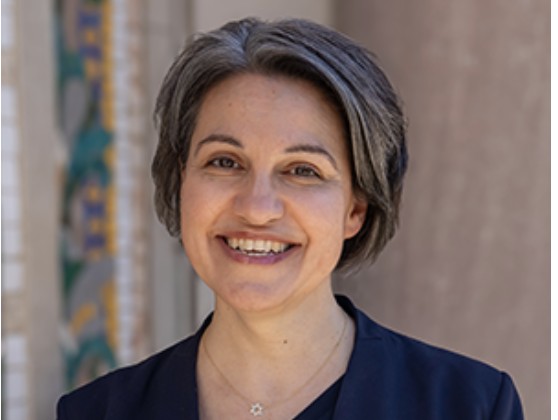
Rabbi Jill Maderer (Source: Congregation Rodeph Shalom, Philadelphia)
It is my profound honor to interview Philadelphia Rabbi Jill Maderer about the Boycott Bike Ride, which took place in Philadelphia on November 8, 2026, on the eve of Kristallnacht, the Night of Broken Glass. This historic anniversary lends particular gravity to a conversation about the meaning and implications of the protest.
Rabbi Maderer’s perspective offers an important opportunity to examine the so-called “Bikeride Boycott,” a bicycle protest targeting six Jewish-owned businesses near Philadelphia’s Rittenhouse Square. Held on November 8, 2026, the demonstration reportedly sought to pressure these businesses to close. The ride drew hundreds of counter protesters, who gathered in opposition to the demonstration and its targeting of Jewish-owned establishments.
Rabbi Jill Maderer has served Congregation Rodeph Shalom in Philadelphia since her ordination from Hebrew Union College, Jewish Institute of Religion in 2001, becoming senior rabbi in 2017. A prominent voice in Philadelphia’s Jewish and interfaith communities, she has dedicated her work to building connections, advancing Jewish values, and promoting moral action. Through her leadership and involvement in numerous religious and civic organizations, Rabbi Maderer has addressed issues of social justice, equality, and community responsibility.
Rabbi Maderer, what was your initial reaction when you learned about “The Bikeride boycott” targeting Jewish- and Israeli-owned businesses in Philadelphia?
My first reaction was anger and sadness. I felt drawn, I felt an urge to show up for the businesses, and counter-protest.
I then reached out to some of the owners of the businesses and asked them what would support them, and what they were feeling. And the folks I talked to, they talked about how these boycotters were actually a very small, very weak, fringe extremist group. Their hope was that we would not arrange a counter-protest, that we would not give them any energy, any oxygen, because showing up would elevate these little weak groups and give them a good day, and just the attention they were looking for.
So, after speaking with them, we also spoke with other Jewish leaders in the area, spoke with some interfaith leaders, and I spoke with some experts from the Jewish Council of Public Affairs, which is a wonderful organization, very wise about such matters, like antisemitism, and working across lines of difference, and everyone was in agreement. The wisest folks I could talk to were in agreement that giving oxygen to this boycott would only strengthen the anti-Semitic boycotters.
So, we as a congregation chose not to, and not everyone’s in agreement, but we as a congregation chose not to bring energy to the Sunday morning counter-protest, and instead to work with the other rabbinic leaders in Center City, who actually responded very much like I did and felt that we didn’t want to bring oxygen and aggression and confrontation to that setting. Along with the rabbis of other congregations across the denominations, we created a Monday evening Kristallnacht commemoration with the Jewish community and multi-faith communities, so that we could really teach about Kristallnacht.
To me, Kristallnacht tells the story of counterprotesting. It tells the story of what it means to devalue the Jewish community, to hate the Jewish community. It tells the story of what it means to have Jewish boycotts set the stage, as it did in Germany for Kristallnacht. We taught some history, prayed together, reflected together last night, and just as important, we had a group of multi-faith clergy with us last night. And they all came forward and recited a call to peace and solidarity, and so it was meaningful to have their support.
Thank you for your actions. You are incredibly well-spoken.
What message does this boycott send to Jewish business owners and Jewish residents who are simply trying to live, work, and contribute to Philadelphia?
It sends a few messages. I think it sends a message of hate and dehumanization to the both business owners and also to the Jewish community in general.
The boycotters claimed that they did not know that it was about to be Kristallnacht. I don’t know if that’s true or not. When they learned that it was Kristallnacht, they did not change the date, and either way, it just demonstrates a lack of education and a need for education. Among the boycotters and among most people, alot of people actually did not know what Kristallnat was.
And the businesses feel really, supported in general, not just this week. These businesses are thriving in Philadelphia, and they are already feeling the love from the Jewish community and the Philadelphia community, because they are valued businesses in our city, and they make our lives better, and so I think they already feel valued, and this week, I think they also felt supported, both by counter-protests, by the outreach that we’ve all personally given, and also by the commemoration we had last night.
Tell me about what happened last night (Sunday, November 9, 2026)?
So last night, we created a commemoration for Kristallnacht. We focused on prayer and reflection, and we were gathered across denominations of Judaism, and we had multi-faith clergy present to show solidarity from the non-Jewish community.
This was held at the outdoor Holocaust Memorial in the middle of Philadelphia and it was supported by the city with incredible partnership from the police department, the parks department, and the Philadelphia Holocaust Remembrance Foundation. Everyone was really working together.
It was not a setting where we were confronting the boycotters, and it was not a setting where we were giving any attention to the boycotters. we were just trying to teach history to make the point and honor the memory of, those who died or were harmed in the Holocaust and on Kristallnacht to make the point that we stand tall as Jews against anti-Semitism, and we stand for the humanization of all people.
Do you believe that if businesses owned by another religious or ethnic community were singled out in the same way, Philadelphia would respond differently?
I think the politicians and our civic servants really did make statements against the boycotters, and the police were absolutely there for the Jewish community in the counter-protests.
I think that if any other group were targeted in this way, there would be more outraged from the greater community, not just from the Jewish community. As there should be.
I think that antisemitism, although it is obviously historic, and we’ve seen antisemitism, there’s nothing new here, we’ve seen antisemitism throughout the ages. It does shapeshift, and the current form has somehow become popular, and there are actually those in our society who are, with their antisemitism, they are making political gains with that antisemitism. I think antisemitism, tragically, has become more acceptable, more tolerated, more welcome in some circles in a way that no other group is experiencing.
There’s a time, you know, I think historically, there was a time when, when I say shape-shifted, there was a time when in society, it was more favored to be strong, and more condemned to be weak, and in that time, Jews were hated for being weak, or vulnerable.
And now, during this time in our society, it is more favored to be the victim, and it is more condemned to be the oppressor, and so now Jews have been identified as the oppressor.
Either way, Jews are used as a symbol for whatever is hated, whatever we want to scapegoat with.
That was very well put. Thank you, Rabbi.
Hundreds of counterprotesters rallied in support of the targeted businesses Sunday, waving Israeli flags and denouncing antisemitism. Customers lined up for hours to show their support. Did you see that coming? What was your reaction?
We did see that coming. My reaction’s mixed. I think that, for many, it was really powerful to see Jews show up for each other. But on the other hand, it was it was a miss because the group did not coordinate with multi-faith community, and so we did not experience solidarity from the multi-faith community there. There just wasn’t a partnership that was worked on to create the counter-protest of all of these folks from the Jewish community who were standing up for themselves. I think that many of the messages were positive, and the support of the businesses was positive.
In some cases, the businesses were very worried that they would be overwhelmed, and we felt for them in that, and it’s actually not what they all wanted, but they were gracious and really tried to just serve as many people as they could who were online out the door.
I think they’re just hoping for peaceful days at the businesses.
My biggest concern is there were those present in the Jewish community who expressed not only love for the Jewish people and for Israel, but also a hostility for other groups, and a xenophobia that I think just harms our relationships and certainly misrepresents many of us. There are those in the Jewish community who were counterprotesting by doxing people who were in the boycott, and I think harming relationships with the community rather than strengthening those relationships.
So, I look forward to finding a way and a time for us to stand tall against antisemitism in our identity as Jews but do so without separating ourselves or dehumanizing other groups.
As a final thought, what do you most want readers to take away from this conversation?
I think it’s so important to know our neighbors, and to get to know our neighbors, and find ways to build relationships across lines of difference. So that other groups know Jews and learn about us and our history. And so that we can be there to stand in solidarity with other groups when they are targeted or feeling vulnerable.
Contact:
Email: clergyoffice@rodephshalom.org
Website: https://rodephshalom.org/