
Piers Morgan’s Gift to Nazi-Loving Fuentes
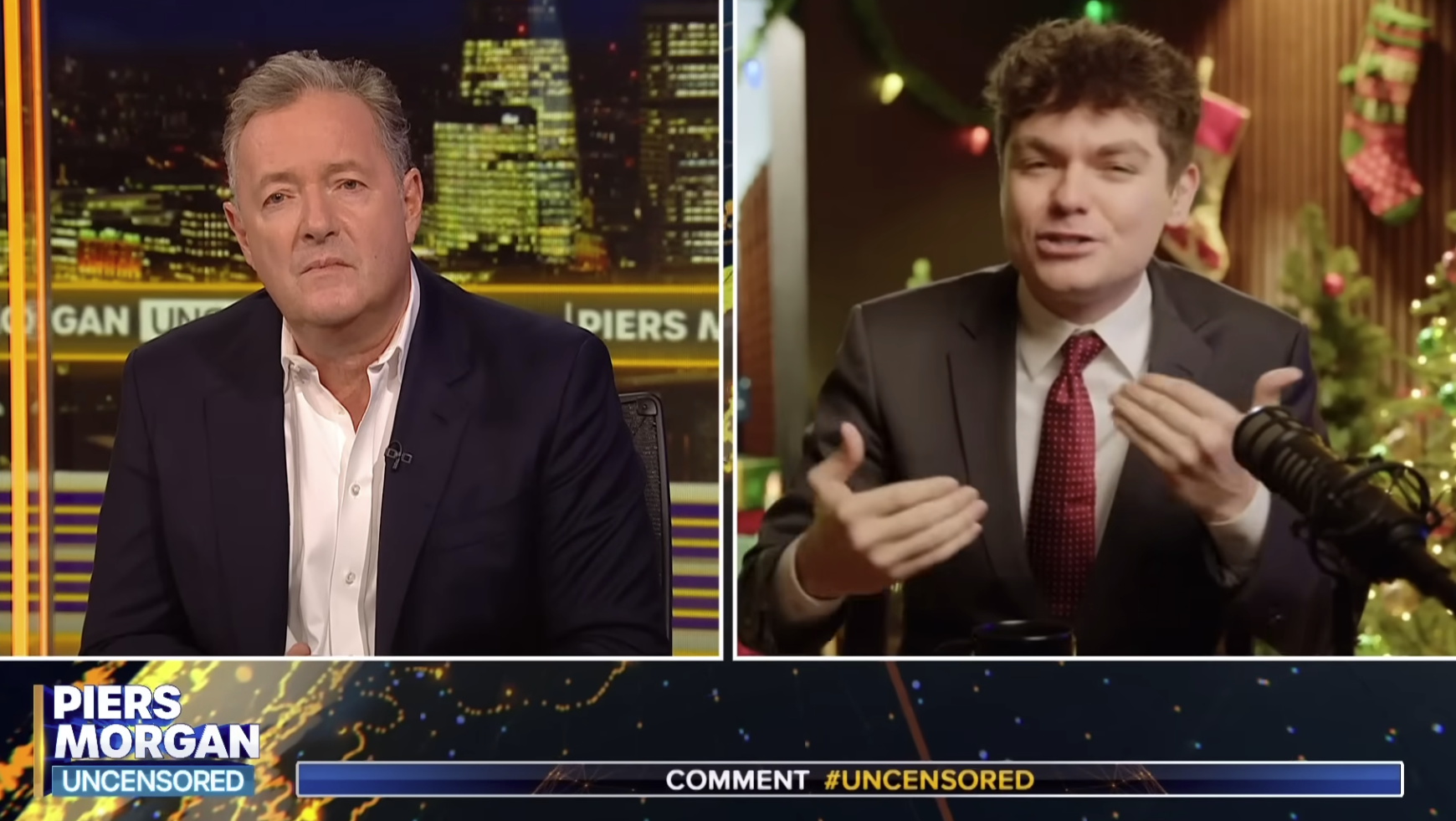
Inviting Nick Fuentes—an unabashed admirer of Hitler and Stalin—onto popular podcasts is not “free speech in action.” It is a direct affront to the victims of 20th-century totalitarianism. From a Polish perspective, treating this as just another media controversy is impossible.
In recent weeks, hosts like Piers Morgan and Tucker Carlson have handed a microphone to a figure known for his authoritarianism and open fascination with genocidal regimes. The motivation is cynically transparent: Fuentes drives traffic. Controversy converts to cash, and outrage has become the primary business model of the new media landscape.
But in exchange for clicks, these interviews offer Fuentes something far more dangerous: legitimacy. They grant him a seat at the table of mainstream debate, allowing him to launder dehumanizing ideologies under the guise of “open discussion.”
A History Written in Blood
From Poland, this is not an abstract intellectual exercise. It is a matter of respect for the dead. Poland was crushed between the gears of two totalitarian machines. Six million Polish citizens perished during World War II—half of them Jews exterminated in death camps, the other half non-Jewish Poles executed, starved, or worked to death in a campaign to erase the nation itself.
When the war ended, freedom did not return. Nazi atrocities were simply replaced by Soviet terror. From the mass graves of Polish officers in Katyń to the decades of show trials and political repression that followed, Poland knows the true cost of the ideologies Fuentes praises. To platform a man who relativizes Hitler and Stalin against this backdrop is not just irresponsible—it is obscene.
The Erosion of Decency
The normalization of Nick Fuentes is a form of moral vandalism. Charlie Kirk once dismissed the ideology Fuentes represents as “garbage,” and while the language is harsh, it captures something essential: this is a figure whose influence corrodes public discourse from within. Elevating him into respectable media spaces validates hate.
I have no illusions about Tucker Carlson. We are past the point of calling it a mere flirtation with the fringe. Between his increasing indulgence of antisemitic tropes and his evident fascination with Middle Eastern dictatorships, his alignment with figures like Fuentes feels less like a shock and more like a natural progression.
But from Piers Morgan, one might have expected a clearer moral line—a refusal to trade historical truth for ratings. Instead, we see a familiar pattern: reach overshadows responsibility. The suffering of millions is relegated to background noise, and the hard-earned warnings of the twentieth century are treated as optional context.
The rehabilitation of evil rarely begins with marching boots. It begins with interviews, normalization, and the polite insistence that “everyone deserves a platform.” Coming from a country devastated by Nazism and communism, we know exactly where that road leads.