Planting Deep Roots: A Tu’Bishvat Reflection
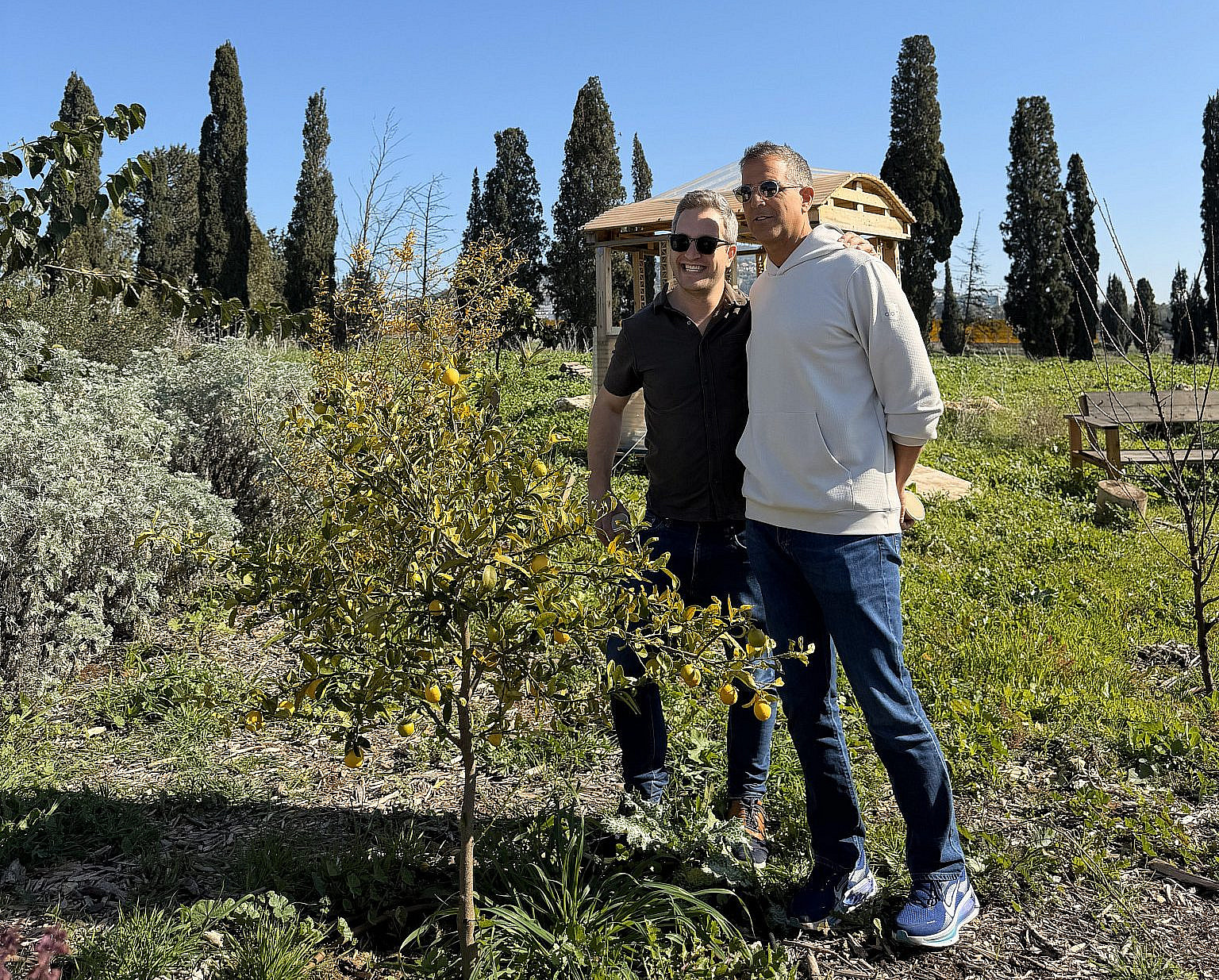
I recently took some of our Israel Friends co-founders back to Matanya Farm for the first time since we planted our first tree there, last summer. Then, it was the middle of July, the air was thick with heat and the earth was still dry and barren.
The season made the tree planting much more laborious than I had expected. We had to move the rocks with pickaxes and shovels, breaking through layers of stubborn earth that seemed determined to resist us. It felt like we were in one of those old-school Zionistic pictures of the pioneers who came to Israel that I would look at throughout my childhood.
But during this recent visit, the Farm was fruitful with the freshly turned soil still damp. That’s because we were approaching Tu‘Bishvat (or the “New Year for the Trees”). While for some it may seem silly, even frivolous, to pause and honor the lifecycle of a tree, the Jewish calendar is rich with agricultural milestones. This caused me to pause as well, and reflect on the visits over the two seasons and how it aligned with Matanya Farm’s purpose in using nature to rehabilitate people’s hearts and minds.
Using trees and fruit as a symbol of Jewish life has persisted through millennia. From Shavuot to Sukkot to Tu Bishvat, we embrace nature’s achievements and celebrate the cycles of growth, harvest and renewal. A young bar or bat mitzvah plants a tree in honor of their transition to adulthood, rooting their life in Jewish tradition and fostering a connection to the Land of Israel.
Though trees rely on humans to take root, we have much to learn from them, and from nature itself. We have a duty to care for the earth and for our home. For me, and for the Jewish people, that home is Israel. Just as the roots of these trees grow deep into the land, so too should the Jewish people stand firmly in their love for Eretz Yisrael and remind us that growth requires nurturing both from the soil and the sun, from our hearts and our minds.
Trees are also a symbol of hope. They start as nothing – a fragile sapling, vulnerable to wind and weather – and grow into something beautiful, sturdy and capable of producing life.
Same too are the brave souls who enter Matanya Farm to combat their demons – they start off with weak roots: lost, broken and even hopeless. These soldiers and civilians are carrying the invisible wounds of war, living with all-consuming PTSD that leaves little room to breathe. But over time, through deeply painful work, those roots strengthen and these soldiers emerge stronger and even more resilient.
On my recent visit, I saw the infrastructure taking shape, and I thought about every person who has come to Matanya Farm and has chosen to keep going, to keep growing, even with the ground beneath them that felt like solid rock. The soldiers who arrive carrying trauma are finding their way back to life. And the trees we planted with blistered hands are bearing fruit.
What was once barren land now feeds both body and soul. The farm is becoming something that offers real hope to those who need it most. I also find myself thinking that, much like the trees will keep growing long after this season, our nation will continue to heal and rebuild, as we – as a people – nurture both Am Yisrael and the land itself.