Pleasure as an Invisible Prison
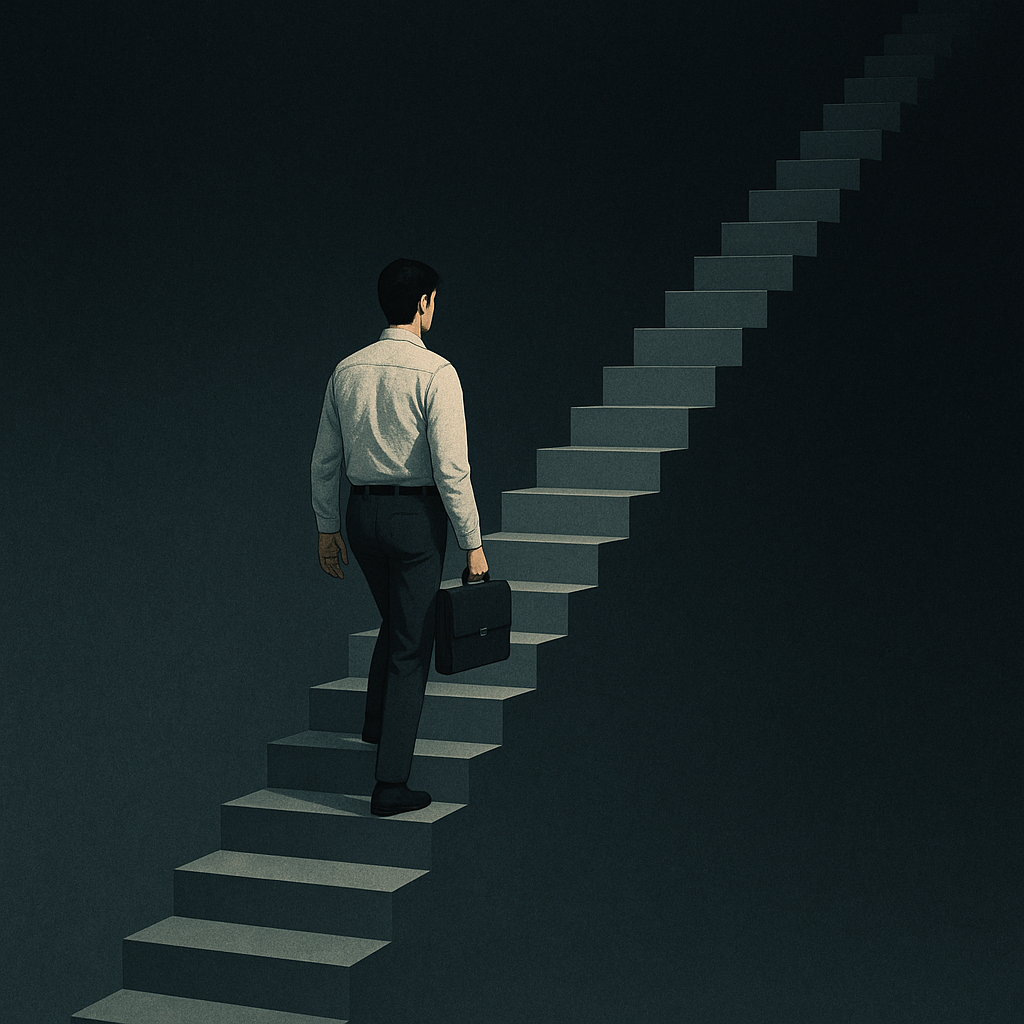
He believed life was an endless staircase. Each step seemed to promise something: a degree, a desired body, a look of approval. He climbed for years. When he reached the top, he discovered there was no summit. Only another emptiness waiting on the next floor.
This is the paradox of modern pleasure: the more you chase it, the further it slips away. Like drinking salt water.
The Chemical Trap
Your brain is an elegant drug dealer. It sells dopamine in small doses and snatches it back at once. A kiss, a purchase, a “like” on Instagram: flashes that fade too quickly, leaving you hungrier than before.
Scientists call it hedonic adaptation. In practice, it is normalised addiction.
You bought new shoes. Two days of glory. Then leather forgotten in the wardrobe. The newest phone: a brief gleam, soon invisible. Social media perfected the system: every notification is a measured dose. Scroll, like, dopamine. Repeat. You think you control your phone, but it plays you like a piano out of tune.
You are not free. You are programmed.
The problem is not feeling pleasure. The problem is mistaking it for happiness. Dopamine clouds your sight. If you could watch it operate, you would run. But the system will not allow it.
What the Philosophers Already Knew
Epicurus saw it two thousand years ago: true wealth is not in palaces or luxury, but in the simple things. A piece of bread, a cup of water, an unhurried conversation in the shade of a tree. Everything else dazzles, but it poisons. Real strength lies in learning to need less.
Schopenhauer was harsher. He said life is like a pendulum that never stops: swinging back and forth between desire and frustration. You long for something, suffer until you achieve it, enjoy it for a few minutes, and then fall back into emptiness. Each swing wears you down, like a ship’s rope cutting into the hands of the sailor who grips it too tightly.
Nietzsche asked for something else: to stop living for applause and invent our own value. For the flame to burn on its own… or not at all.
Three philosophers, three eras, the same warning: misunderstood pleasure does not free. It enslaves.
The Invisible Wound
But knowing this is not enough. Reason breaks before the wound that hurts inside.
Carl Rogers showed it clearly: most people’s self-worth hangs on external approval. One gesture of approval and you matter. One rejection and you collapse. Identity becomes a social puppet.
Julien Sorel, the protagonist of The Red and the Black, is the perfect example. Humble childhood, invisible scars. His ambition was not greatness for its own sake: it was a cry. “See me. Recognise me.” Every achievement tried to erase his origin, but emptiness followed him regardless.
Traumas are silent architects. The ignored child spends a lifetime seeking applause. The humiliated child must prove their worth. It does not come from reason. It comes from the wound.
And neuroscience confirms it: social rejection activates the same brain regions as physical pain. Being despised hurts like a real wound. Validation becomes compulsion. An anaesthetic for social pain.
We all carry an inner Julien. The more we ignore him, the more he devours us.
The World Perfected the Trap
Modern life multiplied the problem. Social media, consumerism, disposable relationships, work as a prison of status: all designed to keep you hungry. Never satisfied.
Each notification is a tiny needle. A photo, a like, your heart races. Ten are not enough. Nor a hundred. Addict’s logic: never enough.
Consumerism pulls the same rope: a new object promises respect, love, status. It shines for two days. Fades. Emptiness. Another.
Relationships became disposable. A partner like a product on a shelf. Quick, short shelf life. If it fails, you replace without grief. Apparent freedom, lost depth.
And work: the modern measure of human worth. Title, salary, position. Even if you hate what you do, what matters is showing it off. Thousands wake each morning with a knot in their stomach, slaves to a routine that kills their joy.
The result: chronic anxiety. Existential emptiness. A bright smile on a screen hiding deep cracks. Never before so much abundance. Never before so many broken inside.
What Still Remains
There is another kind of pleasure. One that asks for nothing in return. The taste of bread after eight hours of fasting. The laugh of a friend who has known you since childhood. The earned exhaustion after creating something with your own hands. This pleasure does not promise. It does not shout. It does not leave emptiness. It simply arrives, and then departs without demanding repetition.
It is not spectacular. It creates no content. That is why we forget it.
The Hard Question
If pleasure without awareness is prison, the only thing that matters is the life you choose to build.
The difference is stark: a life enslaved to fleeting novelties, or one built on your own foundations, where pleasure is a guest and not a master.
Pleasure can be ally or executioner. Chased blindly, it is a cruel master. Faced with awareness, it teaches you to tell the real from the illusory.
We all have mistaken dopamine for happiness at some point. We chase applause, an object, a body. We end emptier. If you do not break the cycle, you will repeat the same prison with different masks.
The decision is not in the world. Nor in biology. Nor in social media.
It is in you. Though perhaps you will go on climbing stairs, searching for a floor that does not exist.