


Mathematics Teaching Professor, Author
Plymouth Synagogue: The Oldest Ashkenazi Synagogue in the English-Speaking World
Plymouth Orthodox Synagogue (Source: Plymouth Synagogue, Devon England)
Plymouth Synagogue, also known as Plymouth’s Orthodox Synagogue or the Plymouth Hebrew Congregation, is an Orthodox Jewish congregation and synagogue located on Catherine Street in Plymouth, Devon, England. Established in the 1740s, the congregation follows the Ashkenazi rite. The synagogue is recognized as the oldest Ashkenazi synagogue still in regular use in the English-speaking world, reflecting the longstanding history and religious heritage of the Jewish community in Plymouth.
I would like to thank the esteemed Jerry Sibley for his guidance.
Synagogue
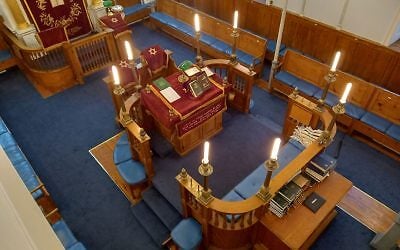
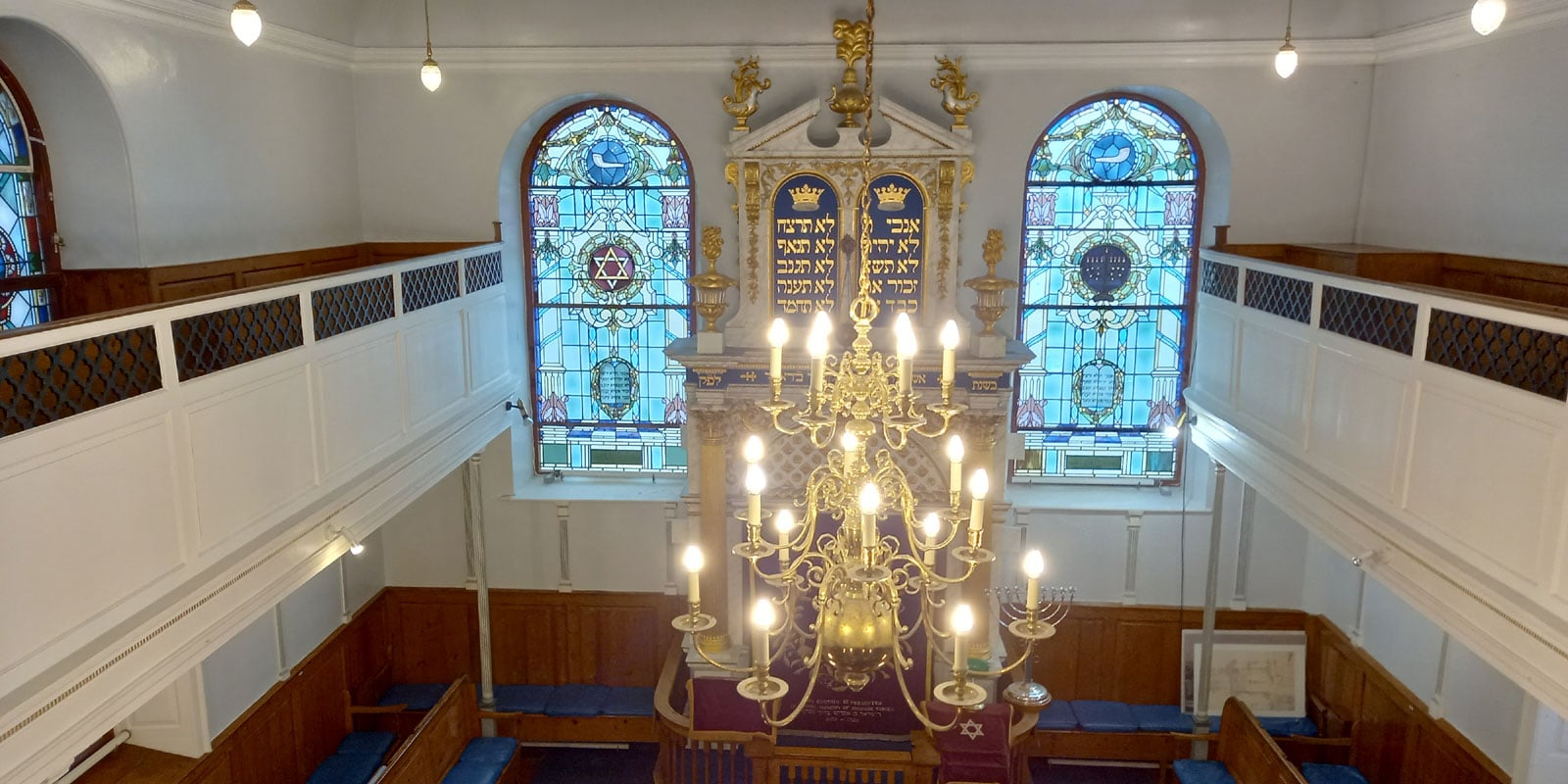
The interior of Plymouth Synagogue in Devon, England, is simple, featuring a flat ceiling and a women’s gallery along three walls. Originally confined to the west end, the gallery was later extended. The original clear-glass windows were replaced with stained glass in the 20th century, while the pair of windows flanking the Torah Ark and opening onto the street were added in 1874.
The synagogue’s main feature is its elaborate two-story Baroque Torah Ark, decorated with fluted Corinthian columns, a broken pediment, carved finials and gold-leaf urns. Above are tablets of the Ten Commandments in gold leaf against a royal-blue background. The cornice bears the Hebrew date 5522 (1761 to 1762) and a passage from Psalm 5:8.
Crafted by cabinetmakers in the Netherlands or the small townships that is now Germany, the freestanding Ark was transported flat-packed from the Netherlands and assembled inside the synagogue. In 2002, it was restored with gold leaf and white and blue paint, contrasting with the building’s plain timber interior.
Religious Events
Plymouth Hebrew Congregation holds regular Shabbat services every Friday evening at 6 pm and Saturday morning at 10 am, alongside services for Jewish festivals. Visitors of all Jewish backgrounds are welcome, and Jewish men are especially encouraged to attend to help form a minyan, the quorum of ten men required for certain prayers and the removal of the Torah scrolls from the Holy Ark.
During services, gentlemen sit downstairs with their heads covered, while ladies are asked to sit in the upstairs gallery unless unable to climb the stairs. Kiddush is held in the vestry after each service.
The synagogue also provides information about Jewish festivals and candle-lighting traditions, including Rosh Hashanah, Yom Kippur, Sukkot, Passover and Shavuot. Its account of The 10th Man highlights the importance of a minyan, telling the story of two men who borrow a tenth participant from Sandys Row Synagogue in London, leaving their own congregation one member short, and a remarkable Yom Kippur miracle.
Tours
Plymouth Synagogue offers guided tours and talks exploring its history, Jewish heritage and place within the city.
The General Tour provides an overview of the synagogue’s history and its role in Plymouth, the development of the city’s Jewish population, particularly around Catherine Street, and comparisons between Judaism and Christianity, including their signs and symbols. This tour lasts approximately two to three hours.
The Hoe Cemetery Tour explores the history of the old Jewish cemetery on the Hoe and its place in Plymouth’s development. Visitors can also follow an audio trail of 16 tracks featuring short stories about people buried there and the cemetery’s history. This tour lasts approximately one hour and 30 minutes.
A virtual tour of Plymouth Synagogue is also available, allowing visitors to explore the building remotely.
Historical Backgrounds
Jewish communities first became established in England in 1066, following the Norman Conquest, when William the Conqueror invited Jewish merchants and financiers from Rouen, Normandy, to settle in the country. The earliest recorded Jewish presence in Devon dates to 1177, when permission was granted for a Jewish cemetery outside Exeter’s city walls.
In 1290, King Edward I issued the Edict of Expulsion, forcing Jews to leave England. Nearly three centuries later, Sir Francis Drake’s 1577 to 1580 circumnavigation of the globe aboard the Golden Hind recorded in ship logs and local maritime history references a quartermaster and sailing master navigator known as Moses the Jew, who was noted as coming from the Barbican area of Plymouth. Jewish life resumed in 1656 under Oliver Cromwell, when a Sephardic Jewish community was permitted to return. By the early eighteenth century, a permanent Jewish community had re-established itself in Devon, contributing to the development of Jewish life in the region.
Which brings us to 1762.
In 1762, Great Britain was deeply involved in the Seven Years’ War, expanding its military and colonial influence. British forces captured Havana, Cuba, in August and Manila, Philippines, in October, while British and allied troops fought French forces in Europe and supported Portugal against Franco-Spanish invasions.
In Devon, England, local men participated in Britain’s military campaigns, including the expedition to Havana. Meanwhile, local administration continued through parliamentary acts and county court proceedings concerning property, criminal cases and poor relief.
It was in that year, 1762, that construction of Plymouth Synagogue commenced. The building was completed in 1764, making it the oldest surviving synagogue built by Ashkenazi Jews in the English-speaking world. In 1954, the synagogue was designated a Grade II listed building in recognition of its historical and architectural significance.
A Jewish community was established in Plymouth by the mid-18th century, consisting mainly of immigrants from the German lands and the Netherlands. Many belonged to an extended family bearing the surname Emden. By 1745, the community was holding regular religious services in private homes, which later moved to rented rooms.
Plans to construct a synagogue began by 1759. In 1762, land for the building was leased, with the lease signed by a Christian, Samuel Champion, because the legal validity of leases signed by Jews was uncertain at the time.
The congregation continued to use the property and eventually purchased the freehold in 1834, securing permanent ownership of the synagogue site.
In conclusion, Plymouth Synagogue remains an important part of the city’s religious and cultural heritage. With its rich history, distinctive Baroque Torah Ark and continued religious services, it preserves the traditions of Plymouth’s Jewish community. Known as Plymouth’s Orthodox Synagogue, it is the oldest Ashkenazi synagogue still in regular use in the English-speaking world, representing a lasting legacy of Jewish life in Devon.
Contact Information:
Plymouth Synagogue, Synagogue Chambers, Catherine St, Plymouth PL1 2AD, United Kingdom
Phone: 07753 267616 Between 10am and 6pm and not on Sundays.
Email: phccaretaker@yahoo.co.uk
Website: https://www.plymouthsynagogue.co.uk/