


Polarization in Jewish life is (mostly) nothing new
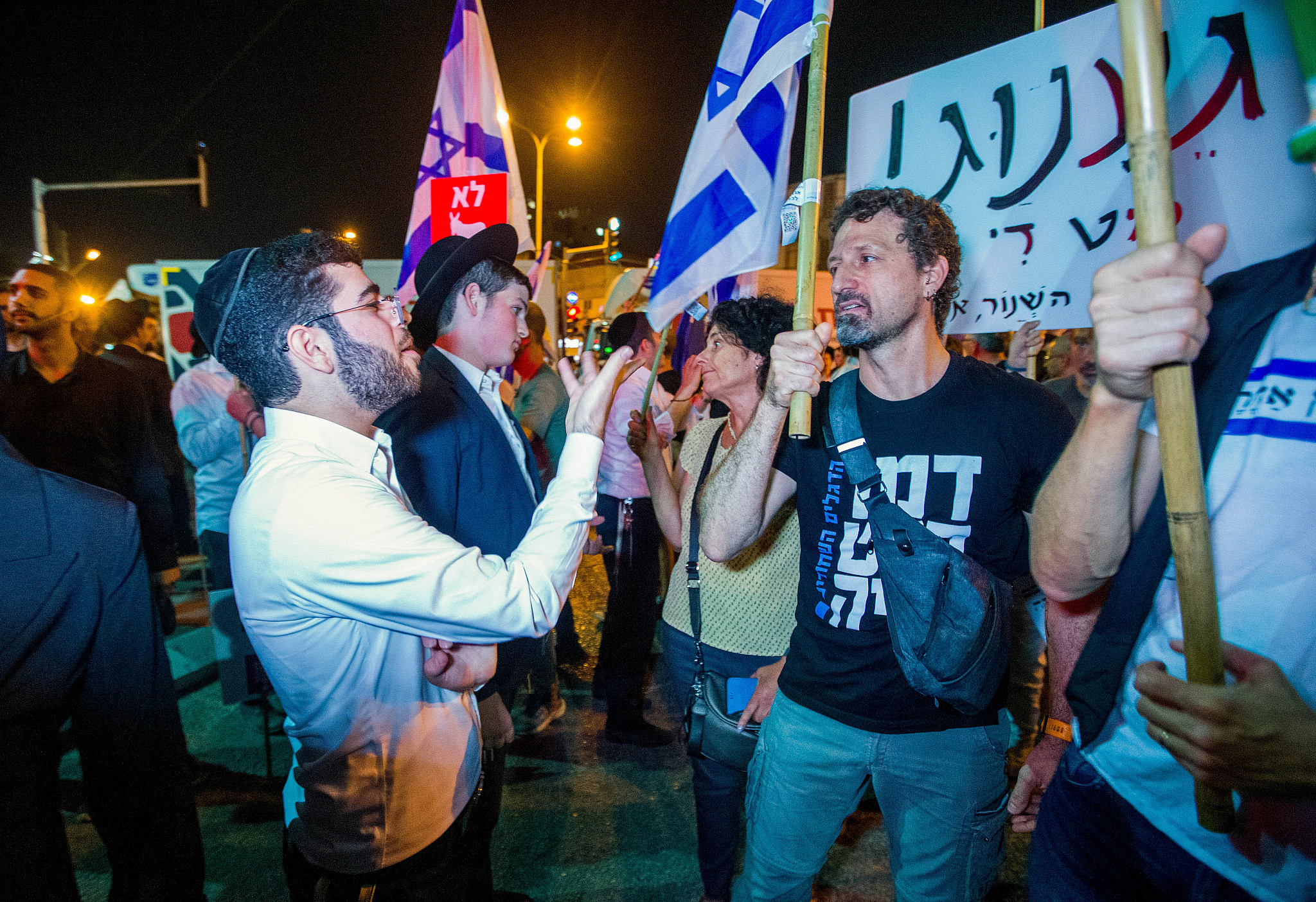
As we are rapidly approaching the two-year mark since the October 7 attack, and as most of the enemies that stood against Israel have been defeated, a growing number of commentators point out that the struggles among us pose a much greater risk to our future than external threats. Left vs. right, secular vs. Haredim, the “state of Tel Aviv” vs. the periphery, Ashkenazi vs. Sephardic, and so on. Such warnings are often accompanied by some supposedly magical solutions – if only we do this or that, the problem will disappear. Without diminishing the risk of inner conflicts, one should look at where we are from a broader perspective before jumping to conclusions.
Internal conflicts, occasionally with grave consequences, have always been an integral part of Jewish life. The civil war in Jerusalem during the Roman siege 2000 years ago, the conflict between Hassidim and Misnagdim in Eastern Europe 200 years ago, the bitter strife between the Hagana and Etzel forces before Israel’s independence, the Wadi Salib riots in 1958, the Black Panthers in the 1970s, and more, reaching a climax in the murder of Prime Minister Yitzhak Rabin in 1995.
However, in recent years such inner struggles seem to have intensified dramatically. Inability to form stable coalitions followed by frequent elections, massive demonstrations in the wake of a multiple investigations over alleged corruption by government officials, protests over the judicial reform initiative, roadblocks over the release of the hostages on one hand and over forced conscription of Haredim on the other hand, etc. – not a week goes by without significant public friction.
The escalation of inner struggles over the last two decades is not unique to Israel. Similar phenomena happened across the Western world. The USA was on the brink of a second civil war in January 2020 and tensions between different groups are constantly rising there. Ever since the Brexit debate started, the UK has been caught in a spiral of political instability and public unrest. Successive demonstrations and strikes in France, political instability in the Netherlands, Germany and so on – citizens of the liberal democracies seem to prefer distancing themselves from those that hold other opinions rather than listen, debate and attempt to find some common grounds. The forces of polarization act like a giant centrifuge that throws each of us to a certain corner from which it becomes exceedingly difficult to escape.
The sharp surge in polarization coincided with the emergence of social media channels in the early 2000s, and today many experts believe that social media plays a crucial role in fueling polarization. They point out how the algorithms employed by these media strive to capture an ever-larger share of our attention span by feeding each of us with views that are closer to ours, making us blind to other opinions and encouraging us to adopt evermore extreme positions. These media often push fake news that were designed deliberately to spread chaos and unrest. They give preference to posts that contain incitement as they are more likely to capture attention.
Social media has also become a convenient enabler in driving demonstrations and public unrest. Every person with access to the internet can coordinate such activities effortlessly and almost at no cost. All you need is to have some followers on Facebook, a WhatsApp group or other such applications and you are set to go. You can even sit in Moscow or Tehran, pretend to be an American or Israeli, and cause people to hate each other in New York or Tel Aviv.
Realizing that once the social media genie came out of its bottle, it’s impossible to put it back there, we must figure out ways to mitigate its polarizing impact. This can be done through various means such as introducing new content to our educational system that will teach kids how to use social media more wisely, tightening regulation over these media through laws that will address incitement and libel accusations spread through, etc. Since these platforms are all driven by economic forces, a very effective way to address this challenge is by applying public pressure on companies that publish their goods or services through these media to ensure that the algorithms in the process do not associate their advertisements with extreme content.
Eliminating inner discord is possible only in dictatorial regimes and we don’t want to be there. As a thriving democracy, we should be thankful to our Talmudic forefathers that left us a rich culture of discussions and argumentations. It’s our duty to safeguard this culture while containing the powers of polarization.