


Peacemaker, Motivational Speaker
Political Supportability: The Arab World’s Missing Responsibility for Peace
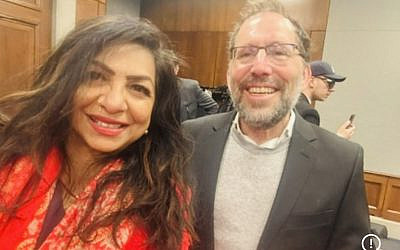
Photo Credit – Photo taken by writer – Soraya in Jerusalem
By Soraya M. Deen
The Middle East does not lack peace plans. It lacks political supportability.
For decades, diplomats have negotiated ceasefires, peace initiatives, normalization agreements, and roadmaps. Yet too often these efforts have failed to achieve their full promise because they overlooked a fundamental principle: peace cannot survive unless societies are prepared to support it.
Lasting peace is not built only in presidential palaces or around negotiating tables. It is built in classrooms, houses of worship, universities, media, businesses, and civil society. It depends upon leaders who are willing to prepare their people—not for perpetual conflict, but for coexistence.
As a Muslim who has dedicated more than a decade to building Jewish-Muslim relationships, I have come to believe that the greatest contribution the Arab world can make today is not another declaration condemning conflict. It is creating the political, moral, and theological conditions that make peace possible.
Public policy offers a useful framework known as the Strategic Triangle, which teaches that successful leadership rests on three pillars: public value, organizational implementability, and political supportability. While diplomats often focus on the first two, the third has been largely ignored in the Middle East.
Without political supportability, agreements become fragile. Without public legitimacy, courageous leaders stand alone. Without societies prepared to embrace reconciliation, peace remains vulnerable to those who profit from hatred.
The Middle East desperately needs a new model of leadership—leaders who pursue not only the interests of their own nations but also the common good of the region.
Most of the challenges facing the Middle East are adaptive challenges. They cannot be solved by military force alone, emotional reactions, or slogans repeated generation after generation. Adaptive challenges require adaptive leadership—leaders willing to transform narratives, challenge assumptions, confront extremism, and prepare their societies for coexistence.
Anger can mobilize a crowd. Vision builds civilizations.
The Abraham Accords demonstrated what visionary leadership can accomplish. They challenged decades of conventional thinking and showed that normalization between Arab nations and Israel could produce economic opportunity, innovation, security cooperation, and human relationships that benefit the entire region.
The United Arab Emirates has emerged as an important example of this vision. Its declaration of 2019 as the Year of Tolerance reflected a national commitment to interfaith engagement and coexistence. Its willingness to acknowledge Jewish history, including the establishment of the first Holocaust museum in the Arab world, demonstrated that reconciliation begins by confronting history honestly rather than denying it.
Recently, a delegation of approximately twenty Israeli organizations working in interfaith dialogue and diplomacy participated in the International Dialogue and Tolerance Conference in the UAE. Although I was not part of the delegation, I was deeply encouraged by what it represented.
The delegation was led by the Jerusalem Interfaith Center, whose remarkable leaders—including Rabbi Yakov Nagen, Megan Doherty, and Rabbi Aharon Lavi—have spent years building trust across religious divides. They met with senior government officials, policymakers, religious leaders, and civil society representatives. Their work demonstrated that dialogue is not weakness. It is strategic leadership.
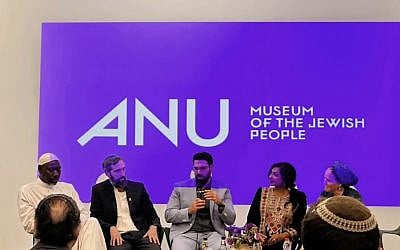
Photo credit – Photo taken by author – Soraya
Last December, my colleagues and I had the privilege of signing the Jerusalem Declaration in Tel Aviv together with friends from the Jerusalem Interfaith Center. That declaration reaffirmed our shared commitment to strengthening Jewish-Muslim relationships and creating a future built on dignity, trust, and mutual responsibility.
These initiatives deserve the support of every nation in the region.
Yet political supportability requires more than diplomacy.
It requires moral courage.
One of the greatest barriers to lasting peace is one we rarely discuss honestly: the theological narratives that have shaped attitudes toward Jews throughout history. Both Christianity and Islam contain historical interpretations that have, at different times, contributed to prejudice and hostility toward Jews. Many Christian churches have spent decades confronting and rejecting teachings that fueled antisemitism. Comparable efforts within much of the Muslim world have limited almost nonexistent. Today – Islamist extremism has further hardened anti-Jewish narratives.
As Muslims, we recognize Jews and Christians as Ahl al-Kitāb—the People of the Book. This should not remain merely a theological label. It should become the foundation for renewed relationships based upon dignity, respect, and shared moral responsibility. Religious leaders throughout the Arab and Muslim world have an opportunity—and an obligation—to reclaim those teachings within Islam that encourage coexistence while openly rejecting interpretations that perpetuate hatred.
Political supportability begins with moral leadership.
For too long, much of the Arab world has measured its commitment to the Palestinian cause primarily through opposition to Israel. Yet decades of rejection have not delivered peace, security, or prosperity for Palestinians. The time has come to ask a different question: What policies are most likely to produce a better future for Palestinians and Israelis alike?
Normalization is not a betrayal of Palestinians.
Normalization is an investment in their future.
Imagine a Middle East where Israeli innovation, Gulf investment, Arab talent, and Palestinian entrepreneurship work together to create jobs, improve education, develop life-saving medical technologies, address water scarcity, and expand regional trade.
This is not naïve optimism.
It is strategic realism.
The tragedy following October 7 reminds us why political supportability matters. Had Arab governments spoken with one united voice demanding the immediate release of all hostages, condemning attacks on civilians, and making unmistakably clear that terrorism could never advance the Palestinian cause, the political landscape might have been very different. Extremists thrive when moderates remain divided or silent.
The Arab world possesses enormous political, religious, economic, and cultural influence.
Now is the time to use it.
Governments should champion normalization as a regional strategy for peace. Religious leaders should teach the ethical significance of Ahl al-Kitāb. Schools and universities should educate young people for cooperation rather than perpetual conflict. Civil society should build partnerships across borders. Women, youth leaders, entrepreneurs, and educators should become architects of a new Middle East grounded in dignity rather than grievance.
The Middle East does not need another generation raised on anger.
It needs a generation equipped with education, science, technology, entrepreneurship, and the confidence to build together rather than destroy apart.
The Abraham Accords opened a historic door.
Political supportability will determine whether the region has the courage to walk through it.
History will not remember those who perfected the politics of outrage.
It will remember those who built the political support that made peace possible.