
Power Dynamics in the Transition Era
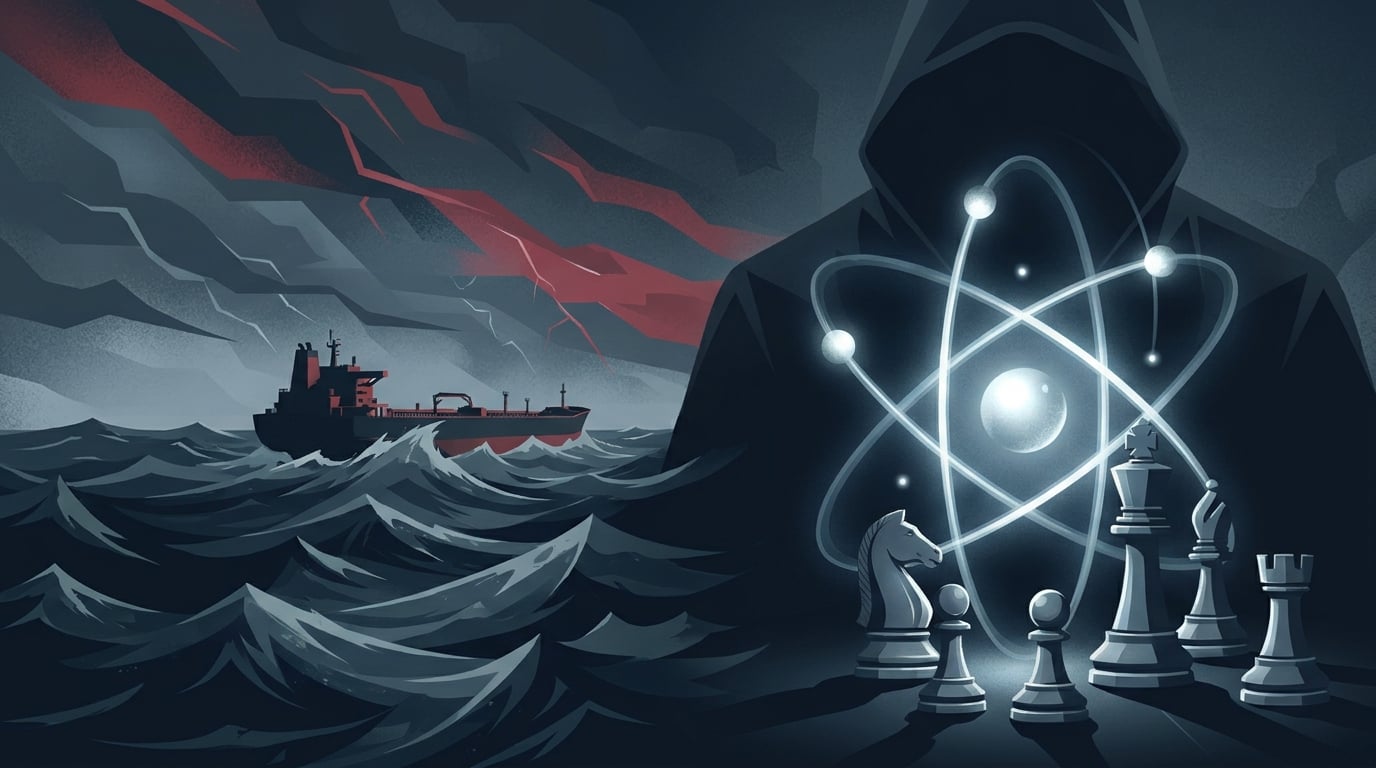
Structural Schism, Moscow’s Geopolitical Influence, and the Balancing of Power in Iran’s Nuclear and Maritime Doctrines.
Abstract
This paper analyzes recent shifts within the overarching power structure of the Islamic Republic of Iran during its ongoing transitional phase (the era of the “Third Leader”). Focusing on two pivotal events—the public push by hardline representatives to alter the nuclear doctrine and bypass the fatwa against the atomic bomb, and the subsequent maritime attacks on commercial vessels following the signing of a de-escalation agreement with the United States—this study tests the hypothesis of a “deep structural schism and the emergence of a parallel chain of command under Russian influence” against the classic theory of “strategic role distribution (Good Cop/Bad Cop).” Relying on variables of political psychology, domestic public grievance, and Russia’s strategic preferences, the findings indicate that the regime’s behavior is not a coordinated game, but rather the manifestation of a naked power struggle between the conservative bureaucracy of the political establishment and the faction backed by the new Leader.
1. Introduction and Problem Statement
In the post-Khamenei era and under the tenure of the Third Leader, international security analyses have witnessed a paradigm shift from a model of “vertical, centralized decision-making” toward a “flat and horizontal leadership structure” in Iran. In this context, two concurrent phenomena have confronted observers with critical questions:
1. The dissemination of coordinated messages by hardline political figures (such as Mahmoud Nabavian) demanding a public mandate to authorize the production of nuclear weapons, thereby bypassing the historical religious decree.
2. Missile and drone attacks against commercial vessels in international waterways, occurring immediately after the signing of a tension-reduction agreement with the United States, and precisely following high-level diplomatic consultations by Russian officials (such as Dmitry Medvedev) in Tehran.
The convergence of these two events has shaped two competing hypotheses in political literature, which this paper aims to articulate, compare, and deconstruct.
2. Evaluating and Deconstructing the Traditional Hypothesis: The Doctrine of Institutional Role Distribution (Good Cop/Bad Cop)
2.1. Theoretical Foundations of the “Coordinated Game”
The first hypothesis, predominant in classic Western think-tank literature, interprets the aforementioned actions as part of a grand, highly coordinated strategy orchestrated by the regime as a whole. According to this view, the system distributes roles between the diplomatic apparatus (the good cop) and the military/hardline faction (the bad cop) to generate leverage against the West. Under this logic, threatening to alter the nuclear doctrine or destabilize shipping lanes serves to extract concessions at the negotiating table. This model presumes the regime is a rational, monolithic actor exercising absolute control over internal variables.
2.2. Falsification of the Traditional Hypothesis Based on Social Psychology and Public Grievance
This traditional hypothesis is only viable when the system enjoys a “relative internal stability” and a “secure social base” capable of absorbing the collateral costs of such a high-stakes game. When introducing the variables of public psychology and the sociology of crisis in Iran, this traditional theory is thoroughly falsified:
• The Powder Keg Variable:
The experience of nationwide protests in recent years demonstrates that Iranian society exists in a state of acute grievance and absolute socio-economic blockade. Any new security spark possesses the potential to reignite the streets. A rational, unified political establishment seeking its own survival would never voluntarily engage in a self-destructive act (such as violating the newly signed agreement) that drives an volatile society toward a point of total explosion.
• The Psychology of Frustration and Mass Backlash:
The signing of the agreement with the United States generated a positive, albeit fragile, psychological wave within the market and the general populace, reviving hopes for relief from the burden of sanctions. The immediate violation of this agreement via maritime attacks drove public despair and anger to an absolute peak, directly targeting the system’s remaining internal legitimacy. To assume that the political establishment systematically accepted such a massive domestic risk merely for a diplomatic maneuver ignores the fundamental tenets of mass psychology in contemporary Iran.
• The Asymmetry Between Regime Survival and Moscow’s Geopolitical Preferences:
The domestic political establishment is painfully aware of, and fears, the destructive potential of public anger. Russia, however, within its military doctrine (modeled after the scorched-earth strategy in Syria and Ukraine), is completely indifferent to the internal public sentiment of Iran, its human costs, or the collapse of the national currency. Consequently, the violation of the agreement is not the product of a grand state consensus, but the forced output of a faction that has tied its survival directly to Moscow’s global strategy—even if it results in the total disintegration of Iran’s internal social cohesion.
3. Articulating the Core Hypothesis: Structural Schism, Extra-Institutional Balancing, and Moscow’s Shadow Influence
In contrast to the first hypothesis, the second and more logical model emphasizes the existence of a deep structural schism and the formation of a parallel chain of command. This hypothesis rests on two main components:
A) The Breakdown of Consensus in the Political Establishment and External Recruitment
Structural analyses during the era of the Third Leader indicate that within official decision-making bodies and the core of the political establishment (including the heads of the branches of government and senior IRGC command), the aggressive, confrontational stance of the new Leader has met with absolute resistance from the majority (excluding a narrow faction of the Paydari Front and individuals like Saeed Jalili). The bureaucratic and executive apparatus of the country favors a policy of “relative stability and avoidance of total war.” In response to this isolation within the political establishment, the new Leader has deployed proxies in parliament (such as Nabavian) to artificially generate “pressure from below and a fabricated public mandate in Qom,” seeking to declare the past fatwa obsolete and offset his lack of institutional weight with the noise of an ideological base.
B) Russia’s “Scorched Earth” Doctrine and the Parallel Chain of Command at Sea
Moscow’s geopolitical interests dictate that Iran must have no path back toward the West or diplomatic equilibrium, thereby ensuring Western attention remains diverted from the Ukrainian front. Evidence suggests that while the recent agreement with the US carried the official endorsement and ratification of the Supreme National Security Council, the subsequent escalatory counteractions were orchestrated outside this formal framework. The precise timing of the maritime attacks following Dmitry Medvedev’s aggressive rhetoric in Tehran regarding the Strait of Hormuz, coupled with a history of certain commanders frequently paying homage at the Russian Embassy, points to Moscow’s deep structural infiltration into specific nodes of Iran’s military apparatus. This pro-Russia faction, acting without the coordination or approval of the broader decision-making bodies of the political establishment, receives tactical directives from Moscow’s shadow channels, effectively holding the agreed-upon de-escalation strategy hostage.
4. Conclusion
A comprehensive analysis of recent developments indicates that the traditional “role distribution” hypothesis is incapable of explaining the regime’s contradictory and highly costly behavior. Overwhelming evidence from social psychology and field dynamics reinforces the hypothesis of a naked power struggle and structural schism. Lacking the absolute charismatic authority of his predecessor within the official political establishment, the Third Leader has resorted to an extra-institutional balancing strategy. This complex strategy relies on domestic religious hardliners to legitimize an atomic path on one hand, while surrendering the country’s military leverage to Russia’s “scorched earth” doctrine on the other—ultimately attempting to isolate the technocratic and conservative factions of the political establishment and locking the country into an irreversible path of global confrontation.