"I'm the spokesman for the OK Boomer generation"
Pragmatic Activism
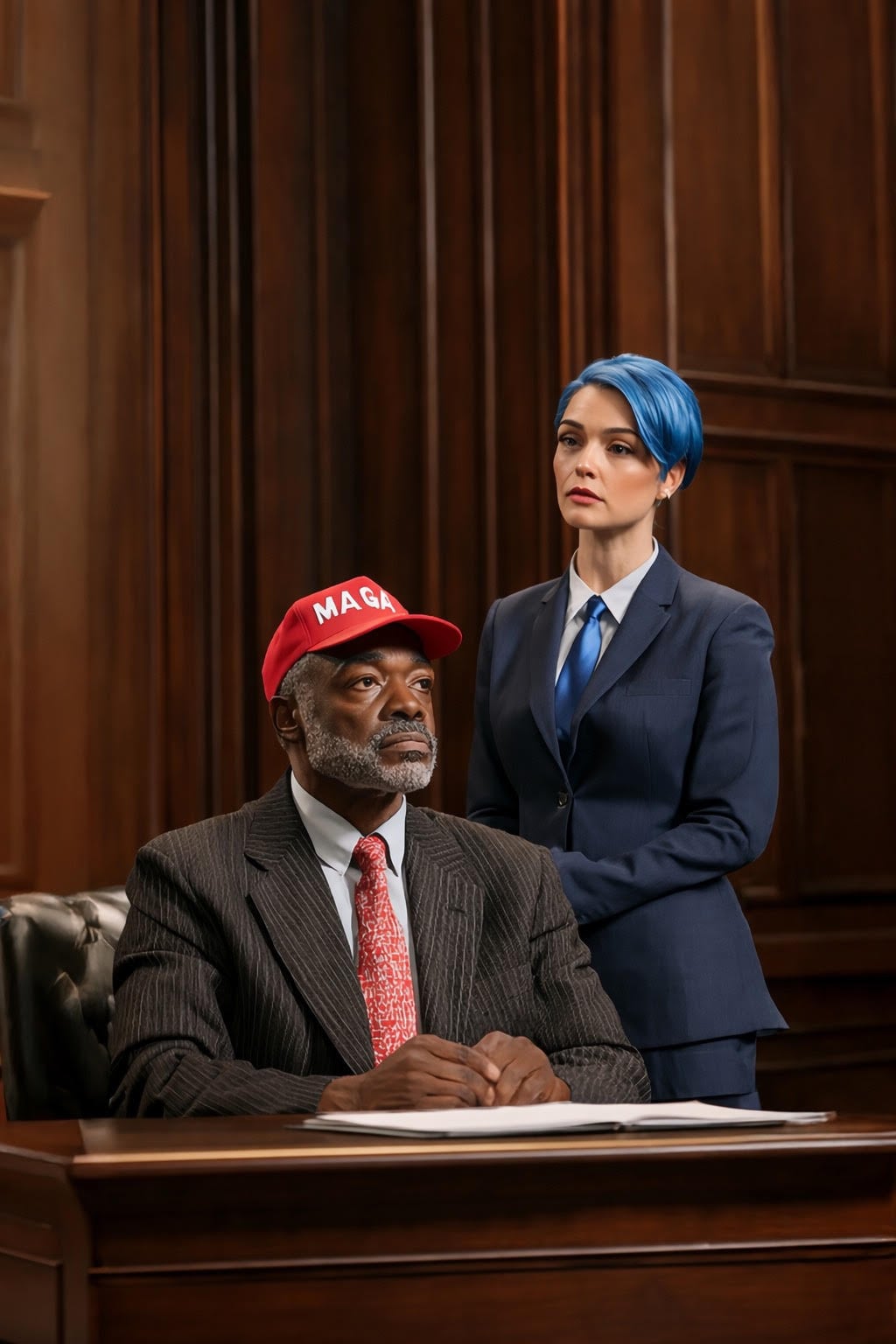
Photo: Tony Senatore: all rights reserved
In America, activists are often praised by liberals and criticized by conservatives. Throughout history, activism has been regarded as subversive, disruptive, and often radical, with civil disobedience serving as its defining instrument. American history makes clear that such measures have sometimes been necessary. Had citizens remained passive, Black Americans would not have secured civil rights, and sustained opposition to the Vietnam War would not have forced a national reckoning. Activism, at critical moments, has been indispensable. However, necessity does not imply permanence. The strategies that once corrected grave injustices have, in their modern form, become increasingly corrosive. Contemporary activism too often relies on moral absolutism, institutional distrust, and social antagonism, producing division rather than progress.
What was once a tool for reform has evolved into a permanent posture of grievance, weakening national cohesion and undermining the very ideals it claims to defend. America no longer benefits from activism that seeks disruption for its own sake. Instead, it requires a new, assertive model of activism that builds legitimacy, earns trust, and delivers measurable outcomes. I call this new type of activism pragmatic activism. It has always existed in America. I am simply giving it a name. By prioritizing achievement, institutional participation, and cultural integration over accusation and confrontation, this approach offers a more effective and sustainable path to equality and social progress. Pragmatic activism is the pursuit of social equality through demonstrated excellence, responsibility, and integration rather than accusation or division. Open to all races and genders, it holds that the most durable progress is achieved when people prove, in tangible and visible ways, their ability to compete, contribute, and lead on equal footing within shared institutions, as long as there is a level playing field. This approach believes culture changes when expectations change. By succeeding in professions, education, business, and public life, individuals do more than advance themselves; they normalize achievement and widen the path for those who follow. Representation matters most when it is credible, aspirational, and broadly respected. Pragmatic activism rejects the idea that progress requires constant conflict or that society is irredeemably hostile. Instead, it emphasizes agency over grievance, solutions over slogans, and outcomes over rhetoric. It seeks allies rather than enemies, and persuasion rather than coercion. This is not passive acceptance of injustice. It is disciplined, strategic action grounded in realism and confidence.
Pragmatic activism aims to win trust, reshape perceptions, and secure lasting equality by showing what is possible, and then making it ordinary. A classic example of pragmatic activism is Bill Cosby’s The Cosby Show. In my opinion, the show did more for the advancement of Black Americans than the typical form of activism in which a black student who graduates on a full scholarship as valedictorian from an elite Ivy League university, and in his salutatory address, frames America as structurally irredeemable and chooses to emphasize historical grievance and violent protest as the primary lever of change rather than, in the words of William F. Buckley, the ” good nature, the generosity and the decency that do lie in the spirit of the American people.” I hold The Cosby Show in high esteem because, as a conservative, it checks all of my boxes. The show quietly changed attitudes without ideological confrontation, reducing racial barriers by promoting equal competence and professionalism. What Mr. Cosby did in his personal life is tragic, but his nefarious deeds should never diminish what he accomplished.
Most importantly, the show normalized black professional success, making black excellence unremarkable and expected. Thus, pragmatic activism is not just a tactic but rather a theory of social change. While I won’t be joining any protests anytime soon, I put my idea of pragmatic activism in action in a book I published last May, entitled An Apology from Trump’s America. This book is a contemporary reimagining of Plato’s Apology. Its central figure, Adamantios, is an older Black American intellectual whose philosophical interests center on figures such as Plato, Aristotle, Ayn Rand, and Milton Friedman rather than prevailing contemporary discourses on identity, equity, or reparative justice. At the same time, Adamantios possesses a thorough understanding of Marxist theory. This background becomes essential during his sustained philosophical engagement with Professor Fiocco Di Neve, who occupies a role analogous to that of Meletus in Plato’s original text. She accuses Adamantios of corrupting Columbia University’s youth and characterizes him as a political reactionary and a threat to democratic norms.
Departing from reductive or stereotypical representations, Professor Di Neve is presented as Adamantios’s genuine intellectual equal. The narrative avoids tragic resolution; instead, it foregrounds dialogue as its primary mechanism of transformation. Through a sustained Socratic exchange, a radical feminist and a Black conservative arrive at a position of mutual intellectual respect, demonstrating the possibility of principled disagreement without moral delegitimization.
My book was conceived as a form of intellectual activism rather than a commercial project. Its aim is pedagogical and cultural: to broaden access to classical Greek philosophy, particularly for young readers who may not otherwise encounter it. If the book succeeds in introducing even a single Black student to the philosophical canon in a way that fosters curiosity rather than alienation, the long process of its creation will have achieved its purpose.
More broadly, the book challenges contemporary movements that question the relevance of classical core curricula on the grounds of cultural exclusion. It advances the contrary position that the foundational texts of Western philosophy are not the exclusive property of any single culture, but resources open to reinterpretation by scholars of all backgrounds. My book ultimately argues that the vitality of the canon depends not on its abandonment, but on its continual reexamination by new generations confronting moral and political questions far removed from those of ancient Greece. My pragmatic activism builds upon the ideas of Martin Luther King and Post-Civil Rights Integrationist Liberalism, which focused on achieving racial equality through colorblind integration, aiming to eliminate discrimination through anti-discrimination laws and institutional reforms, such as affirmative action, to create a race-neutral society. I have received a lot of pushback from critical race theorists who would rather focus on ongoing systemic power imbalances and the debate as to whether true equality means moving beyond race or acknowledging its persistent role in structuring society. They view my pragmatic activism as nothing more than an attempt to generate the next generation of Uncle Toms. From the far right, I received emails from “academics” outraged that I chose a black man for my Socratic figure. As much as people may say they favor open discourse, my personal experience proves otherwise. It is not easy being that “man in the arena” Theodore Roosevelt spoke about. Regardless, I press onward and hope my work has an impact. While I admit that more active forms of protest will always be relevant and vital to a healthy democracy, I hope that more young people will embrace my pragmatic activism and that it will become more mainstream on college campuses, on the streets of America, and throughout the entire world.
Related Topics