


Connecting Israel to the Diaspora at https://www.instagram.com/sandstoneisrael/
Property in Israel: The Bridge That Connects
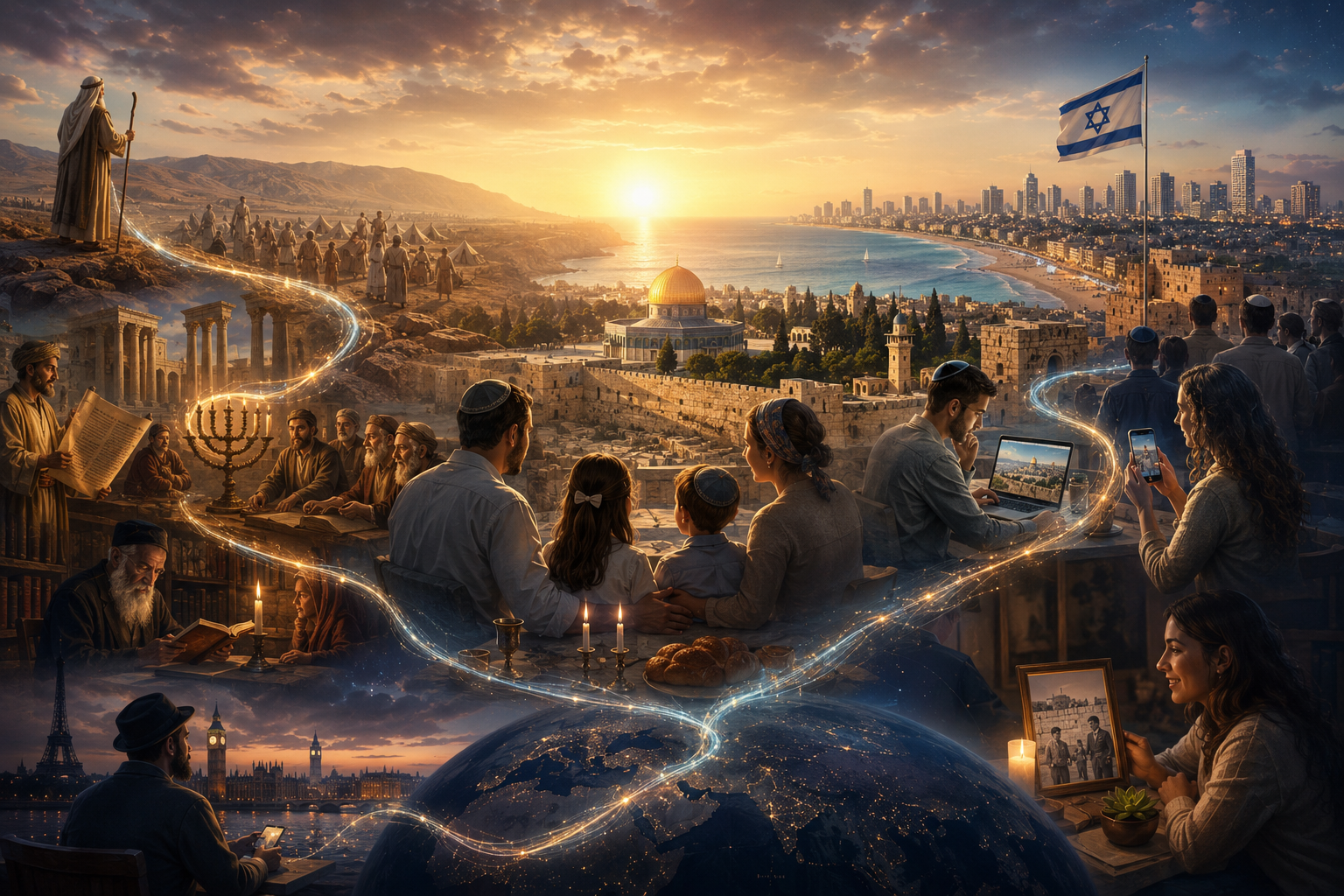
(AI generated)
The very fact that you’re reading this, on this particular website, already says a lot about you.
It says you care deeply about Israel. You’re interested, you’re engaged.
It says that like many others, Israel for you is part dream, part anchor; an ideal, a source of identity, memory, responsibility, and hope.
For some, that connection is religious. For others, it is historical, cultural, national, emotional, or deeply personal. But however it is felt, Israel sits at the center of the Jewish story in a way no other place can.
You may live in Israel. Or maybe America, Canada, Australia, the UK, or South Africa. Either way, you’re looking to stay connected with Israel.
This raises a very modern question: how can Diaspora Jews stay effectively connected to Israel? Reading this website is a great first step. And then what?
I’m going to argue that the most effective way to bridge the gap between Diaspora Jews and Israel, is through owning property in the country.
“Elitist!” some will shout. “Impossible!” others will yell. But before you get emotional, just hear me out.
One of the earliest property stories in the Torah is Avraham buying Me’arat HaMachpelah in Hebron. He is offered a burial place for Sarah, but he insists on paying full value. The Torah goes into remarkable detail: the negotiation, the price, the witnesses, the field, the cave, the transfer. Why so much detail? Because a purchase in the Land of Israel was a statement that this land is not theoretical to us – it is part of the Jewish story in the most real and grounded way.
Centuries later, the prophet Yirmiyahu buys a field in Anatot at what seems like the worst possible moment. Jerusalem is under threat. Exile is approaching. Buying land looks almost irrational. But that is exactly the point. The purchase becomes an act of faith. A deed in the ground saying: Jewish history is not ending here. We will return. We will rebuild. Homes, fields, and vineyards will matter again.
Even the Talmud gives striking weight to acquiring a home in Eretz Yisrael (Bava Kamma 80b). It discusses the special importance of completing the purchase of a house in the Land, treating it as something with significance beyond a normal property deal.
Whether one looks at this religiously, historically, culturally, or emotionally, the message is clear: Jewish ownership in Israel has long been part of the bond between the Jewish people and the Land.
And this did not disappear in modern times.
In the 19th century, Sir Moses Montefiore, a British Jewish philanthropist, helped build Mishkenot Sha’ananim, the first Jewish neighborhood outside Jerusalem’s Old City walls. He was using his resources, his vision, and his connection to help expand Jewish life in the Land. He understood that even from abroad, a Jew could play a real role in building Israel. In investing in Israel. In making a statement.
But we’re not all Montefiores or Rothschilds. I get that. And Israel’s property prices are a well-known choking hazard.
But think about, for example, the famous blue JNF boxes. They sat in Jewish homes across the Diaspora – in London, New York, Los Angeles, Melbourne, Toronto, Johannesburg, and countless smaller communities. Many of the families putting their last coins into those boxes were not able to pick up and move. But they still wanted a share in the story. They wanted their children to know that Israel was not distant. It was personal. It was theirs too.
If you can buy – you should.
And if it’s not feasible, the dream still matters. Stay close to it. Understand what’s happening in Jerusalem, Netanya, Tel Aviv, Ra’anana, Herzliya, Modiin, Ashdod, Beit Shemesh, Karmiel, Zikhron Yaakov, and in communities from Kiryat Shmona to Eilat. Keep the conversation alive.
For those that can buy, I’m specifically not necessarily talking about making Aliyah. Not moving tomorrow. Sometimes it’s an apartment for Pesach and Sukkot. Sometimes it is a base for visiting children in yeshiva, seminary, college, or – increasingly, and incredibly – the army. Sometimes it is part of a future Aliyah plan. Sometimes it’s a “just in case.” Sometimes it’s simply the emotional power of being able to say: we have a place in Israel.
You follow what is happening differently when you own here, or even when you are simply working toward that possibility. You think about the country differently. You visit differently. You care about the city, the street, the building, the neighborhood. Israel becomes less abstract. It becomes part of your family rhythm.
To buy property in Israel is not the only way to support Israel. It is not possible for everyone, and it is not the right step for everyone at every stage. But for those who are able, it can be one of the most personal, practical, and lasting ways to connect to Israel, to join this incredible chain:
A chain that runs from Avraham’s purchase of Me’arat HaMachpelah, to Yirmiyahu’s field in Anatot, to the courage and vision of Sir Moses Montefiore, to the families who placed coins into blue JNF boxes from thousands of miles away because they wanted a share in the rebuilding of the Land.
And now, in our generation, we have the opportunity to be part of that same story.