
Protest, Provocation, and the Erosion of Israel’s Civic Space
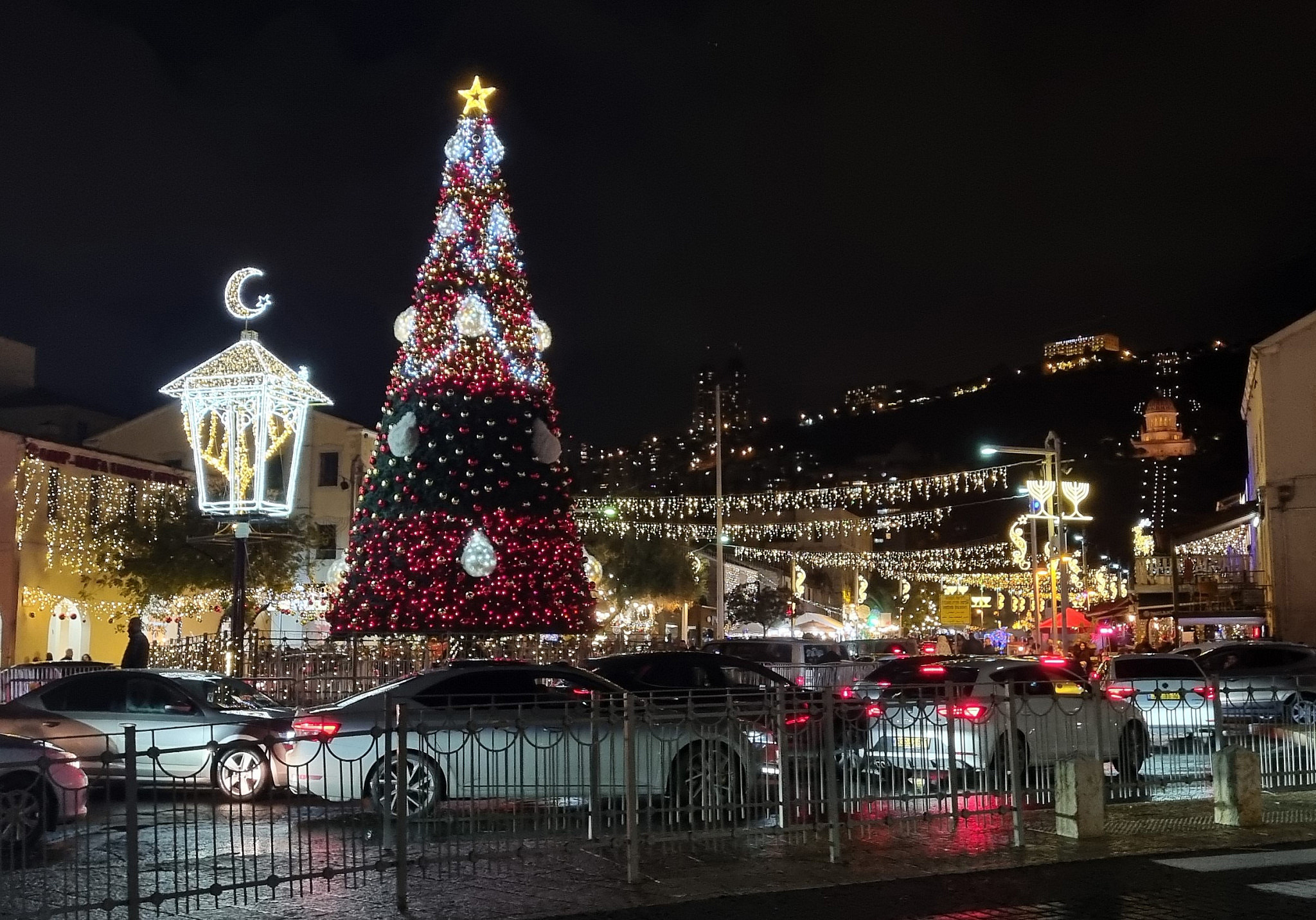
The extinguishing of Hanukkah candles in a Tel Aviv shopping center last week was quickly framed as a scandal, and just as quickly transformed into a symbol. A young Arab-Israeli woman filmed herself putting out the candles of a public menorah, uploaded the video to social media, and within hours the act was absorbed into Israel’s ongoing cultural and political battles.
Yet the incident itself matters less than the debate it exposed. The question is not whether the act was offensive or provocative. It is what kind of protest it represents – and what happens when symbolic disruption replaces engagement with power in a shared civic space.
On the right, the act was framed as evidence of Arab hostility toward Jewish tradition, another sign of an ethnic or religious struggle. On the left, the framing was almost the opposite: a moral gesture, even a courageous one. A prominent commentator likened the young woman to Rosa Parks and described the extinguishing of the candles as a nonviolent interruption of Jewish celebration amid suffering in Gaza.
Both framings miss the point, turning the incident into a clash of identities.
To understand why this event hardens so quickly into identity politics, it is necessary to step back and consider the civic position of Arab citizens of Israel. Arab citizens did not enter the state as immigrants, nor as a voluntary minority, but as a population that remained after the 1948 war – a war that simultaneously marked Jewish independence and Palestinian catastrophe.
Israel’s Declaration of Independence promised full civil and religious equality to all its citizens, regardless of ethnicity or faith. Yet from the outset, Arab citizens were asked to live within a state whose foundational narrative was not their own. The tension between legal citizenship and national identification has therefore been structural, not incidental – a condition carried across generations.
For many Arab Israelis, the war in Gaza intensifies this long-standing strain. Familial ties, emotional identification, and national solidarity coexist with citizenship in a state at war. The pain, anger, and moral dissonance that result are real and legitimate. Acknowledging this complexity is not an act of generosity; it is a prerequisite for any honest civic conversation.
Yet precisely because this tension is lived within a shared civic framework, the question is not whether it may be expressed, but how. Acts that target the religious symbols of fellow citizens do not articulate this complexity; they flatten it. What begins as an attempt to externalize internal conflict risks being translated into a gesture others experience as negation rather than expression. In this sense, symbolic desecration does not give voice to a difficult identity – it collapses it into confrontation.
At the core of democratic protest lies a basic distinction between challenging power and injuring a community. Protest, to be effective, has an address. It confronts those who make decisions, enforce policies, or wield authority. Rosa Parks’ refusal to give up her seat targeted a legal regime of segregation; it exposed an injustice embedded in law and demanded institutional change.
Extinguishing Hanukkah candles in a shopping mall does none of these things. It does not confront a government body, challenge a policy, or articulate a demand. Instead, it targets a religious symbol practiced by ordinary citizens. When an act lacks an address, a demand, and a confrontation with power, it ceases to function as protest and becomes something else entirely: provocation staged for visibility rather than change.
Indeed, protest sometimes inconveniences citizens – strikes disrupt services, roadblocks delay commuters. But there is a fundamental difference between temporary inconvenience and the desecration of a symbol. A roadblock asks a driver for a few minutes of patience. Extinguishing candles asks the observer to absorb an assault on something sacred. The first disrupts routine; the second demeans it.
This distinction matters because religious symbols are not interchangeable with political ones. Hanukkah candles in a shopping mall are not assertions of conquest or political dominance. They are ordinary expressions of tradition, no different from Christmas decorations in a public space. To treat them as legitimate targets is to declare that everyday religious or traditional life is fair game for disruption.
Pluralistic societies depend on a shared civic space in which disagreement is possible without erasure. One can oppose policies, criticize governments, and express deep moral outrage while still recognizing the symbolic worlds through which others understand themselves. When protest shifts from confronting power to dismantling symbols of fellow citizens, it risks narrowing, rather than expanding, that space.
Some argue that maintaining ordinary life amid suffering in Gaza signals moral indifference, or worse – making every citizen silently complicit. But ordinary life is not the opposite of compassion – it is often the condition that makes compassion possible. When moral expression is reduced to disruption alone, shared symbols become targets. This is not solidarity. It is a narrowing of moral imagination, in which care is confused with negation.
Disagreement, even profound disagreement, is inevitable in divided societies. What is not inevitable is the erosion of the shared space in which that disagreement takes place. What if she had walked past the menorah, spoken her pain and dissonance aloud, and chosen not to extinguish the candles? What if she had respected the symbol of those she lives among, even without agreeing with them? That would not have erased her protest. It would have given it force.
A short related article by the author appeared in Haaretz Hebrew edition on December 23, 2025.