Pushkin, the Queen of Sheba, and the Hidden Light of My Jewish Roots
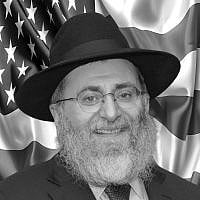
By Rabbi Mikhail Salita, a Brooklyn rabbi with roots in Odesa, Ukraine
Sometimes destinies intertwine in ways that even angels marvel at. My great-grandfather, a Podolian Hasid, was a friend and business partner of the grandson of the great Russian poet Alexander Sergeyevich Pushkin. The more I learned about this connection, the more I felt that it was written not in ink, but in breath.
There are stories that belong neither to time nor place — they live between heaven and earth, between dust and light. The story of my great-grandfather, Srul Aronovich Lekhtman, is one of them. In him faith, intellect, and inner nobility merged, reflecting the ideal of the Hasidic court of Ruzhin — to be a “king without a crown,” serving the King of Kings.
He lived in Kamianets-Podilskyi, a town in western Ukraine where nearly all Jewish life followed the Ruzhin–Husiatyn Hasidic tradition. The Rebbe of Ruzhin, often called “the holy Rebbe” or “the king without a crown,” taught that true greatness lies not in gold, but in how one carries divine light through ordinary life. Wealth, he said, should serve the soul, not the body. His Hasidim built factories, educated children, and helped the poor — all as a form of prayer through action. From that spirit of sanctified labor came people like my great-grandfather.
He was an educated man who served on the City Council of Kamianets-Podilskyi under the Russian Empire, owned a brick factory, and was closely associated with Pan (Mr.) Teofil Dembicki — a Polish nobleman and intellectual whose ancestry, as it turns out, carried traces of Jewish roots. Archival records show that my great-grandfather managed Dembicki’s estate and later became his business partner. Together they owned a brick factory where the clay of Podolia turned into both building stones and human stories. Their bond was not only professional but deeply spiritual — as if two souls had recognized each other beyond words. Sometimes, people don’t meet for the first time; they simply remember each other.
A historian, Valery Kuznechikov, in his essay “Pushkin’s Firstborn: The Family Secret of the Dembicki House,” suggested that Teofil’s brother, Count Karl Dembicki, was a grandson of Alexander Pushkin — born of a secret union with a Polish Catholic noblewoman named Angelika. At that time, such a union was unthinkable: a court poet and a Catholic lady defying the social laws of the Empire. Yet blood flows not by the laws of empires, but by the laws of Heaven.
Pushkin, a great-grandson of Abram Gannibal, the African-born general adopted by Peter the Great, was of Ethiopian Jewish descent. The elite of the ancient Beta Israel community in Ethiopia — descendants of the Queen of Sheba — believed their lineage traced back to King Solomon, son of King David, from whom, according to prophecy, the Messiah will come. Pushkin knew this and was proud of it. He felt the breath of ancient royalty within his soul. In one of his final sketches, he drew the design for his own gravestone — adorned with the Star of David — as a symbol of returning to his origins and of faith in a divine plan that connects nations and generations. Sometimes a great soul leaves a sign on earth — and centuries later another soul follows that sign, continuing the story.
Perhaps that same spark — the one spoken of in the Zohar — led Pushkin’s descendant, Teofil Dembicki, to my great-grandfather, the Podolian Hasid. When light and clay meet, a vessel is born. When a Jew and a non-Jew come together in truth and mutual respect, a sacred partnership arises. Their destinies intertwined not by chance, but by the design of that Great Book that is written not in ink, but in divine breath. There are no accidental lines in it. Everything that seems earthly has long been written in Heaven.
Years later, during the Soviet purges, Dembicki was executed as an “enemy of the people.” My great-grandfather, realizing the danger, left Kamianets-Podilskyi with his family and moved to Odesa — a city of sea, light, and hidden prayers. There he became the director of the Odesa University Library. The man who once built factories became a guardian of books. From clay, he moved to word — for both bricks and books are forms of Creation.
He died tragically, struck by a tram while returning from the university, transporting books on a horse-drawn cart. His last words to his wife, my great-grandmother Esther-Dina Dvoyris, were simple and Jewish: “Give the children an education.” That was his testament.
Esther-Dina came from a Hasidic merchant family where Yiddish was the mother tongue and faith was passed down like a family blessing. After her husband’s death, she was left alone with four children, yet her faith never wavered. She prayed three times a day — Shacharit, Mincha, and Maariv — even during the years when prayer itself was dangerous. She attended underground synagogues, because she could not live otherwise. Her soul was bound to Heaven, and no fear could break that bond.
Among my distant relatives on the Dvoyris side were also the socialist thinker Pavel (Faivel) Axelrod and the Soviet scientist Boris Zbarsky, known as the first director of Lenin’s Mausoleum. I do not take pride in them, but I do not condemn them either. We are all children of one God. As the Psalm says, “We are all the sheep of His pasture.” Every soul has a chance for teshuvah — to return to the light — even if its path has wandered through darkness. For in every human heart lies a spark, and when God breathes upon it, it can glow again.
I am proud that in my lineage are the Hasidim of Ruzhin and Husiatyn. I feel close to Chabad — the movement whose name means Wisdom (Chokhmah), Understanding (Binah), and Knowledge (Daat). Since 1997, I have attended a Chabad synagogue because I feel there the living breath of Torah — something that connects generations and dissolves the borders between worlds. The Lubavitcher Rebbe once said, “At Sinai there were no Reform Jews, no Conservatives, no Orthodox. There were only Jews.” That truth still calls to me. We are all children of Abraham, bearers of his covenant, and through us the world remembers its beginnings.
Perhaps that is why the Abraham Accords appeared in our time — a sign that nations weary of conflict are searching not for divisions but for shared roots. It is not merely diplomacy, but a sacred echo: a return to the first Father, who called God his Friend and taught humanity friendship.
My brother, Dmitriy Salita — a world boxing champion (WBF) — was inducted into both the New York Boxing Hall of Fame and the Jewish Sports Hall of Fame. As for me, I have dedicated my life to preserving the ancient Israeli breed Kanaani, a living reminder of harmony between humans, animals, and Creation itself. I am currently studying to become an animal chaplain because I believe that every living being carries within it a spark of the Divine breath.
And perhaps all of this — from the Queen of Sheba to Pushkin, from a Podolian Hasid to a Brooklyn rabbi with Odesa roots, from the clay of Ukraine to the living breath of Jerusalem — is part of one great story. We are all children of Abraham. And when we remember this, argument turns into peace. For in a world where every soul is a letter in one divine book, there is no room for hatred — only for light, return, and the Eternal.