Is AI Good for the Jews?
Qatari Active Measures
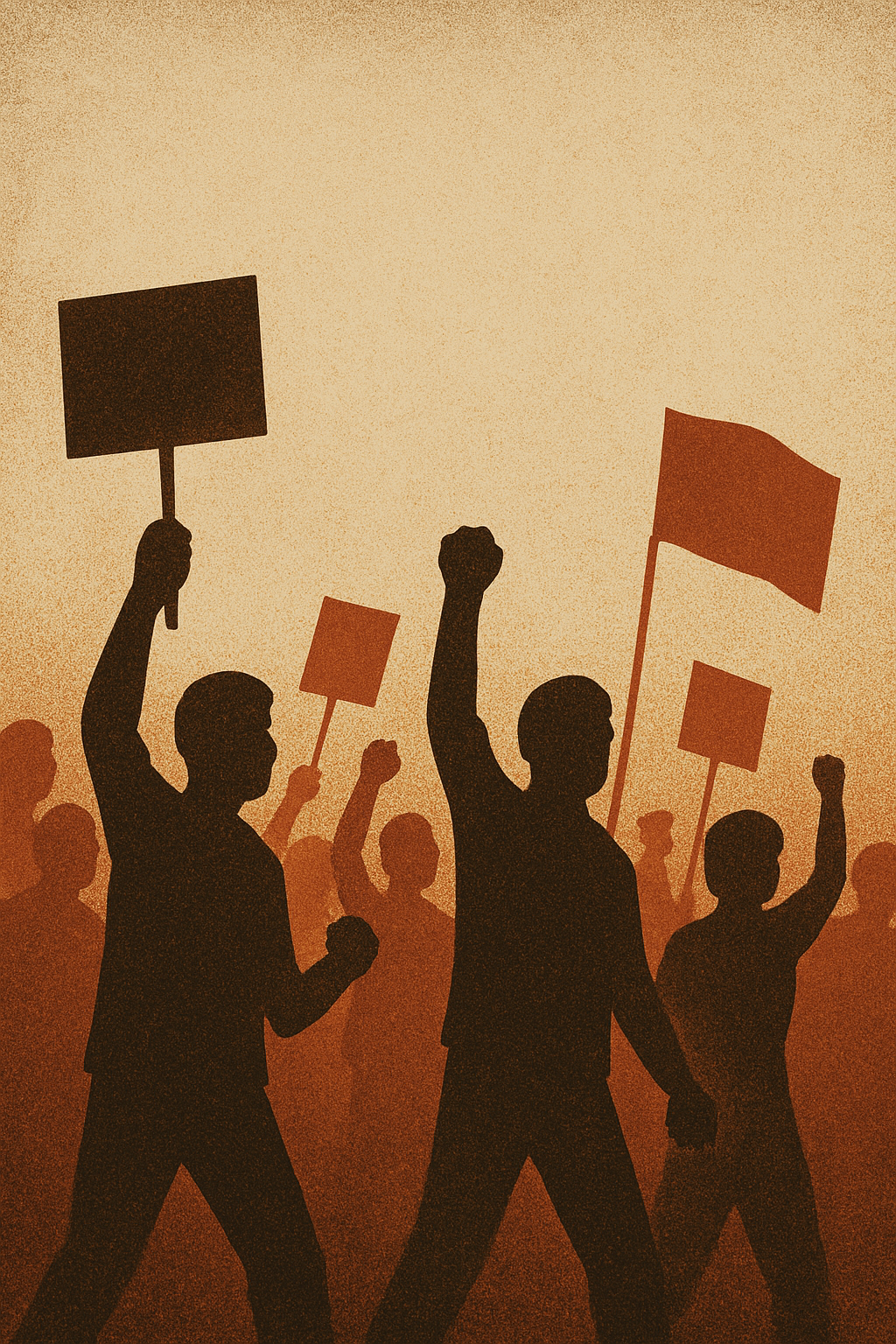
During the Peloponnesian War (5th century B.C.E.), Sparta sent money and envoys to foment revolts among Athens’ allies, inciting uprisings in places like Mytilene and supported oligarchic factions within democratic city-states to destabilize Athens’ Delian League. In the 2nd and 1st centuries B.C.E. Rome frequently funded rival claimants or “popular parties” in client kingdoms to overthrow or weaken hostile kings. For example, Rome backed certain Jewish factions in Judea against others to destabilize local power structures before direct rule.
Byzantine emperors paid subsidies and smuggled money to “barbarian” chieftains or pretenders inside rival kingdoms to destabilize them in the 6th-10th centuries. Even the Pope, in medieval Europe, used bribes, promises, and covert funding of barons or towns to rebel against kings who defied The Vatican.
In the 20th century the Soviets were the masters of this tactic, to which they assigned the term “Aktivnye Meropriyatiya” (Active Measures), a wide toolkit of covert operations, including propaganda, disinformation, ideological subversion, and clandestine diplomacy intended to manipulate public opinion and weaken adversaries. The Soviets have practiced full-on disruption campaigns aimed at the West since the 1950s, for example covertly bankrolling front organizations such as the World Peace Council and the International Union of Students to cause unrest around push-button issues like Vietnam and race relations in the 1960s.
The Soviets weren’t the only ones.
In Operation Ajax (1953) the C.I.A. paid street gangs, organized demonstrations, and manipulated the press in order to overturn Iranian Prime Minister Mohammad Mossadegh. In Operation PBSUCCESS (1954) the C.I.A. organized strikes and protests and distributed propaganda to incite unrest to overthrow Guatemalan President Jacobo Arbenz. There is also Chile in the early 1970’s, where the C.I.A. targeted President Salvador Allende by funding protests and strikes, leading to civil unrest and a destabilized economy. The C.I.A. has also fostered civil unrest to advance U.S. policy objectives in Poland (1980s), Nicaragua (1980s), and Ukraine (2004).
Britain did it in Egypt in 1956 when the M16 organized and funded anti-Nasser groups and fomented strikes in Suez-zone labor unions after Nasser nationalized the canal. In 1997 China’s PRC covertly organized pro-Beijing groups, unions, and street demonstrations to counter the pro-democracy movement. Beijing continues to fund front groups and social-media campaigns encouraging demonstrations critical of Taiwan’s government policies to this day.
In the 1980s the Pakistani ISI facilitated strikes, demonstrations, and tribal uprisings in areas under Soviet control. These days the ISI funds street protests and civil unrest alongside armed militancy in Jammu & Kashmir to undermine Indian rule. Libya, under Gaddafi funded anti-Western student groups in Europe. Cuba established protest groups to cause civil agitation across Latin America in the 1970s and 1980s.
Iran has engaged in active policy of exporting its Islamic revolution since 1979. In the 1980’s Iran created and funded Hezbollah in Lebanon to dominate Shi’a politics and organized mass protests and strikes to weaken the central government. Prior to the U.S.-Iraq War, Iran provided active support to Iraqi Shi’a insurgent groups SCIRI and the Dawa Party. Today, Iran works closely with Shi’a opposition groups to undermine the Iraqi government.
In Yemen, Iran provides funding, weapons, and media support to the Houthis, initially to support a movement against the Saudi backed government. In Syria, Iran organized and mobilized militias and engineered pro-government demonstrations to prop up the Assad regime. In the Palestinian territories Iran funds both Hamas and Palestinian Islamic Jihad in order to disrupt Israeli security.
In today’s social media driven world the use of civil disruption as a tool of espionage is perhaps easier than it ever was. One might therefore assume that governments, democratic governments in particular, would be hyper-sensitive to “opinion assaults”, punishing and retaliating against all agitators.
And yet perhaps the most world’s most egregious practitioner of social sabotage, Qatar, practices its craft daily, openly, and with enthusiastic Western support.
Qatar has built a multi-pronged anti-Western toolkit that includes media, funding to Islamist actors, patronage of non-state actors, quasi-diplomacy/mediation, and permissive financial and legal environments that gives it the capability, and in several documented cases confirms its practice of supporting actors or narratives that clash with core Western interests of stability of allies, counterterrorism aims, and normative Western positions. Post October 7, 2023, this toolkit has been used to foster and amplify domestic unrest, empower anti-Western actors, and shape public narratives in ways that erode Western policy goals.
Qatari media power is centered around its state funded network Al Jazeera, which serves as its global platform for the amplification of anti-Western narratives. The Qatari use of Al Jazeera as a tool of state espionage was so blatant that countries like Saudi Arabia and other Gulf Emirates have in the past demanded that the network be shut down. Despite the clarity of its biases and the dangers of its success, articles from Al Jazeera are carried by news distributors like Apple News and its journalists are questioned on the likes of CNN as so-called experts.
Qatari mediation efforts, including hosting terror groups, funding social programs, and serving as a broker between warring parties gives Qatar the opportunity to normalize actors the West regards as hostile. This pattern was witnessed in its full effectiveness with Hamas, who after invading Israel, committing atrocities, kidnapping hostages, and provoking a destructive war, is still someone viewed among many in the West as an equal and rightful partner to negotiations.
Qatar empowers non-state actors hostile to Western allies and interests. It distorts and recasts debates within Western democracies with the aim of eroding Western support or causing civil disorder. It encourages and funds the formation of organizations to promote anti-Western ideas and support candidates with radical ideas. It permits legal and financial infrastructures that make it hard for Western enforcement agencies to disrupt the funding of extremist actors. Qatar is in idea and in action anti-Western.
And yet, the Qataris are the toast of the town in the West. They host the Al Udeid U.S. air force base, invest heavily in Western businesses, universities, and charities, and generally have their transgressions overlooked.
Meanwhile, in the Arab world the Qataris are despised. Their role supporting rebel factions in Libya, Tunisia, and Syria, and their efforts to undermine Saudi Arabia, the Arab Emirates, and Egypt during the Arab Spring in 2010. In 2017 the Gulf states initiated a since repealed boycott of Qatar, instigated by Qatari support of forces seeking to disrupt the region.
The Israeli strike on Hamas leaders in Qatar could be the beginning of change in Israeli tolerance for Qatari interference, which allegedly reach into the very center of the Prime Minister’s office (not unlike a Qatari scandal in the British halls of power.
Stirring social unrest is an ancient, proven tactic to subvert enemy societies, and yet the West refuses to acknowledge, let alone punish Qatari seditious behaviors, even as chaos hits their streets and campuses. Qatari provocations aim to irreversibly change Western way of life. Can it be that we are so gullible, arrogant, and corrupt that we ignore their incitement?
Related Topics
Related Posts