Rabbi Dr Abraham Yehoshua Heschel Twerski
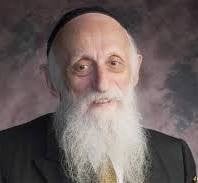
On the the 21st of Shevat, 8th February 2026, an online presentation featuring international speakers is to be launched. It will mark the 5th yahrzeit of the late Rabbi Dr Abraham Yehoshua Heschel Twerski, one of the most remarkable men I have ever met.
The link to access the event is:
shorturl.at/PZTJs Password: Twersky2026
For those who have not come across Rabbi Twerski and his teachings, here is a short summary of his life. He was grandson of Rabbi Menachem Nachum Twerski, the founder of the Chernobyl Chasidic dynasty, and also the Bobove Rebbe who was to play a big part in his early education.
He received semicha to be a Rabbi in 1951 and worked with his father as assistant Rabbi in Milwaukee. He qualified as a doctor in 1959 and became head of psychiatry at Pittsburgh’s St. Francis of Assisi Hospital. He wore the traditional Chasidic dress which made the appointment all the more surprising to him. He was actually “headhunted “for the position. Rabbi Twerski said that they had approached the wrong man to which he was told “we have the right man”. Later on, he wrote the book, “The Rabbi and the nuns”, detailing many encounters and lessons.
Having founded the Gateway Rehabilitation Center in Pittsburgh, he became the associate professor of psychiatry at the University of Pittsburgh’s School of Medicine and set up the Shaar Hatikvah rehabilitation centre for prisoners in Israel.
Rabbi Twerski used the metaphor of alcoholism to relate to various behaviours both religious (such as Teshuvah / repentance) and secular and was a great aficionado of the Twelve Steps programme of Alcoholics anonymous as a means to self-improvement.
Rabbi Twerski composed the world-famous tune for “Hoshea es Amecha,” which is particularly popular in Chabad. It was sung at the funeral at Rabbi Twerski’s request, rather than the giving of a eulogy / hesped – a mark of his humility.
It is hard to write an appreciation of somebody who has been a big part of my life for over 30 years. However, here are some personal stories, which I hope will inspire you and help perpetuate Rabbi Twerski’s memory and legacy.
Figuratively we met over 30 years ago in a bookshop in Golders Green in England. My wife and I were early for a meeting with friends. Being a lover of sefarim (engendered by the late Rabbi Joseph Rabinowitz ZT”L), I went into the seforim shop (Rabbi Twerski would say “that there is no such thing as killing time”). I noted a book called “Living each day”, which is A5 size. I removed it from the shelf, looked in and thought, “I can do this extra studying and self-reflection every day. The book itself was written at the behest of someone at an alcoholics anonymous meeting. Members are encouraged in spirituality and many of the references used in the daily booklet to be studied were Christian in origin. He was asked to write a book with daily inspiration and reflection, based on Jewish values which became “Living each day”.
Over 50 seforim later, the relationship continues. In those days there was no cover with a picture of Rabbi Twerski, so I had no idea what he looked like. When I first saw him at an Encounter conference, (see later), the kindly face just fitted so well with the writings. I thought to myself that if Heaven forbid, I needed a psychiatrist this is the sort of person that I would want to see.
I continued to expand the library (reading the seforim / books – not just buying them). I was struck by the combination of the Kedusha/ holiness due to Rabbi Twerski’s yerusha/ genealogy, and his medical / scientific base which produced a world view.
A few years later after buying “Living each day” Rabbi Twerski came to England to give a lecture at the United Synagogue Encounter conference. I decided that I had to go to see and listen to him. The event was at the Institute of Education. Rabbi Twerski was allocated one of the classrooms in which to speak. I thought I would miss the opening event, so that I could get a good seat for his presentation. I made a good call. When Rabbi Twerski arrived, he had to fight his way to get to the small podium, so full was the room. Clearly, we knew something the organisers did not. It was the first and last time he was not given the main auditorium.
When Rabbi Twerski came on another occasion to speak at Hampstead Shool, I was to go with my late Father z” l. I said we should leave early, so that I could park near the Shool to make life easier for my Dad. We got there and put our coats on chairs in the hall before going to daven Maariv. When we returned, the hall was full. Another good call.
My Dad always liked to have a sefer signed by the author. To that end he had taken his copy of “Living each week” with. When he asked Rabbi Twerski to sign it, he said of course. However, when Rabbi Twerski opened the cover, he saw it was signed by my children saying, “To Grandpa – Happy birthday, lots of love”, with their names individually written. Rabbi Twerski commented “What do you need me writing in this when you have your granddaughters’ signatures?”. He did sign it, but his humility and sense of family shone forth.
Rabbi Twerski made having a good sense of self-esteem a cornerstone of his work. Whenever he was introduced as the author of say eighty books, he would always reply, “I have only written one book – just eighty different ways”.
When my Dad was niftar/ passed, we arranged a Mishna siyum for the Sheloshim. Rabbi Twerski’s seforim/ books are usually my first port of call for a dvar Torah. There is no inclusion for the final Mishna in “Messages from the Mishna”. I emailed Rabbi Twerski for a dvar Torah and wrote about the previous story when my Dad met him. In less than 24 hours, I received a dvar Torah which I used at the sheloshim siyum.
So many of his teachings have impacted on my life and on the others, I have related them to people, both socially and professionally on very many occasions. To those who had not heard of Rabbi Twerski, in particular non-Jewish patients, I always introduced what I was going to say with a short biography of the Rav. The appreciation of his wise words was even more appreciated.
Rabbi Twerski often used the phrase,” the advice of “competent professional”, and has been used by me so many times to ensure friends and patients get the appropriate treatment and therapist. Nobody means to harm another, but one cannot dispense medical advice as an example without being a qualified doctor. There are people who lives have been saved because of Rabbi Twerski without him ever knowing. I have also seen the results of people who have not followed Rabbi Twerski’s advice.
The comment on time wasting due to non-punctuality in “Lights along the way” has guided me for appointments and the smachot – weddings we made. You cannot compensate people for wasting their time due to lateness.
It would have been fascinating to hear his take on AI.
Sadly, the last public visit to the UK was around 2005. During the evening Rabbi Twerski had to sit down due to his spinal issues and so was “interviewed” rather than having to stand for the whole evening. Sadly, his spinal issues were to increase in severity. He remarked that this might be his last visit, and so it proved to be. He also mentioned that he would keep in contact with people via his writings and the internet.
After an event, people always stay on to hear the questions that are asked. I make it a point to take the chance of an extra learning opportunity. Rabbi Twerski was asked what his favourite book was – he replied, “Living each a day”, but that he did not have a copy of every book he had written. I added that he would be most welcome to come home with me and see my collection of Rabbi Twerski seforim in the attic. He smiled, realising that I was referencing the “pancake story”.
It was so sad to read in when he wrote in “Growing up” that he was retiring due to health reasons, and he felt “the well had run dry”. I wrote to him to say that I was sure that this was not the case, the well had not run dry.
At one time I had two daughters who live in Ramat Beit Shemesh. It was so exciting to hear that the Twerski family visited on alternate Shabbatot. It became an ongoing joke, that whenever my wife and I visited, this was the Shabbat he was not here. Conversely my Mechutan would ring me when he visited from England and say, “Guess who I saw?”
Having once again visited on a Shabbat when Rabbi Twerski was not there, I told this to Rabbi Myers, the Rabbi of Menorat Hamaor and son in law of Rabbi Twerski. He said I should email Rabbi Twerski and ask to see him. I did this after Shabbat and was thrilled to be called on Sunday morning by Rabbi Twerski inviting me to his home. My family were so pleased for me. “Dad is going to meet one of his heroes”. It was a simcha for the whole family.
But here is the twist in the story showing Hashem’s hasgacha pratis (Hashem being involved in every detail of daily life). Usually, I would walk both my granddaughters to gan and then go to Shool. It depended on the time of day, as to which of the local minyanim I went to. That day, it was raining extremely hard and so I went by car with one granddaughter, rather than walk. When I came out of the Aish Kodesh Shool, I met my other granddaughter and took her to gan. I went back to that daughter’s flat first before going to the one I was staying with. That is when the call came from Rabbi Twerski inviting me to see him. I was not expecting to be in that daughter’s flat. Had I been in my other daughters’ flat, I would not have received the call due to the poor mobile phone signal that time. To add to the story, I went to the mall in Beit Shemesh before taking the train to Yerushalayim. There was a big mural for a restaurant that was to be opening with a jacket potato – an allusion to the lesson on the microwaved potatoes story, whose moral is “A shortcut is the quickest way to be where you do not want to be”.
It was an incredibly special moment in my life. I left on a spiritual high. We discussed many topics (I made a list before going and kept it). Rabbi Twerski said that “he was pleased to have helped and made a contribution to people’s lives”. Before leaving, I asked if I could take a picture of him. He replied, “let’s take a selfie”. This picture has sat on my bookcase since then and now resides with us in Ramat Beit Shemesh.
It is sad that I did not get the opportunity to see him again and never to hear the inspirational Yom Kippur Neilah service at Menorat Hamaor which members have told me of.
In several places, we read that Tzadikim /righteous people are alive even if they are not physically with us. This is so true of Rabbi Twerski. To this end, I have tried to learn from one of his books every day since his passing.
The memorial video presentation link is: shorturl.at/PZTJs Password: Twersky2026
The presentation will be uploaded and can be accessed with the link and password afterwards.
May Rabbi Twerski’s memory be as a blessing.