
Radicalized by Outrage, Silenced by Ceasefire
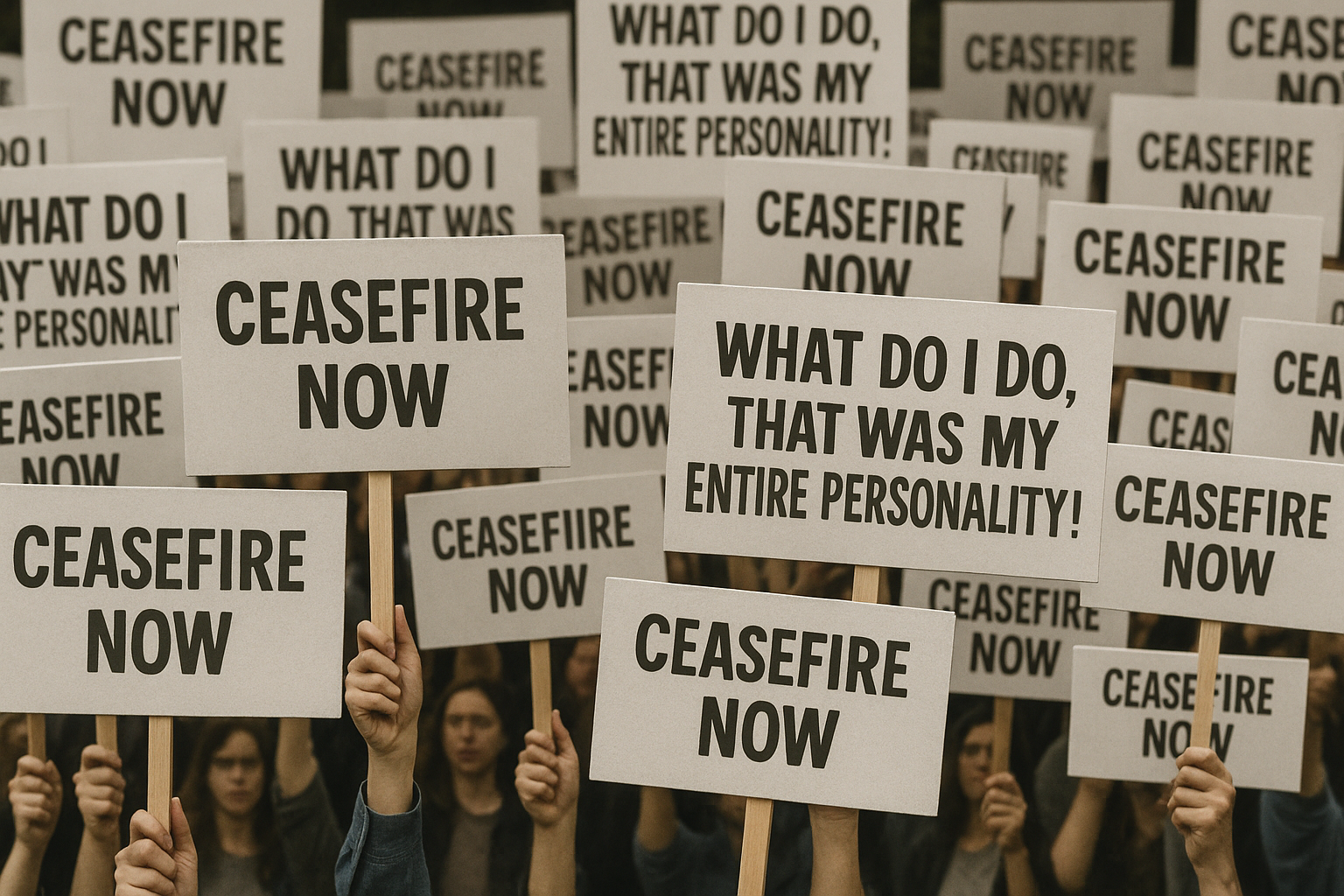
Now that a ceasefire is in effect, the “ceasefire now” movement has gone silent. There is no collective sigh of relief, no public jubilee, barely even an acknowledgment that what they screamed for just weeks ago has come to fruition. What we witnessed over the past two years was not a grassroots humanitarian awakening — it was the culmination of a long-term campaign of emotional engineering, a case study in mass radicalization. These post–October 7 “activists” are emotionally recruited pawns in a psychological war built on reaction without reason.
The “ceasefire now” movement was nurtured by years of algorithmic incentives, activist influencers, and state-backed propaganda that rewarded emotional conformity over intellectual independence. Add to that the systematic hijacking of higher education — where foreign funding and ideological agendas have quietly shaped curricula, discourse, and student activism — and you have a generation conditioned to mistake emotional certainty for moral truth. By the time October 7 happened, a critical mass of people had already been trained to respond to complex realities with pre-programmed outrage. Their empathy had been weaponized against their own discernment. The current silence is not the product of disillusionment, nor some quiet moral reckoning. It is a retreat into private silos, a regrouping of those conditioned to seek the dopamine rush of moral certainty over the discipline of truth.
For many, activism became a substitute for meaning; a way to feel virtuous without having to confront complexity. The radicalization of these activists relied on a psychological dependence on moral identity. Protest became proof of purpose, and displays of moral fervor were rewarded with validation and belonging. The cause itself became secondary. Their cause was often fiction, but that never mattered, because the movement’s real function was emotional validation, not moral clarity, and certainly not a call for fact-based justice. Without a so-called crisis to perform around, the moral identity collapses. A ceasefire offers no social reward.
Much of the pro-Israel world is now pointing out this hypocrisy: demanding to know why those who shouted for a ceasefire have not celebrated its arrival. But this response misunderstands the nature of what we are dealing with. You cannot appeal to reason in a movement built on emotional conditioning. The “ceasefire now” crowd was never engaged in a dialogue of ideas; it was participating in a feedback loop of feeling. These are not bad-faith actors debating policy, rather they are radicalized participants in a mass emotional movement. They were programmed to feel, not to think; to oppose, not to resolve. Attempts to expose their inconsistency only reinforce their sense of persecution and moral superiority. Expecting them to suddenly reenter reality is like expecting a propaganda bot to develop self-awareness.
The environment that produced this movement was not built overnight, and it will not dissolve overnight. Years of ideological grooming, emotional conditioning, and narrative repetition created the current reality. Undoing that requires time, strategy, and sustained psychological counter-programming. De-radicalization is not achieved through argument or exposure, but through patient re-education and the rebuilding of cognitive resilience. It demands institutions, media, and community leaders willing to invest in a generational project — one that restores critical thinking, moral complexity, and emotional literacy. The same deliberate architecture that built the radicalized must now be mirrored by an equally deliberate architecture of recovery.
This silence is not an oversight; it is evidence that exposes the performance. This moment should be instructive. It shows how easily moral theater can replace moral thought, and how profoundly our information systems reward feeling over fact. Those who once claimed the language of justice have been conditioned to depend on perpetual crisis to define their virtue. Without it, they face an identity vacuum. The task ahead is not to celebrate this silence or to shame it, but to understand it for what it reveals: the scale of manipulation and the fragility of moral reasoning in an age of algorithmic emotion. Just as this mass radicalization was built deliberately over time, so too must its undoing be. It will not come through exposure or argument, but through a long, patient, and intentional process of de-radicalization that re-teaches discernment, restores complexity, and rebuilds the public’s moral immune system.
There may be a tactical ceasefire, and calm may follow. But the enduring front line remains the war for hearts and minds — a psychological battleground where perception is both the weapon and the prize.