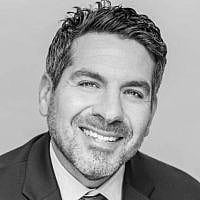
Rav Yoni Rosensweig- the bold pioneer
If you don’t know who Rav Yoni Rosensweig is, please get to know him and his ground-breaking work, pioneering, trailblazing, and life-changing mission here https://mnefesh.org/.
The following are my notes from the talk that he gave two weeks ago at the annual Maaglei Nefesh conference which this year was in Tel Aviv. This talk took guts, but boy does he have that! It is mindblowing and revolutionary…. And cracked me open. I cried through the entire lecture.
Rav Yoni gives me a platform for stability, happiness, hope and emotional health and also gives me a platform to keep halacha as best as I can and spiritual health.
Rav Yoni “gives me permission” to believe and stay religious and also hold on and be happy.
Buy his book- I did. It could be hard to read (it’s very scholarly), but the existence of it on my shelf means so much to me; it’s so validating. When speaking to Rav Yoni (and I have spoken to him!) I feel seen, heard, understood, valued and I feel that I have the strength to keep living as a frum Jew.
Disclaimer: These are my notes from his lecture which he has reviewed and gave me permisson to share- but this is not his words exactly, so if I got something wrong, it’s on me- not him.
———————————————————————————————————-
The question of tzadik v’rah lo (why do bad things happen to good people?) is a question that has been asked for thousands of years.
There are 3 typical answers given in the religious world:
1- It’s seemingly bad. Not really bad in its etzem– it’s just what it looks like. Suffering does not really equal suffering.
2- Bad is truly bad but we dont know why- it’s beyond our comprehension, so just believe G-d knows what He’s doing and focus on the good. Suffering does equal suffering, but don’t focus on it.
3- Yes, it is suffering, but make it meaningful and give it meaning- “Don’t ask why, ask what?”- what can I do with my suffering? The why isn’t relevant. Suffering equals meaning. (This is Rav Salavachik’s z”l answer and why so many who have been through hard things turn their traumas into organizations and make world altering changes).
#3 says the question isn’t why- the question is how can I utilize the suffering for good? A positive force can be made in the world from the suffering. And yes, loss can be an engine for change for some people, but for people with mental health issues, that is usually not the case, in Rav Yoni’s experience.
He has seen that none of these options, especially 3, helps people who suffer from mental health issues.
Why doesn’t this 3rd option help these kinds of people?
- You need mental and physical strength and will power to do that kind of thing and that is precisely what is missing in their tool box. So a person can’t (necesserily) do this- because that is the issue in the first place!
- People can many times do this when it’s a 1x event (ie: someone is killed) but when the suffering is ongoing and over time, it’s much harder to find meaning. When suffering is prolonged, this community of people don’t want to learn from it, they just want it to just end. They don’t want to make the chronic pain meaningful per se- they want validation and help.
- It’s a bit mocking. Tell a person who is suffering: find meaning. That’s why this group of people HATE the idea “Hashem doesn’t give a person what they can’t handle”- because it doesn’t help these people struggling with mental health issues at all. It’s discouraging, even mocking, and it makes them feel like they need to take fault that they can’t handle it- when it is not their fault at all!
In the world of people with mental health issues, these solutions don’t work. So Rav Yoni offers a new model:
A person has to focus on the inner perception of the meaning and what suffering means to them. This doesn’t mean making a practical change. We don’t need to change our opinion on the suffering. Bad can equal bad. Suffering can equal suffering.
Buwhat does that mean? To understand this, you need some context on how Rav Yoni looks at Halacha. He says, Halacha has to help a person be ok. If someone says they are not ok with an answer that he gives them (and he always asks a person how he/she feels about the answer after he gives one), then maybe that is not the halachic answer, according to Rav Yoni, and maybe he even needs to think of another one! Halacha is not meant to or supposed to be easy. But halacha isn’t supposed to be suffering. If it’s suffering then it’s not ok. We keep halacha even in the face of suffering- but if the halacha itself is causing harm, then that is not halacha for that person in that context. If halacha is causing pain, something is wrong. Halacha has to be GOOD for the person, NOT BAD. (And we know people can use halacha as a tool for the bad.)
If I have a hard time with a halacha then I need to ask myself: is this hard but I can work on handling it, or is it actually causing me suffering and pain? “The Torah comes to benefit humans” (as his Rebee Rav Rabinovitch z”l said in the name of the Rambam in Moreh Nevuchim). So if my relationship with G-d is damaging me, then something is wrong. It could be hard, but it can’t be painful.
Do I keep halacha because it’s a good life and I believe in being a good person? Or because someone intellectually proved G-d to me? Or because I just believe it’s all true? How you got there matters less. But bottom line, for someone with mental health issues, it can’t cause pain; it needs to be good for them and if it doesn’t benefit them or feel good, then they will leave it all together. (Which we see over and over again, so clearly Plan A isn’t going to well.) Torah needs to feel good for people to hold on to. If it doesn’t feel good, they will leave. People want to feel good and happy about G-d, Torah, and living a Jewish life- and if they don’t, why should they stay?! (This is why is is better for a teen to be angry at G-d than apathetic.)
How do we do that?
First– Have a clear eyed view of the suffering→
Ask yourself- what is this thing I am going through? Give the event attention and acknowledge it for what it is. I am going to look at the event and not ignore it but listen to what it’s telling me. I have a relationship with Hashem based on the suffering I went through and my relationship is based on the scarring Hashem gave me so how could I compare my relationship with Hashem to someone else’s? We have different relationships because we have been treated differently and we have different scarring from our Father. (Say to G-d: You want me to keep praying 3x a day like you didn’t scar me G-d? No- I can’t do that!) Does a child who was sexually abused by her father have an equal relationship to a girl who was treated wonderfully by her father? Of course not! Same with G-d! I can’t interact with G-d the same way as others because of my personal mental health issues.
So let’s not hide the suffering, let’s not ignore it. It’s more complex than that- it’s a different kind of relationship because it’s honest AND REAL. It’s not one size fits all with halacha, my halacha is based on what G-d gives me, it’s personal. I need to be real with G-d, honest, call Him out on the “way He treats me”, be angry at Him, and once I recognize the suffering for what it is, and call it out for what it is- then, and only then, can I move on. Label it as suffering and be real about it with yourself and G-d…
Then…. and on then comes phase 2 – “Limiting suffering to its proper place and making space for other emotions” →
Now that reality is really bad, and suffering = suffering (no string attached), now there is room for another angle. Now I can turn the prism to help me.
This isn’t trying to say the bad is really good, it’s not saying there is a different perspective on this bad and it’s not saying the bad must now become meaningful. It’s seeing an option for space for goodness / giving space in myself (my soul) to see goodness, AND allowing myself to have space to hold the suffering at the exactsame time. Hold the suffering through a prism of pain, but turn it a bit to look at it a different way, and allow yourself to see something else TOO, at another angle, and allow yourself to see another perspective that might ALSO be there and then HOLD BOTH truths at the same time. Try saying: this is bad AND I can also choose to see some shades of light.
I am in a bad way AND there is LIGHT. Stability is: 1- holding the pain and 2- holding the light— at the same time.
Note from me:
As someone who has dealt with mental health issues with family memebrs and within my self, this is a ground breaking chidush that no one has ever said out loud. People will tell him he is wrong and that halacha is halacha is halacha- but those are people that can’t see shades of grey, that don’t believe Torah has to shift with the times and according to it’s people, and those are people who don’t believe in “lefi darcho“. What Rav Yoni is proposing is giving me, and people I love dearly, something to hold on to without having to throw it all out. I have made some decisions based on this principal the last few years that allowed me to “stay frum” with sanity and not anger. And I have also made some recent changes in the way I keep halacha based on this. When I struggle with something in halacha- I now ask myself- if this is hard for me….or am I suffering? And if I am suffering, I speak it out with Rav Yoni, and we adjust the temperature of the halacha so I don’t get burned.
If only every orthodox leader read this, integrated it and “paskined” like Rav Yoni, I know for certain we would be treating sickness with proactivity and not reactivity. Like Dr. Mark Heiman states: global health systems are based on treating the already sick. But if those same government leaders would put energy and money into proactive health, there wouldn’t be so much to recover. If orthodox leaders nipped this in the bud, and got it right the first time around, I really believe the “off the derech” crisis and kiruv in general would significantly decrease and with time, maybe even dissapear.
Spread his work. Spread his message. Spread his *co-authored with Dr. Shmuel Harris* book. Share this blog. Follow him on Social Media and believe in change.