
Re-imagining the image of God
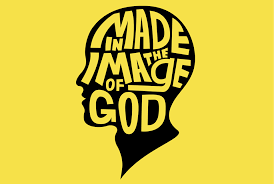
Our tradition provides many examples to teach us that no one of us is better than any other of us. That all humans are created from the same Divine mold. That all of us are descended from the same parents. The Mussar movement shares a chant for us to internalize as we gaze upon another person, “Each and every one, holy soul.”
These lessons necessarily stem from a realistic understanding that in ancient times and even through today, some of us feel innately and racially superior to others. Often, Jewish teaching is brought to elevate an underlying human feeling to a transcendent plane. Most of us welcome the idea that we are created “in God’s image” in that spirit – as a meaningful expression of a core Jewish concept that enhances something we feel as humans, in our core. But when it comes to confronting racism, to be honest, some of us carry a hollow core. So, when faced with this concept, we go along passively so as not to trample a Torah teaching. Mouthing the words “all people are created in God’s image,” without the proper kavanah – intention – is a desecration. And again, to be honest, if we have to rely on Jewish sources as the primary motivation to battle racism rather than to summon the basic goodness within us to attain that perspective, then shame on us.
Yes, we should continue to refer to people as created in the image of God, because in our worldview it is correct and true. This radical idea is deeper than it appears and more powerful than commonly perceived. We often think of the “other” as the one created in God’s image and worthy of respect. While this idea is deeply profound on its own, what we might neglect to understand is that we are created in God’s image, too. When I draw near a mirror and say “Well, look at me. I am created in God’s image!“ what does that mean?
It means that I carry within me Godly characteristics. Traits that, while based on intellectual understanding, lean more into activism. God, through God’s Torah, compels us to be just. Therefore, I, too, have the responsibility to compel others towards justice. God, through God’s prophets, calls upon the Jewish People to be righteous. Therefore, I, too, have the responsibility to call Jews to righteousness. God does not hesitate to call out evil. Therefore I, too, in God’s image, summon the courage to confront evil where I see it.
Juneteenth is not only a holiday to celebrate the liberation of African Americans from slavery. As Jews, it is a time to conduct a Cheshbon HaNefesh, a spiritual accounting of where we are on this issue, and how to advance to where we should be. Juneteenth catalyzes us as Jews, and fundamentally as human beings, to continue our pursuit of justice, restoring dignity and respect. Juneteenth, and every day, is the day to create a Kiddush Hashem, a sanctification of God’s name, partnering with the One whose image we are blessed to bear, whose compassion resides within us, to create the world that God imagined.