
Rebuilding Jewish unity from within
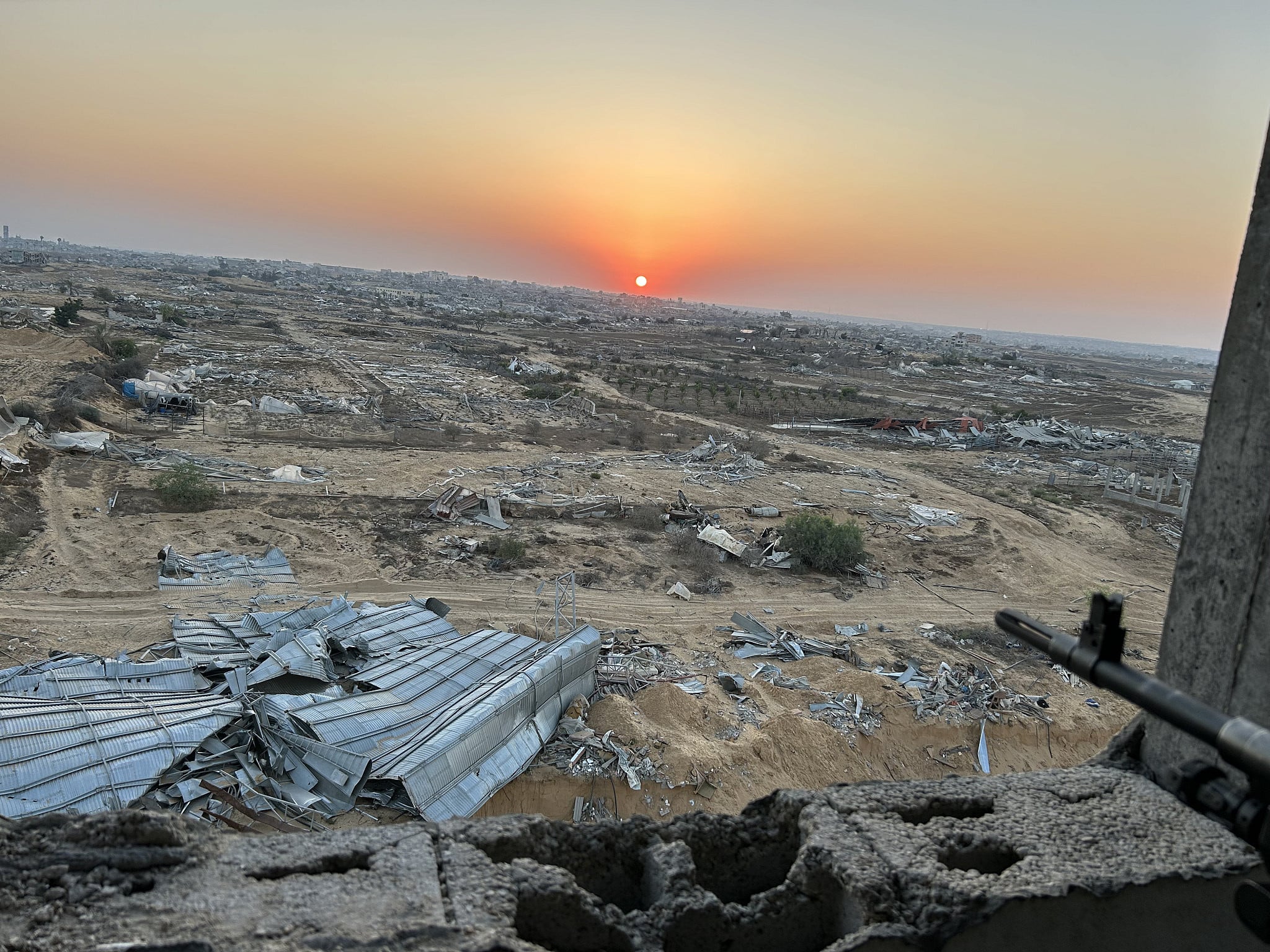
I’ve seen a lot during this war, but watching tens of thousands of Gazans sprint toward a GHF food distribution point has been one of the more surreal sights for me. At this USA-run center, food and aid are handed out twice a day. A flood of bodies pushing, fighting, and looting to grab a heavy bag of food, they then schlep it under the scorching sun back to their “tent city,” nearby which houses a few hundred thousand Gazan evacuees.
I witnessed this daily in my fifth round of Miluim, when I was sent to a military post in view of one of these distribution centers in southern Gaza. From afar and even in front of my eyes, I saw the desperation of Gazans living in subpar conditions, and to be honest, they did look rather underfed as well.
So while there’s a reasonable chance there is indeed some level of food shortages in Gaza like the rest of the world regularly points out to us, the root cause is blatantly clear, which I also saw in front of my eyes. Hamas has consistently shown zero regard for the well-being of their population, and the population even cheers when IDF troops shoot at Hamas terrorists who steal humanitarian aid trucks. Palestinian history involves investing in terror infrastructure instead of public services, and brutal attacks on innocent Israelis with support and participation among a majority of Gaza’s civilian population. And it is our job for the sake of Israel, but really the rest of the world too, to completely wipe out this evil group from the world.
This isn’t just my view. The army, most Israelis, and supporters of Israel fundamentally see these points as true. While there’s debate over how this should factor into hostage negotiations, the continuation of the war, and Israel’s broader response to Hamas and Gaza, the underlying perspective is broadly accepted.
But this is a disregarded view, rejected by most of the world, whose memories of October 7th’s atrocities have faded and tragic results never hit close to home. They do not understand the reality of the conflict as intuitively as those connected to Israel, and see mostly empathy-inducing content from the Palestinian side without the broader context.
This disconnect between global, anti-Israel narratives pushed, and the reality of the situation has real consequences. Not only in regards to how Israel must fight its wars, but it affects how Jews in America can comfortably express their identity and support for Israel. Even groups across the political spectrum that have traditionally supported Israel, where many Jews have felt secure, are now starting to push back, arguing that the U.S. should avoid stretched-out foreign entanglements, including unwavering support for Israel.
As a result, many Jews, especially those in the public workforce or on college campuses, can find or may soon find themselves surrounded by people who are either indifferent to Israel or openly opposed to it, from both the left and the right. What once felt like a safe and accepted connection is becoming more complicated, potentially leaving many questioning what their relationship with Israel should look like as American Jews.
Which is why now, when the most intense fighting in Israel has slowed, it is an opportunity for our communities to look at the state of the world around us, and truly internalize the character of our nation that has kept us alive and propels us forward. And that starts with building ourselves from within, by validating our values and sharpening our sense of identity into a culture that is unaffected by any kind of outer forces.
Fittingly, we have just entered the “Sheva Denechamta,” the “Seven weeks of Consolation,” a time seen as Hashem’s comfort after the mourning of the Three Weeks. But the word “nechama” can also mean a shift in perspective, or the act of reflecting and realigning.
Shabbat Nachamu is the turning point of this shift, when we transition from destruction to redemption. The Gemara tells us that on Tisha B’Av, Hashem declared that Bnei Yisrael would not enter the land of Israel from the desert, after rejecting it in Chet Hameraglim. Therefore, if we, and our children, want to stay connected to Israel, we have a responsibility to look at what has held us back, and what we can do better going forward. It means genuinely believing in Israel as our only home, the only place we can truly be together as a nation. To see the good and the beauty that exists within a land filled with holiness, yet so sought after and contested, that sometimes we have to even fight or go to war to earn it. And that no matter how physically comfortable we can feel outside of it, our souls will always feel like outsiders spiritually, unless we are properly in our land.
Looking back at the shifting social climate in the U.S., we must ingrain in ourselves that “Ahavat Yisrael,” love for every Jew, is stronger and more reliable than any outer power can ever offer. Because no matter what how easy it is to be convinced otherwise, non-Jewish support for us comes and goes, but our only guaranteed loyalty comes from within. What follows is not just thinking about it as some nice, theoretical idea, but setting these as unbreakable foundations within our communities, providing clear messaging and practice of Jewish morals, missions, and priorities, strong enough to withstand any contention by outsiders.
These core values, among many others, are what’s gotten me through five rounds of reserves in especially tough situations. These are not theoretical beliefs that we decide when we feel it is convenient for us to follow. They are what I believe allows Israel to endure this relentless battle, while the rest of the world moves on. And they are what will continue to build the resilient, enduring nation we are blessed to be a part of. Once our communities truly embrace these values, action will naturally follow, and we won’t just keep the status quo of our connection to Israel and the nation, but rather, ignite it. We’ll raise a generation that doesn’t just feel tied to our nation or that they don’t quite fit in, but is ready to fight for it, build it, and live for it with everything they have.