
Author and Global Affairs Commentator
Reclaiming Zionism’s Narrative
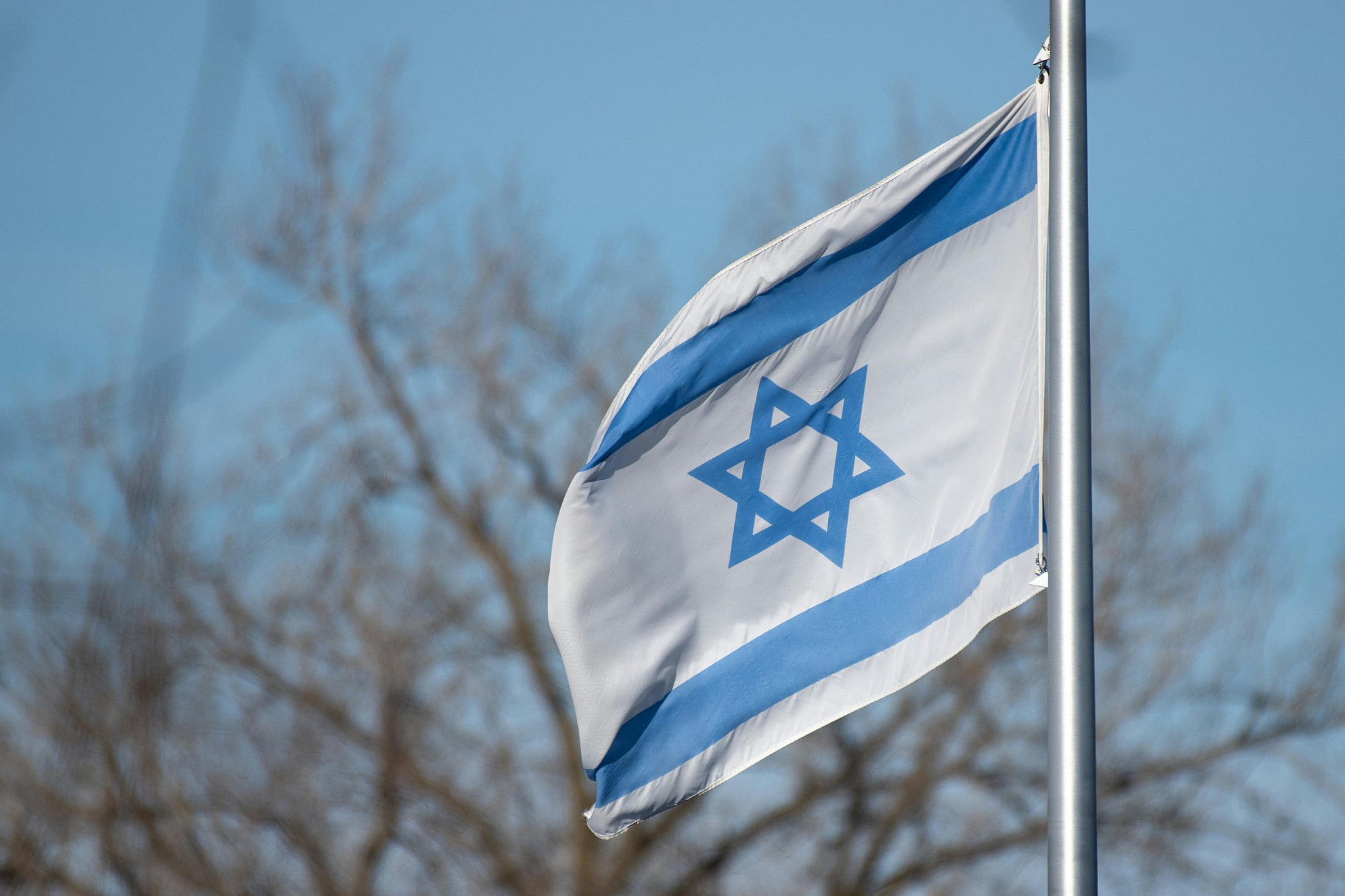
Has Israel spent too long responding to accusations instead of challenging the assumptions that underpin them?
Has Israel spent too long responding to accusations instead of challenging the assumptions that underpin them?
Military power can defend borders. Diplomacy can secure alliances. But neither is sufficient if a nation steadily loses the battle over its own legitimacy.
That, increasingly, is Israel’s predicament. While the country has demonstrated remarkable resilience on the battlefield, it has struggled to shape the broader story told about its existence. Over several decades, a powerful narrative has emerged in much of academia, diplomacy, international media and activist politics that casts Zionism primarily as a colonial enterprise and presents Palestinian nationalism as the sole indigenous claim to the land.
Whether one accepts that interpretation or not, its influence is difficult to dispute.
Ideas that were once confined to ideological margins now occupy the mainstream. The existence of a Palestinian nation-state is frequently treated as a settled historical fact rather than a modern political aspiration. Conversely, Israel’s founding narrative has increasingly shifted from one of national liberation to one of alleged dispossession, with the legitimacy of the Jewish state itself becoming the subject of renewed debate.
The consequences extend well beyond rhetoric.
Arguments that once focused on Israel’s policies now increasingly question Israel’s right to exist as a Jewish nation-state. The debate has evolved from criticism of governments to criticism of the country’s foundational premise. That distinction is significant, because it transforms political disagreement into a challenge to national legitimacy.
Israel has not been solely responsible for this shift, but it has often failed to respond effectively.
Public diplomacy has traditionally emphasized explaining military operations, correcting factual inaccuracies and reacting to successive controversies. While these efforts serve an immediate purpose, they are fundamentally defensive. They answer accusations without challenging the assumptions from which those accusations arise.
That strategy has yielded diminishing returns.
Narratives are rarely won through fact-checking alone. They are shaped by compelling historical frameworks, moral language and repeated storytelling. In that contest, Israel has frequently ceded the initiative to its critics.
Historian Benny Morris recently described two dominant interpretations of Zionism. One portrays it as a colonial project imposed upon an indigenous population. The other accepts Zionism’s original legitimacy but argues that Israel ultimately betrayed its founding ideals.
Both frameworks begin from premises largely established by Israel’s critics.
There remains a third perspective: that Zionism represents one of the modern era’s most successful national liberation movements—a movement through which an ancient people re-established sovereignty in its historic homeland after centuries of persecution, displacement and statelessness. That interpretation receives considerably less attention in many international debates despite its central place in Israeli historical consciousness.
The imbalance is becoming more pronounced.
Across parts of Europe and North America, political movements increasingly advocate positions that would once have been considered fringe, including describing Zionism itself as an illegitimate ideology or questioning Israel’s continued existence as a Jewish state. In some activist circles, the discussion has moved beyond support for Palestinian statehood toward rejection of Zionism altogether.
Such developments illustrate that the debate is no longer confined to borders, settlements or peace negotiations. It concerns the historical and moral legitimacy of Jewish self-determination itself.
Israel’s response has often remained reactive.
Rather than contesting the broader historical narrative, official messaging frequently concentrates on explaining specific military actions or responding to the latest allegations. Necessary though those responses may be, they rarely alter the larger framework through which international audiences interpret events.
A more ambitious communications strategy would seek to reshape that framework rather than merely defend against it.
That would require asking more fundamental questions. Why should Jewish national identity, with roots stretching back millennia, be regarded as less authentic than competing national narratives? How should the region’s long history of conquest and imperial rule be understood when modern accusations of colonialism are made? What obligations fall upon political movements that have repeatedly rejected negotiated settlements or embraced violence?
These are not questions that disappear because they are uncomfortable.
Nor should public diplomacy consist solely of rebutting allegations after they gain traction. Successful political narratives are proactive. They establish assumptions before opponents have the opportunity to define them.
Resources are not the principal obstacle. Since October 2023, substantial sums have reportedly been devoted to strengthening Israel’s public diplomacy, particularly across digital platforms. The greater challenge has been strategic rather than financial. Much of that investment has focused on responding to criticism instead of reframing the broader conversation.
The distinction matters.
A defensive posture inevitably allows critics to determine the agenda. An offensive strategy, by contrast, seeks to shift the burden of argument onto those advancing claims against Israel’s legitimacy. It asks them to defend their own historical interpretations rather than simply requiring Israel to answer theirs.
None of this suggests that effective communication can substitute for sound policy or diplomacy. Nor does it imply that complex historical disputes can be resolved through marketing alone.
But nations that lose confidence in telling their own story often discover that others will tell it for them.
For Israel, the central challenge may no longer be explaining individual military operations or responding to each successive controversy. It is reasserting the broader historical narrative of Zionism as a movement of national self-determination—and ensuring that debate over the Middle East begins with a fuller understanding of that history rather than assumptions that have, over time, become accepted as fact.
Related Topics